
Why Do We Feel Guilty for Having Fun?
When I embarked on my eight-month journey across Southeast Asia, I expected exhaustion, confusion, exhilaration and wonder. I anticipated stress mixed with excitement and a powerful sense of liberation. There was one feeling I did not expect to emerge and grip me so consistently: guilt.
Yes, guilt.
I was puzzled. I began analysing this strange feeling, taking a magnifying glass to it and asking myself: why was it there? Why did I feel guilty for choosing myself and prioritising my desire for freedom, expansion and experimentation?
I had worked extremely hard to put myself in a position where this level of freedom, combined with long-term travel, was possible. I had saved money for years. I was a homeowner. I had planned carefully and strategically, worked on my mindset and hired a life coach to help me create the freedom I desired. I had invested in self-development and qualifications that allowed me to teach online and support myself while travelling. I had not stumbled into freedom accidentally. I had constructed it deliberately over many years.
Of course, I felt happy and proud of myself. Yet part of me still felt guilty for doing something outside the norm, for having so much fun and for experiencing a level of freedom I had once only dreamed about.
The Origins of Guilt: I Had Escaped
While I was walking through unfamiliar cities, crossing borders, discovering new landscapes and living a nomadic life, I often thought about my former colleagues. They were still inside the learning and therapy centre where I had worked for eight years. Their days remained structured by locked doors, challenging students, alarms going off, constant supervision and the same repetitive routines I had left behind.
I had escaped. They had not.
But I had planned my escape for years. I had built a financial cushion, invested in qualifications, developed online teaching skills and organised every detail carefully. I had even written a manifesto describing the authentic, expansive and experimental lifestyle I wanted to create. Still, instead of allowing myself to enjoy my new life fully, part of me behaved as though my liberation were an act of betrayal. I felt as though I needed permission to feel so free and to live such an unconventional life, even temporarily.
The Guilt Followed Me Home
When I returned to the UK, I knew that a typical nine-to-five job was no longer for me. Because I had already been teaching online part-time while travelling, I decided to teach ESL online full-time and work entirely from home.
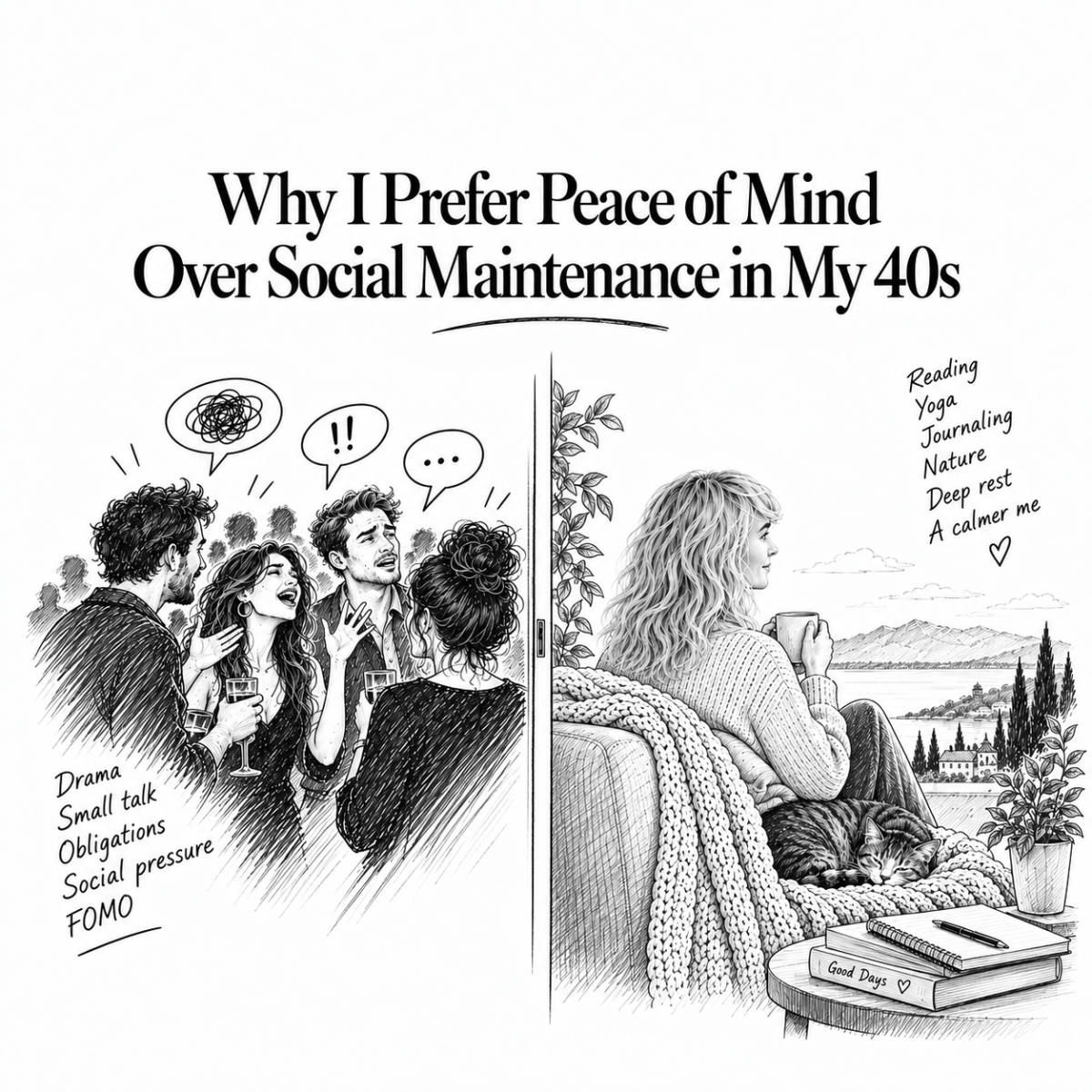
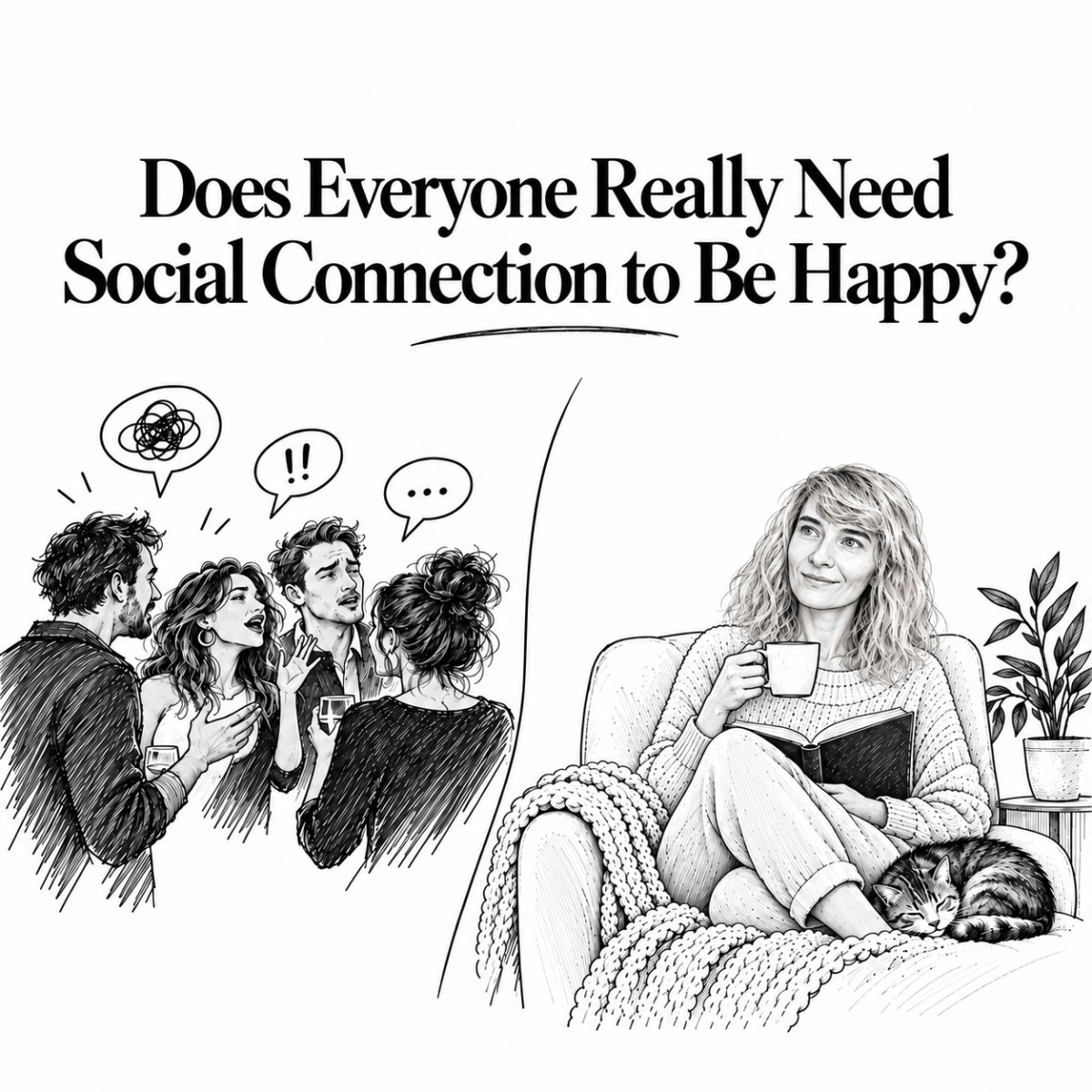
At first, it felt strange to be at home but not leave the house for work as I used to. There was no commute, no small talk, no boss, no meetings and no compulsory training. My mornings became slower and more reflective. I created a two-hour gap in the middle of the day so I could go shopping, running or walking in daylight. I could walk in the sunshine, browse through shops or sit quietly with a coffee while other people were confined to workplaces for most of the day. I could dance, develop new movements, cook and enjoy peace and quiet. I was having fun in my solitude. These ordinary joys should have felt completely natural. Instead, guilt crept back in.
At first, it was fuelled by my older neighbour, who questioned my employment status. I told her that I worked online, but I sensed suspicion in her eyes. After that, whenever I stepped outside at eleven in the morning to go shopping, walking or running, I felt as though I were being watched and judged. Were the streets at that hour supposed to belong only to pensioners and mothers with babies? Was a working-age woman allowed to be outside in daylight without appearing unemployed, irresponsible or idle?
These freedoms began to feel almost illicit.
Freedom Felt Unfamiliar
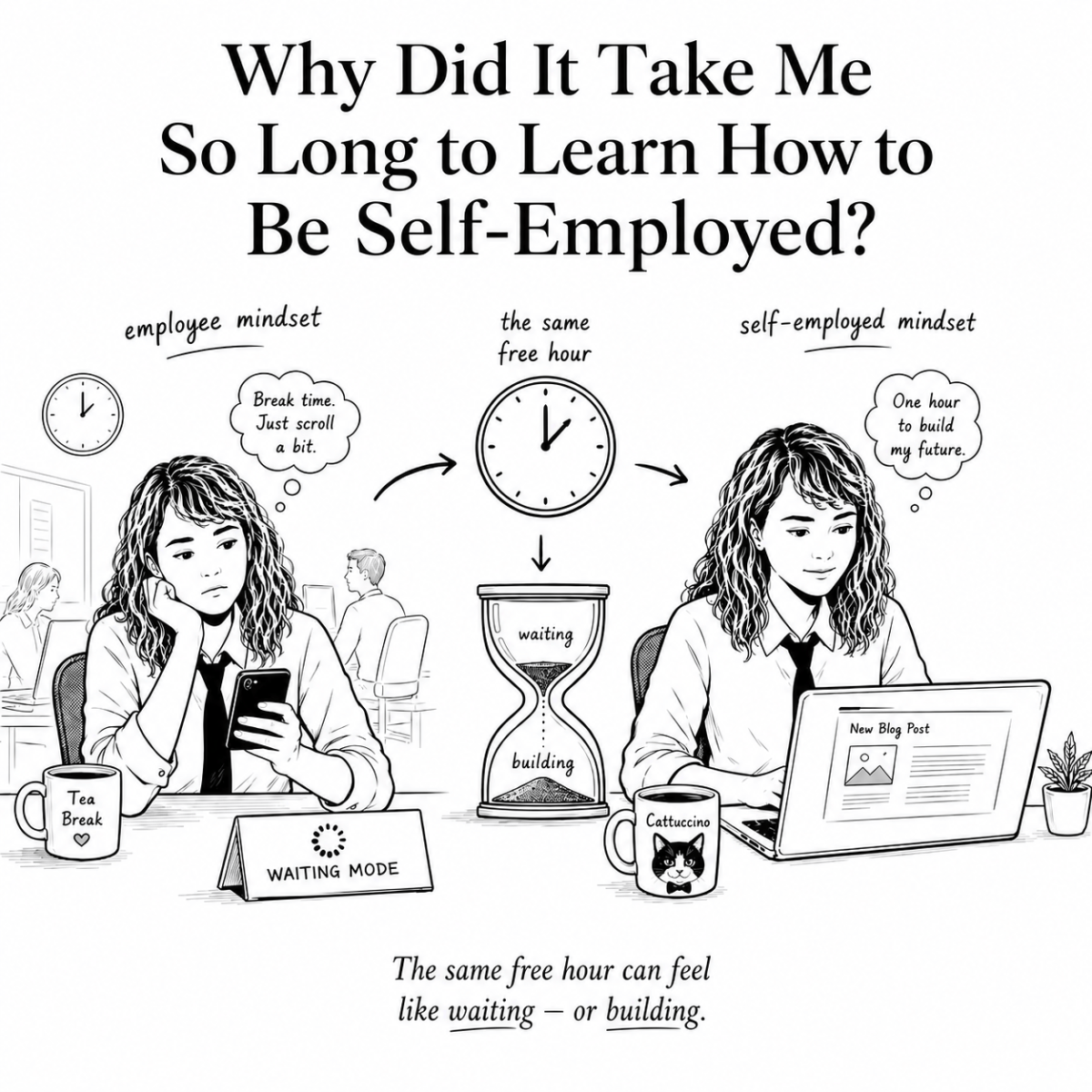
Eventually, I realised how deeply conditioned I was. I had spent so many years believing that legitimate work required commuting, physical confinement and visible exhaustion that even a brisk walk between lessons could feel like cheating. But nothing improper was happening. I was working. I was supporting myself. I was paying my bills and my mortgage. I had simply created a life with more autonomy and flexibility. I could decide how many hours I wanted to teach. I could choose Friday as my day off. It felt great. Yet emotionally, I still felt as though freedom required an apology or some kind of explanation.
I had lived with restrictions for so many years that becoming considerably less restricted felt uncomfortable and strange. Freedom was what I had wanted, yet once I had it, I did not immediately know how to inhabit it without unease. I knew I needed to work with this feeling because it had become a burden. I started asking myself: what exactly was I afraid of? Other people’s judgement? Running into a former colleague in the middle of the day and having to explain that I was self-employed now? Or perhaps it was the sense of isolation that came from stepping outside the working pattern I had known for my entire adult life. I had always worked conventional hours, and suddenly I did not know a single self-employed person in real life who could reflect this new lifestyle back to me as normal.
Processing the Guilt: The Old Social Script
I began to understand that forcing myself back into socially approved boxes would not help me or anyone else. We all live within certain forms of captivity and confinement, although we do not always recognise them as such. Working from home is not perfect. It can be isolating. Self-employment brings income fluctuations and lacks many of the benefits associated with traditional employment. However, it also gives me freedom, autonomy and flexibility, and I value those things tremendously.
I had to unlearn old paradigms, or perhaps dissolve them. I had to remind myself that I had worked extremely hard to grow into a braver and more resilient version of myself: a woman who could be self-employed, rely on laptop-generated income and trust her own teaching skills. I also had to understand that trying to shrink myself back into old boxes was not particularly honourable.
Part of me believed that refusing to participate in collective hardship was frivolous, selfish or even morally questionable. I had to remind myself that feeling uncomfortable about going for a two-hour walk at eleven in the morning would not improve the lives of corporate workers. Refusing to enjoy Southeast Asia would not improve the working conditions of my former colleagues. And if people judged me or suspected that I was unemployed, why should I care? Why should I feel guilty or apologise?
Why Feeling Good Can Feel Wrong
We live in a society that glorifies graft, hard work, exhaustion, commitment, discipline and obedience to the work ethic. Hardship is placed on a pedestal. Joy and happiness are carefully rationed and allowed mainly on special occasions, or when you are a child. You dance, prance and giggle as a child, but once you grow up, you are expected to become serious. You may be silly only when you get drunk. Dancing in my living room between lessons? How frivolous. Walking in full daylight? How hedonistic.
It took me a long time to grant myself permission to be happy, joyful, expressive and authentic. Nobody else was going to give me that permission. I had to give it to myself. Freedom and feeling good are not normalised. We talk constantly about managing stress, burnout, misery and anxiety, but do we ever talk about handling excitement and happiness?
Not really.
The Moral Code I Had Inherited
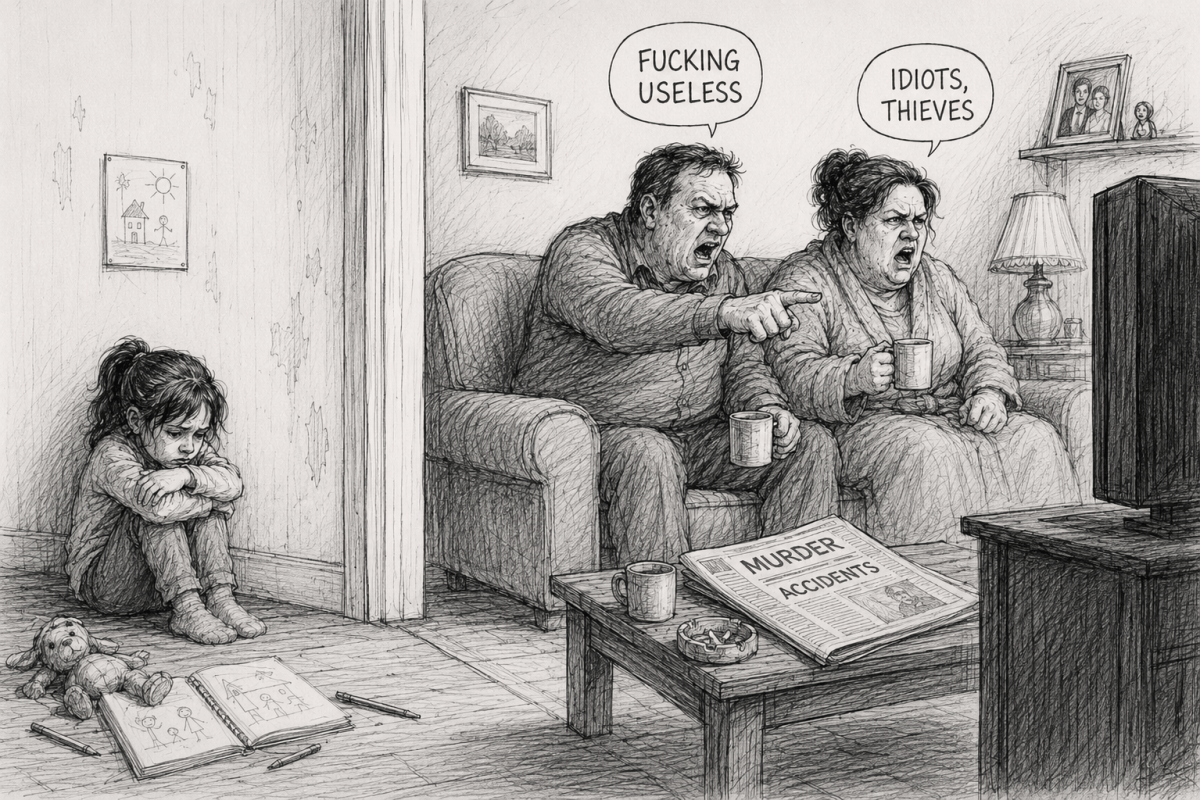
I eventually realised that my guilt came from a collision between the life I had chosen and the moral code I had absorbed. We inherit these codes from our families, neighbours, environments and workplaces. Having grown up in a world that valued relentless labour and looked down on relaxation, it was hardly surprising that I felt guilty when I began living differently. I remembered a story my mother once told me. She had spoken to a priest who questioned why she had only one son after ten years of marriage. He encouraged her to have more children and concluded with the words:
“Life is not a fairy tale.”
She then had me.
And yes, her life was not a fairy tale. It was full of hardship and hard physical work. But I rebelled. I decided to find out whether life could at least resemble a fairy tale from time to time.
I tried. My conclusion is yes—but it came with a price tag: guilt.
I had inherited several powerful beliefs:
A good person should always be useful to others.
A serious adult should be burdened.
Pleasure must be earned through exhaustion.
Freedom is suspicious if other people do not have it.
Living primarily for yourself is selfish.
Why Is Suffering Treated as Proof of Goodness?
Our culture often gives suffering a strange moral prestige. People proudly describe being overworked, sleep-deprived and unable to take holidays. Complaining becomes a form of social bonding. Misery appears respectable because it signals sacrifice, duty and endurance. Meanwhile, someone who is visibly enjoying life may be treated as frivolous, irresponsible or privileged, even when she created that life through years of grit, graft and difficult choices.
Pain is romanticised. Endurance is praised. Martyrdom is presented as noble. A woman who remains in an unhappy marriage may be called loyal, while a woman who leaves may be called selfish. Motherhood is often framed through sacrifice, as though a good mother must disappear into service. Women are expected to tolerate quietly, remain devoted and prove love through depletion.
Meanwhile, joy is minimised. Freedom is called indulgence. Rest is called laziness. Choosing yourself is labelled narcissism. A life organised around curiosity, movement and pleasure may be judged as shallow, even when it harms nobody.
Separating My Life from Other People’s Choices
My parents had chosen rootedness, yet I felt guilty for movement. My former colleagues continued working inside the secure unit, yet I felt guilty for walking through tropical cities. Society praised duty, sacrifice and endurance, so pleasure began to feel morally suspicious. I had absorbed the idea that a respectable life should contain a certain amount of confinement. My parents worked hard throughout their lives and rarely travelled. They remained anchored to one place and saved money their entire lives, perhaps first through necessity and later through habit or preference.
Part of me may have felt that enjoying possibilities they had rejected was a judgement on their lives, or even an abandonment of them. But their decision not to travel did not create a moral duty for me to remain still. I did not prevent them from using their savings. I did not cause my former colleagues to remain inside the secure unit. I simply refused to continue living by the same restrictions. Another person’s decision to remain anchored does not require me to tie myself to the same ground. Their life is not the price of mine, and my unhappiness would not improve it.
Embracing a Guilt-Free Life
What was the guilt actually telling me? It was not telling me that I had behaved badly. It was telling me that I had crossed beyond the boundaries of the only life I had known—the life I had been trained to consider normal, acceptable and legitimate. Unfamiliar territory can feel uncomfortable, even when it is exactly where we want to be. According to an inherited social script, I was guilty of enjoying myself too much. But can we actually enjoy ourselves too much? Why would I put a cap on something that should be natural?
Freedom and fun are not things we must apologise for. They are things we can use wisely, appreciate deeply and, where possible, help others imagine for themselves. This post is not merely about travel guilt or the guilt of enjoying myself. It is about unlearning the belief that suffering makes us morally superior. It is about understanding that we can achieve self-fulfilment and self-realisation through happier means, rather than through self-abandonment, exhaustion and hardship. Freedom does not become immoral simply because other people have chosen a different life.
For years, I worked to construct freedom, but once I had created it, I could not enjoy it without guilt. That was the contradiction. I had built the life I wanted, yet part of me still behaved as though I had no right to live it fully. I had to learn that freedom is not complete when it exists only on paper, in my schedule or in my bank account. It becomes real when I can inhabit it without apology, suspicion or the urge to shrink myself back into old restrictions.
I no longer believe that I must recreate confinement in order to prove that I am a valuable member of society. I can walk in daylight, work from home, travel, dance between lessons, read my Kindle in the sunshine and create a life around autonomy, curiosity and movement. I constructed this freedom deliberately, and now I can finally inhabit it. That is the transformation. I do not need to apologise for enjoying the life I worked so hard to create.




Leave a comment