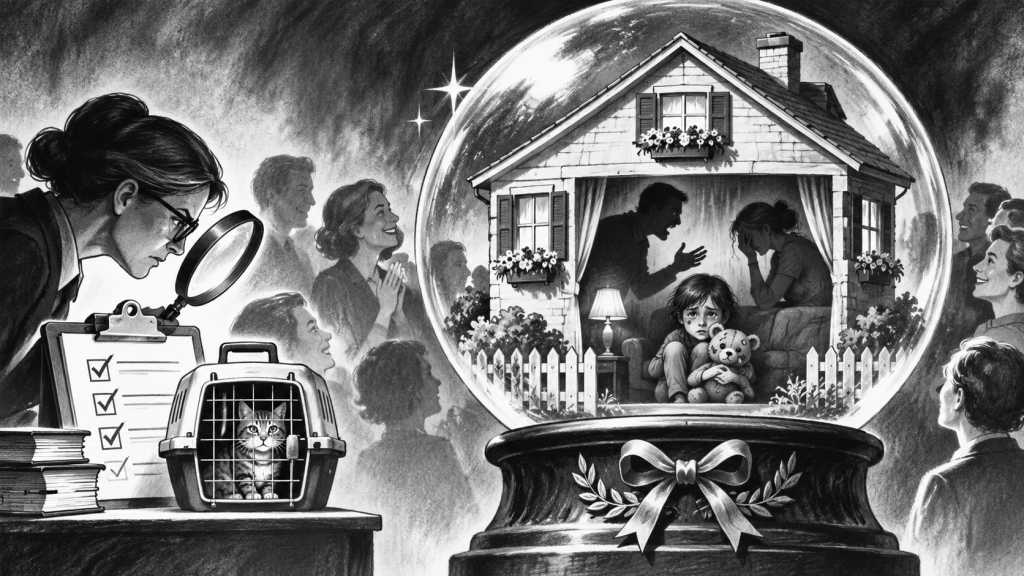
For centuries, we have glorified marriage, celebrated parenthood and placed the family on a pedestal. But what if the institution we consider the foundation of civilisation also contains some of its most dangerous contradictions? Why do we demand qualifications, background checks and professional training from people who work with children, yet allow prospective biological parents to enter one of life’s most consequential roles with virtually no preparation? Perhaps it’s time to question the family fairy tale.
The Sacred Institution Nobody Dares to Question
Family. What a beautiful word! It evokes warmth, belonging, unconditional love, festive gatherings, smiling children and the comforting image of parents who will always be there when we need them. For centuries, marriage and parenthood have been glorified, romanticised and presented as the ultimate achievements of adult life. Society celebrates engagements, weddings, pregnancies and the arrival of babies with enormous enthusiasm. We congratulate people for getting married, having children and creating families, often without giving much thought to what actually happens inside those families once the celebrations are over. Family is supposed to be sacred, a sanctuary from the outside world, a source of protection and emotional security. But is it always? What happens when the very institution we are taught to admire becomes a place of intimidation, humiliation, control, manipulation or violence? What happens when the people who are supposed to protect a child become the people that child fears most? And why are we so reluctant to question an institution simply because it has existed for centuries?
I am not suggesting that all families are dysfunctional, that marriage is inherently isolating or that parenthood produces traumatized children. Plenty of people build wonderful families characterised by affection, respect, stability and genuine emotional connection. I am questioning something different: our tendency to treat family as an unquestionable social good, as though the mere existence of a marriage or the presence of two biological parents automatically creates a happy, healthy environment. It doesn’t. A family is not a guarantee of emotional competence, and biological relationships do not guarantee love. I dare to say family is the most glorified and overrated institution in the world. In fact, sometimes the very privacy and social prestige surrounding family life can allow destructive behaviour to continue for years without meaningful intervention. The family fairy tale is cute and nice, but perhaps it’s time we examined what happens when the sweet picture on the outside conceals a darker reality behind the closed door.
Marriage: The Couple’s Little Bubble
Consider marriage as the creation of a two-person unit. Two individuals enter a legally and socially recognised relationship, establish a household and gradually construct their own private world. Their routines become intertwined, their social lives may become increasingly centred on each other, and their relationship develops a boundary separating the couple from everyone else. For many people, this provides stability, companionship and a sense of belonging. But what happens when the bubble becomes toxic? What happens when one partner becomes controlling, aggressive, emotionally abusive or increasingly isolated from the outside world? The same boundary that protects intimacy can also conceal intimidation, manipulation, coercion and violence. And perhaps most troublingly, the people outside the bubble may convince themselves that they have no right to interfere, even when there are obvious reasons for concern.
I remember growing up in Poland, where the idea of minding one’s own business was frequently treated almost as a moral obligation. People could know that something dreadful was happening behind closed doors — domestic violence, intimidation, sometimes even sexual abuse within the family — yet respond with familiar phrases: It’s their private business. Don’t interfere. They’re adults. Every family has its problems. Don’t stick your nose into other people’s affairs. I found this attitude profoundly disturbing. Of course, privacy matters, and nobody wants neighbours monitoring every disagreement or deciding how other adults should conduct their relationships. But surely there must be a distinction between respecting privacy and tolerating abuse? At what point does staying out of somebody else’s business become a convenient excuse for doing nothing?
Mind Your Own Business — But Only Once You’re Married!
And here is something I find particularly hypocritical about this supposedly sacred respect for family privacy. In Poland, I grew up hearing the familiar warning “Nie wsadzaj nosa do cudzego prosa” — don’t stick your nose into other people’s business! Yet isn’t it fascinating how selectively this principle is applied? When you’re single and childfree, everybody seems to consider your private life public property. Why aren’t you married yet? Why are you so picky? Haven’t you found anyone? Why don’t you have children? You’re not getting any younger! Your biological clock is ticking! Suddenly, relatives, neighbours, acquaintances and even people who barely know you feel perfectly entitled to interrogate your personal choices, question your priorities and offer completely unsolicited advice. Your independence is apparently a problem that the entire community has appointed itself to solve. But the moment you acquire a partner, something miraculous happens: the interrogation stops! Congratulations, you are now part of a socially approved unit, and the outside world suddenly discovers the importance of respecting your privacy. Never mind whether your partner is kind, emotionally mature, trustworthy or capable of maintaining a healthy relationship. Never mind if the person happens to be controlling, abusive, addicted to alcohol or involved in criminal behaviour. You have a partner! Congratulations! You have fulfilled society’s expectations! And now, apparently, whatever happens behind your front door is nobody else’s business. How wonderfully convenient! How spectacularly two-faced!
The same people who had no hesitation sticking their noses into your perfectly peaceful single life may become remarkably reluctant to intervene when somebody’s married life becomes genuinely dangerous. Of course, not everyone behaves this way, but the contradiction is striking: society can be intrusive when there is nothing wrong and conspicuously silent when something is terribly wrong. Perhaps we need to reconsider what respecting privacy actually means. It should mean leaving consenting adults free to make their own personal choices, including remaining single and childfree, while recognising that serious abuse, violence and threats to vulnerable people cannot simply be dismissed as private family matters. What an extraordinary reversal of priorities we sometimes manage to achieve!
The problem is not simply that abuse can occur inside a family. Abuse can occur in schools, institutions, workplaces and other relationships too. The problem is that the family sometimes enjoys a special kind of social immunity. We may hesitate to question parents because they are parents, avoid challenging spouses because they are married, and dismiss children’s distress because outsiders assume that mothers and fathers naturally know what is best for their offspring. Yet safeguarding principles recognise that concerns about abuse should not be ignored merely because they arise in a private home. In England, people can report suspected child abuse to children’s social care or the police without having to prove that abuse has occurred. I find that principle essential: protecting children must take precedence over preserving the appearance of a respectable family. A marriage certificate should never become an invisible wall behind which cruelty is allowed to flourish.
Congratulations! You’ve Had a Baby. Do You Know What You’re Doing?
Now let us move to parenthood, the next chapter of the family fairy tale. A couple announces a pregnancy, relatives celebrate, friends buy tiny clothes and everybody congratulates the prospective parents. Wonderful! But I want to ask an uncomfortable question: what exactly qualifies those two adults to raise a human being? Their biological capacity to reproduce? Their willingness to become parents? Their ownership of a house? The fact that their parents raised them and therefore they assume they will instinctively know what to do? Let’s be honest: many people enter parenthood with very little understanding of child development, emotional regulation, attachment, psychological trauma or the long-term consequences of their behaviour towards their children. They learn through trial and error, often repeating patterns inherited from their own upbringing. And who is the unsuspecting participant in this enormous experiment? The baby, of course! A tiny, completely dependent human being who has absolutely no say in the matter. It’s almost as though each new family receives a little guinea pig and is expected to figure out the experiment as it goes along. How bloomin’ peculiar is that?
Now, I am not arguing that parents should possess encyclopaedic knowledge of developmental psychology before having children. Nobody can prepare for every situation, and even highly educated, loving parents make mistakes. But surely there is a difference between inevitable imperfection and complete ignorance of the emotional responsibilities involved. How many adults understand that persistent humiliation, harsh comparisons, ridicule, emotional invalidation and chronic intimidation can affect a child’s developing self-esteem, confidence, cognitive development, ability to trust others and sense of safety? How many recognise the difference between discipline and domination, between setting boundaries and controlling a child’s personality, or between encouraging achievement and making a child feel permanently inadequate? These things matter enormously because childhood does not remain neatly confined to childhood. The lessons children absorb about themselves, relationships and emotional safety can influence their adult friendships, working lives, romantic relationships and mental wellbeing. Yet we continue to assume that becoming a parent somehow equips a person with the necessary skills to raise a child.
Apparently, I Need a Garden to Adopt a Cat!
Here comes a contradiction that never ceases to astonish me. Some time ago, I considered adopting a rescue pet in the United Kingdom, and I was amazed by the requirements involved. There were questions about the suitability of my home, my lifestyle, my ability to provide appropriate care and, in some cases, access to outdoor space. I began to feel as though I needed a beautiful property with a garden simply to qualify as a prospective cat owner! To be fair, not every rescue organisation requires a garden, and some cats are perfectly suited to indoor living. Nevertheless, the principle is understandable: responsible rescue organisations want to know whether an animal will be placed in a safe, suitable environment with somebody capable of meeting its needs. They don’t simply hand over a vulnerable creature to the first enthusiastic applicant and hope everything works out.
Adopting a child involves even more extensive scrutiny, understandably so. In England, prospective adoptive parents undergo assessments involving social workers, police checks, medical examinations, references and preparation classes. Their circumstances, understanding of children’s needs and capacity to provide a stable home are examined before an adoption is approved. And when I think about the professional requirements involved in working with children, I find the contrast even more remarkable. As a teacher, I have been expected to meet professional standards, undergo criminal-record checks, complete safeguarding training and develop knowledge of child development, trauma, attachment, equality, diversity, inclusion and appropriate professional conduct. I have worked with young people whose needs were complex and whose histories demanded considerable professional understanding. Society quite rightly expects teachers, foster carers, adoptive parents and other professionals to demonstrate competence and accountability. Yet two biological parents can bring a child into the world without being required to demonstrate even a basic understanding of how to raise that child without causing emotional harm. Does nobody else find this contradiction extraordinary?
I understand that adoption and biological parenthood are legally and ethically different. An adoption agency is deciding whether to entrust an existing child to a particular applicant, whereas biological reproduction involves fundamental questions of bodily autonomy and personal freedom. Nevertheless, the contrast raises a question worth asking: if we consider preparation essential when somebody takes responsibility for another person’s child, why do we treat preparation as largely optional when the child is biologically their own? Surely a child’s emotional needs do not become less important simply because the adults raising them supplied the DNA.
Compulsory Parenting Qualifications: Why on Earth Not?
Here is where my thinking becomes rather innovative, and I want to make my position absolutely clear: parenting education and a recognised parenting qualification should be COMPULSORY, not merely encouraged! Why shouldn’t prospective parents be required to attend structured classes, workshops and practical assessments before welcoming a child into their lives? Why shouldn’t they learn about emotional development, attachment, non-violent resistance, trauma, boundaries, positive discipline, positive risk-taking, safeguarding and the psychological consequences of neglect, repeated criticism or humiliation? We require training for countless responsibilities that are considerably less consequential than shaping a developing human being. Yet when it comes to parenthood, one of the most demanding and influential roles imaginable, we seem remarkably comfortable with the principle of improvisation. I believe that parenting should come with a compulsory educational programme and a certificate demonstrating that the adults have learned the foundations of healthy upbringing. Why on earth not?
And why should the qualification be a one-off event? As children develop, the challenges change. Managing an infant’s distress, communicating with a school-age child and supporting a teenager through emotional turmoil are entirely different responsibilities. I would introduce regular refresher training, practical guidance and parenting reviews throughout childhood. Of course, completing a course does not automatically make someone kind, patient or emotionally mature. But surely it is better to equip adults with knowledge and hold them accountable than to hope they will somehow discover the essentials by experimenting on their children!
I can already imagine the outrage. What next? A government licence to have a baby? Officials inspecting people’s bedrooms? Psychological tests before couples are allowed to reproduce? A compulsory system could certainly become discriminatory and authoritarian if it allowed the state to decide who was permitted to reproduce. Who would set the standards? Would people struggling with addictions, living with mental-health conditions or having criminal records be unfairly judged? These are serious questions of human rights and reproductive freedom. The training should be publicly funded, accessible, fair, subject to independent oversight and open to all kinds of families. Difficulties in designing a humane system are not a reason to abandon the debate.
Teachers Are Qualified, Observed and Accountable. Why Aren’t Parents?
As somebody who has worked in education for years, I find the contrast staggering. Teachers and other professionals working with children must meet professional requirements, undergo appropriate criminal-record checks, complete safeguarding training and keep their knowledge up to date. Their work is observed and monitored, their practice is reviewed, and serious complaints can trigger investigation. Children can report inappropriate comments, humiliating treatment or other concerns to adults outside the classroom. In my own career, observations, professional standards and safeguarding procedures were simply part of the job. We accept these safeguards because children deserve protection from adults entrusted with their care. So why should parents, whose influence extends far beyond a classroom lesson, be practically exempt from comparable accountability?
A teacher may be challenged for repeatedly humiliating a child, yet a parent can scream, mock, threaten, compare or invalidate that same child at home for years without another adult ever witnessing it. The child may not even realise that the behaviour is abusive. If shouting, intimidation or ridicule is all they have ever known, how could they recognise it as abnormal? I believe parents should be subject to regular, proportionate parenting reviews, professional supervision and safeguarding checks, particularly in the early years. Qualified professionals should visit households regularly, assess the child’s wellbeing, offer guidance, observe how adults respond to distress and identify warning signs before they turn into crises. This must not be an exercise in judging the cleanliness of somebody’s kitchen, their income or their unconventional lifestyle. It should be an evidence-informed effort to establish whether a child is safe and receiving responsive care, with proper oversight and safeguards against unfair interference.
The Child Who Cannot Speak: Who Protects Them?
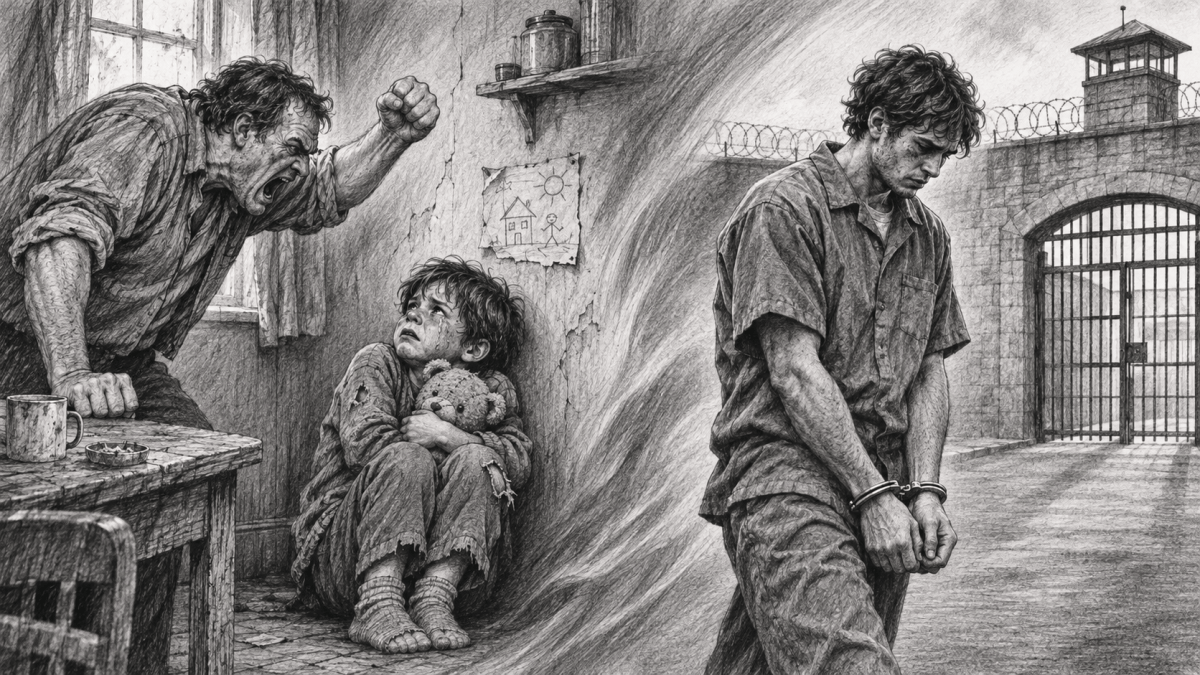
Just imagine a baby living with abusive caregivers. An innocent, helpless little human being who cannot leave, ask for help, contact the police or explain what happens behind the front door! That child is entirely dependent on the very people who may be frightening or harming them. They cannot even put their suffering into words, and may grow up assuming that fear, shouting and humiliation are ordinary features of family life. What an isolating situation! Who notices? Who listens? Who speaks for the child who cannot yet speak? I find it extraordinary that we speak so passionately about family privacy while sometimes overlooking how powerless an infant is inside that supposedly sacred bubble.
England already has a health-visiting programme with statutory reviews during pregnancy and early childhood, and safeguarding is part of that work. I welcome it, but I would go much further: more regular home visits, continuity of professional contact and independent assessments throughout childhood, not merely when somebody has already reported abuse. When children are old enough to communicate, they should also have regular opportunities to meet trained professionals without their parents present, so they can disclose worrying experiences freely and without the immediate fear of being punished for speaking up. Such conversations would need to be age-appropriate, genuinely private and supported by clear procedures to protect a child if abuse is disclosed; confidentiality cannot mean promising secrecy when the child is in danger. No child should have to choose between enduring mistreatment in silence and risking retaliation for telling the truth. We should give children a voice long before a crisis forces society to listen.
None of this would be easy to implement. Regular visits and private consultations would require trained staff, substantial funding, independent oversight, respect for family life and safeguards against discrimination. Nor would professional visits catch every abuser; some people behave impeccably when outsiders are present. But should the possibility of imperfect oversight mean that children have no independent way to be heard? If our society can inspect schools, supervise professionals and review foster placements, why can’t we at least seriously examine a system of continuing parental accountability? The rights of parents matter, but surely the right of a child to be safe deserves equal attention.
The Science: Childhood Does Not Stay in Childhood
The idea that childhood experiences influence adult development is hardly revolutionary, although I sometimes wonder whether people genuinely appreciate just how far-reaching those influences can be. Research on adverse childhood experiences, often referred to as ACEs, has repeatedly linked exposure to abuse, neglect and family dysfunction with increased risks of mental-health difficulties, substance misuse and other adverse outcomes later in life. A major 2017 systematic review and meta-analysis involving 253,719 participants found that experiencing multiple adverse childhood experiences was associated with increased risks across a range of health and behavioural outcomes. The strongest associations included problematic drug use and interpersonal and self-directed violence. These findings do not mean that everyone who grows up in a harmful environment will develop serious problems or become violent. Many people overcome extremely difficult beginnings, while others who experience supportive childhoods still encounter significant difficulties. But surely the evidence makes one thing clear: what happens to children matters, often long after childhood has ended.
And there is another important point: parenting education is not merely a nice idea dreamed up by somebody who believes society should be kinder and more empathetic. The World Health Organization published evidence-based guidelines in 2023 recommending parenting interventions designed to reduce child maltreatment, improve parent–child relationships and prevent emotional and behavioural difficulties. Reviews of intervention trials found that parenting programmes can reduce harsh parenting and child maltreatment while improving positive parenting practices and aspects of children’s behaviour. The evidence varies across different programmes and outcomes, and no course can guarantee perfect parenting. But the underlying conclusion is important: parenting skills can be developed, support can make a difference, and prevention is possible. If we know that appropriate education and support can reduce some forms of harm, why wouldn’t we make those opportunities a compulsory part of preparing people for parenthood? Research supports parenting education, although whether universal mandatory certification and monitoring would outperform other approaches would need careful evaluation.
What particularly disturbs me is how easily destructive practices can become normalised within families. A parent who grew up being shouted at may regard shouting as ordinary discipline. Someone who was constantly compared with siblings may repeat the same comparisons with their own children, believing that humiliation encourages achievement. An adult who was never taught to regulate anger may treat explosive outbursts as an unavoidable feature of family life. The same patterns can travel through generations like an unwanted inheritance, especially when nobody stops to examine them. But understanding this process does not remove individual responsibility. On the contrary, it creates an opportunity to take responsibility: to question what we inherited, recognise damaging behaviour and deliberately choose a different way of treating the next generation.
What If the Parents Are the Problem?
Now for perhaps the most uncomfortable question of all. What happens when parents are not merely inexperienced, overwhelmed or occasionally unreasonable, but consistently incapable of providing a safe and nurturing environment? What if their behaviour is characterised by cruelty, intimidation, emotional neglect or serious violence? We are so accustomed to treating biological relationships as inherently valuable that we sometimes forget something fundamental: children are independent human beings, not extensions of their parents, their property or instruments through which adults can satisfy emotional needs. A child did not request to be born, did not choose their family and does not possess the freedom or resources to escape an unsafe home in the way an adult might. Surely society has a responsibility to offer protection when the people entrusted with that child’s care repeatedly fail to provide it.
This raises a radical possibility. Should some children be raised by trained professionals rather than remain with parents who cause them serious harm? Should we develop more specialised environments where children can receive consistent care, emotional support, education and opportunities to recover from damaging experiences? I can imagine the appeal of highly trained, compassionate adults helping children whose parents are unable or unwilling to meet their needs. Yet we must also ask whether removing children from their families would necessarily improve their lives. Institutional care can produce its own problems, particularly when children lack stable, individual relationships with dependable caregivers. Separation itself can be traumatic, and a professional qualification cannot substitute automatically for love, attachment or belonging. This is why child-protection decisions must be evidence-based, carefully reviewed and focused on the child’s best interests, not merely on whether adults conform to a particular ideal of family life.
Perhaps the most humane approach is not to replace families wholesale, but to recognise that biology should never give adults unlimited authority over children. Where parents are struggling but willing to improve, we should offer effective parenting education, psychological support, practical assistance and access to trained professionals. Where serious abuse or neglect places a child at risk, competent safeguarding agencies must be prepared to intervene, with appropriate independent oversight. And when a child genuinely cannot remain safely with their parents, stable family-based alternatives, including suitable relatives, foster carers or adoptive families, should be considered wherever appropriate. The principle is simple, even if the decisions are difficult: the welfare of the child must matter more than preserving the image of the family.
Maybe We Should Stop Putting Parenthood on a Pedestal
There is another reason I believe the family fairy tale deserves closer examination: the enormous social pressure to marry and have children. For generations, parenthood has been presented not merely as a personal choice but as a necessary stage of adulthood. People who remain single or childfree are frequently questioned, pitied or treated as though they have failed to complete the greates milestone. But what if refusing to become a parent is sometimes one of the most responsible and mature decisions a person can make? What if somebody recognises that they do not possess the desire, patience, emotional resources or willingness to devote decades of their life to raising a child? Surely choosing not to reproduce is preferable to having children simply to satisfy relatives, conform to tradition or avoid social judgement.
I believe we should stop glorifying parenthood as an achievement in itself. Having a child demonstrates the capacity to reproduce, not necessarily the capacity to nurture. Raising a child well, however, requires enormous dedication, flexibility, emotional maturity and the willingness to put another developing human being’s needs into serious consideration. Some parents rise to this responsibility magnificently. Others struggle and learn. Some need substantial support. And unfortunately, some repeatedly expose their children to environments characterised by fear, abuse or neglect. These realities should not be hidden behind sentimental slogans about the sanctity of family. If we genuinely care about children, we must become more interested in the quality of parenting than in the mere fact that somebody has become a parent.
Perhaps the Family Needs Less Worship and More Accountability
For centuries, we have treated family as one of civilisation’s most important institutions. But institutions do not become healthy simply because they are old, familiar or culturally revered. Schools, hospitals, religious organisations and workplaces are all expected to respond to changing knowledge, establish professional standards and address harmful practices. Why should family life be exempt from scrutiny? Why should the place where a human being’s earliest understanding of love, safety, trust and self-worth develops be treated as an almost entirely private experiment? And why should society be content to deal with the consequences of harmful parenting decades later, through mental-health services, addiction treatment, social care or the criminal justice system, when some of that harm might have been prevented much earlier?
I am proposing compulsory parenting education and qualifications, continuing training, regular professional visits and parenting reviews, and independent opportunities for children to disclose abuse safely. This would require fair standards, adequate resources and safeguards against discrimination and unjustified intrusion; I am not proposing that reproduction should be restricted to wealthy or conventionally respectable people. I want us to stop confusing reproduction with competence, privacy with impunity, and family loyalty with unconditional acceptance of harmful behaviour. We should strengthen safeguarding, challenge the normalisation of emotional abuse and create a culture in which children are recognised as individuals with needs and rights of their own. We should encourage adults to examine the dysfunctional patterns they may have inherited before passing them to another generation, and we should stop treating the decision to remain childfree as a deviation from the supposed natural order.
Perhaps the most radical thing we could do is also one of the simplest: stop asking whether a household looks like a respectable family and start asking whether the people inside it feel safe, loved, accepted and respected. A home with two biological parents is not automatically healthier than a home with one parent, adoptive parents, foster carers or another stable caregiving arrangement. What matters is the quality of the care, the security of the relationships and the willingness of the adults to take responsibility for their behaviour. A family should not be judged by how closely it resembles the conventional picture, but by whether the people within it are able to flourish.
And if the family really is the foundation of society, as we are so often told, shouldn’t we be far more concerned about the quality of those foundations? We inspect buildings before allowing people to occupy them. We train professionals before entrusting them with vulnerable individuals. We assess prospective adopters before placing children in their care. Yet we continue to treat preparation for biological parenthood as something largely optional, as though love and competence will simply materialise when a baby arrives. I believe compulsory qualifications, regular reviews and independent access to children should be part of a far more accountable system. Perhaps we don’t need fewer families. Perhaps we need fewer families built on ignorance, fear, emotional neglect and inherited dysfunction — and far more adults who understand what it actually means to raise a human being. Because the real fairy tale is not the belief that families can be wonderful. It is the belief that they are wonderful simply because they are families.
Research and Further Reading
Hughes, K. et al. (2017). The effect of multiple adverse childhood experiences on health: a systematic review and meta-analysis. The Lancet Public Health. https://pubmed.ncbi.nlm.nih.gov/29253477/
World Health Organization (2023). WHO guidelines on parenting interventions to prevent maltreatment and enhance parent–child relationships with children aged 0–17 years. https://www.who.int/publications/i/item/9789240065505
UK Government. Child adoption: Adoption assessment. https://www.gov.uk/child-adoption/adoption-assessment
NICE (2017). Child abuse and neglect: Recommendations. https://www.nice.org.uk/guidance/ng76/chapter/Recommendations
United Nations. Convention on the Rights of the Child, particularly Articles 3, 9, 18 and 19. https://www.unicef.org/child-rights-convention/convention-text
Stanford Encyclopedia of Philosophy. Parenthood and Procreation. https://plato.stanford.edu/entries/parenthood/
UNICEF. Children in alternative care. https://www.unicef.org/protection/children-in-alternative-care
RSPCA. How to adopt a rescue cat or kitten. https://www.rspca.org.uk/findapet/adopt/cat
UK Government. Healthy Child Programme: health visiting (ages 0 to 5). https://www.gov.uk/government/publications/delivery-of-the-healthy-child-programme/part-2-health-visiting-ages-0-to-5
Department for Education. Keeping Children Safe in Education. https://www.gov.uk/government/publications/keeping-children-safe-in-education–2
Author’s note: This essay is a philosophical exploration of parenthood, children’s rights and social responsibility. It does not propose restrictions on reproductive freedom or the automatic removal of children from their families. It advocates compulsory parenting education and qualifications, continuing reviews and stronger independent safeguarding for children, while recognising that these proposals would require legal, ethical and empirical scrutiny.






Leave a Reply