The Power of Travel Journaling: Why Portugal Still Lives in My Senses Eight Years Later
How an old-fashioned notebook, almost no internet and ten days in Portugal created memories more vivid than thousands of photographs.
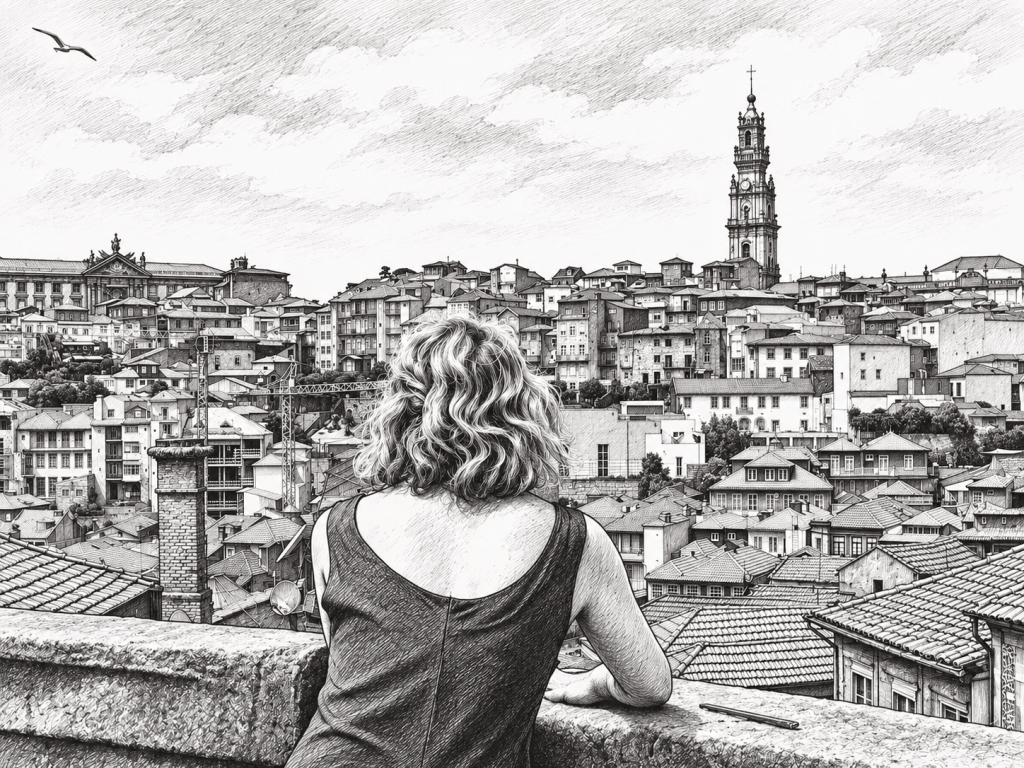
Why Do Some Journeys Stay With Us Forever?
Those of you who have been reading Eccentricize for a while probably know that I absolutely adore travelling. During my extended journey through South and Southeast Asia in 2025, I spent eight months exploring countries including India, Singapore, Vietnam, Laos, Thailand and Cambodia. India became particularly special to me. I spent over two months completing my yoga teacher training in Rishikesh, developing wonderful connections with my teachers and local people, and experiencing that extraordinary sensation of being completely at home thousands of miles away from home. On another journey, I explored Rajasthan, Varanasi and Agra, immersing myself in the sensory chaos of Indian life. India has left such an enormous impression upon me that I could probably write an entire book about it. But something rather peculiar occurred to me recently. Of all the countries I’ve visited — approximately twenty so far — there is another that remains astonishingly vivid in my memory: Portugal. And unlike India, where I spent months, I visited Portugal for only ten days, back in the summer of 2018.
Almost eight and a half years have passed, yet I can still remember Portugal with remarkable clarity. The smells, the colours, the flavours, the strange noises drifting through open windows, the textures of buildings, the peculiar atmosphere of particular streets. Sometimes I feel as though I could close my eyes and transport myself directly into one of those scenes. I remember specific meals, tiny architectural details, snippets of conversations, the sensation of cold air-conditioning against my skin, and the wonderful smell of the Atlantic Ocean. Why? Why should a relatively brief journey remain so extraordinarily alive in my imagination when other, much more recent experiences have already begun fading into a rather indistinct collection of photographs?
And then I rediscovered something rather wonderful: my old Portugal travel journal.
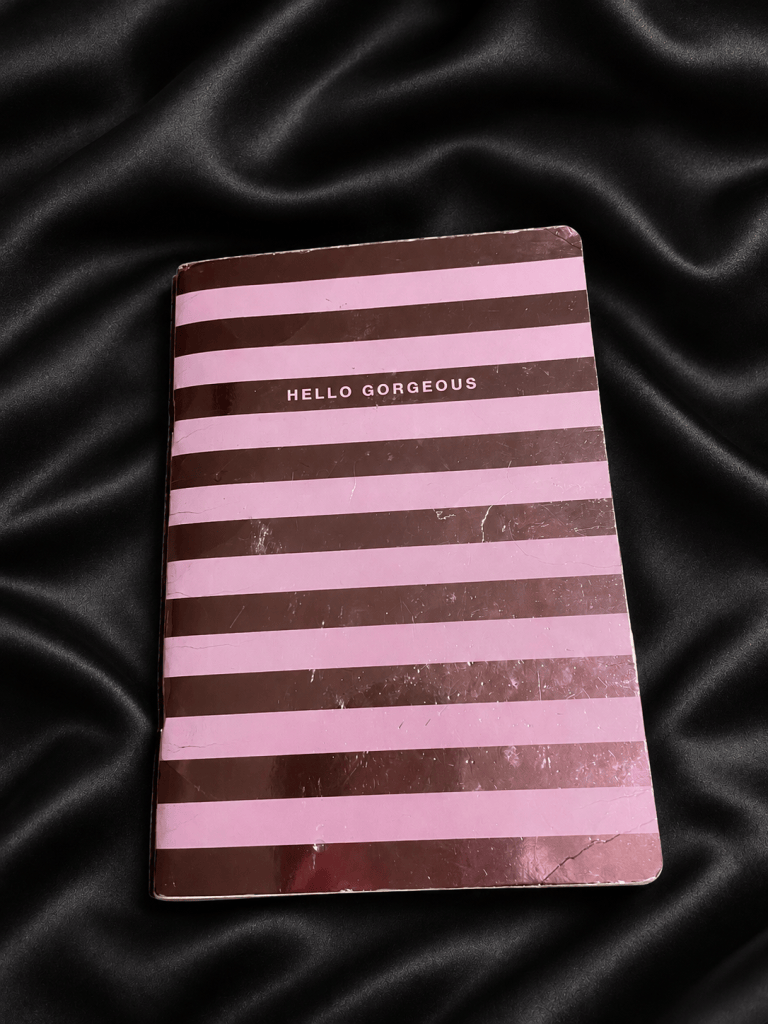
For the entire duration of that journey, I had been keeping a detailed, handwritten diary. Yes, an actual paper notebook! How outrageously eccentric in our increasingly digital world! It had a beautiful cover decorated with shiny gold and iridescent purple stripes, and I carried it around as faithfully as some people carry their smartphones. I scribbled in it while waiting for restaurant meals, sitting in cafés, travelling by public transport and returning to my hotel room after long days of exploration. I didn’t simply record where I’d been. I described what I’d seen, tasted, smelled, heard and felt. I wrote about peculiar people, extraordinary buildings, delicious food, unexpected inconveniences and wonderfully bizarre encounters. And now, all these years later, those pages have become a little time machine.
Portugal Before Mobile Data Invaded my Travels
When I travelled to Portugal in 2018, I had an old Samsung smartphone and very limited mobile data. I wasn’t constantly connected to the internet. I couldn’t simply spend hours scrolling through social media, checking notifications, investigating every restaurant review or watching other people’s lives unfold on a tiny screen. Instead, I relied on paper maps, handwritten notes and my own ability to navigate unfamiliar places. I sometimes got lost, occasionally became confused and undoubtedly wasted time searching for things that modern navigation apps could have located in seconds. But I was also paying attention to my surroundings in a way that I suspect I don’t always manage nowadays.
Without a constant stream of digital entertainment competing for my attention, the world around me became my playground. An old dilapidated building, a funny smell, an unexpected conversation or a curious architectural detail could occupy my imagination for ages. Instead of immediately reaching for my phone whenever I found myself alone in a café, I reached for my notebook. I observed, reflected, wondered and wrote. I didn’t realise it at the time, but I was creating an astonishingly detailed record of a world that might otherwise have gradually dissolved into a vague memory of colourful buildings and sunny beaches.
Let me show you what I mean.
Faro: Familiar Storks, Crumbling Buildings and the Terrifying Howls from Next Door
My hotel in Faro overlooked a street called Infante Dom Henrique. I remember lemon trees, old buildings with peeling plaster, walls covered in graffiti and the unsettlingly weathered appearance of the neighbourhood. Some buildings looked almost abandoned, their façades crumbling and their surfaces discoloured by years of exposure to the elements. Yet there was something irresistibly picturesque about all that imperfection. The street wasn’t polished or manicured. It possessed a raw, unrefined charm. And then there were the storks! I remember looking up and discovering their enormous nests balanced on rooftops and chimneys. It was such a lovely surprise, because storks were wonderfully familiar to me from my childhood in Poland. I had always associated these birds with Polish villages, fields and countryside chimneys. In fact, growing up, I rather assumed Poland must be their favourite country! And here they were, apparently enjoying Portugal just as much. Some stood perfectly motionless on their nests, their long legs and slender bodies forming peculiar silhouettes against the sky. Others produced that unmistakable rapid clattering sound with their beaks, particularly in the mornings and evenings. It’s called bill-clattering, and it has a wonderfully distinctive, almost wooden quality — clack-clack-clack-clack! The sound brought back childhood memories while simultaneously becoming part of the soundtrack of my Portuguese adventure.
But the storks’ clattering was positively soothing compared with the noises coming from a neighbouring building.
Right next to my hotel stood an old, dilapidated structure. From the street, it looked almost abandoned. Its exterior was shabby, the plaster damaged, and the windows appeared to have been covered with plywood boards. You wouldn’t necessarily expect anything particularly interesting to be happening inside. And yet people gathered there, apparently entering through the back of the building, and what happened next was unlike anything I had ever heard.
They howled.
And I mean howled.
Not ordinary singing, not a few enthusiastic voices raised in conversation, not even the kind of loud chanting one might associate with a particularly emotional religious service. These were extraordinary, prolonged, almost animalistic cries. Human voices rose together in unison, producing sounds that reminded me of beasts howling in some collective state of agitation or ecstasy. At times the noise swelled into a deafening roar, voices overlapping, rising and falling, becoming increasingly intense before subsiding and beginning again. It was as though dozens of people were surrendering themselves to some powerful, shared experience that I, sitting outside on my balcony, could neither see nor comprehend.
I sat on my hotel balcony listening in the evenings, utterly discombobulated.
There was something deeply unsettling about those sounds. I remember experiencing strange sensations as I listened, a mixture of unease, nervousness, curiosity and fascination. The cries seemed to penetrate the ordinary evening sounds of the street and create an atmosphere that felt completely removed from everyday life. I couldn’t see the people producing them. I couldn’t observe their gestures, expressions or movements. All I had were those disembodied voices emerging from a seemingly uninhabited, decaying building whose boarded windows concealed whatever was taking place inside.
And perhaps that was what made the whole experience so unnerving. My imagination had absolutely nothing to work with except the sounds.
Were they taking part in some intense religious ritual? A spiritual ceremony involving collective chanting, altered states of consciousness or ecstatic worship? Was this some obscure congregation whose practices involved howling, screaming and surrendering to some spiritual forces? Could it have been some form of deliverance ritual or exorcism?
I found myself entertaining all sorts of possibilities.
The gathering certainly sounded ritualistic to me. There was an unmistakable collective rhythm and intensity to those voices, as though the participants were engaged in something deeply meaningful to them. But what exactly were they doing? Why were they howling like that? And why were these extraordinary proceedings taking place inside a building that looked so thoroughly neglected from the outside?
I never found out.
Even now, almost nine years later, I can vividly recall sitting on that balcony in the evening, listening to the strange chorus rising from the building next door. Of all the things I experienced in Faro, this remains one of the most haunting. It was frightening and fascinating in almost equal measure. I wanted the noise to stop, yet I also wanted to keep listening. I felt uneasy, but my curiosity was absolutely ravenous.
And here’s an appeal to anyone reading this who knows Faro, particularly the area around Rua Infante Dom Henrique: does this description sound familiar? Have you encountered a religious or spiritual community whose ceremonies involve prolonged, collective howling, screaming or ecstatic chanting? I would absolutely love to understand what I witnessed — or rather, what I heard — back in 2018. Perhaps somewhere among Eccentricize’s readers is somebody who can finally solve this extraordinary little mystery for me!
The Food I Can Still Taste Eight Years Later
And then there was the food. Oh, the food! My journal contains very detailed descriptions of meals that I might otherwise have forgotten entirely. I remember sitting in a quiet restaurant enjoying a delicious tuna pâté accompanied by cooked carrots and lovely crusty bread presented in a shallow wicker basket. The pâté was rich and savoury, the bread satisfying, the whole meal beautifully simple. On another occasion, I enjoyed sweet potatoes with salted cod and chickpeas, a combination of flavours and textures that I found absolutely delightful. The restaurant itself was memorable, with rustic stone walls that made the interior resemble a cave. It was wholesome food, unusual surroundings and the pleasure of savouring something delicious in a foreign country on a quiet, lazy Sunday afternoon.
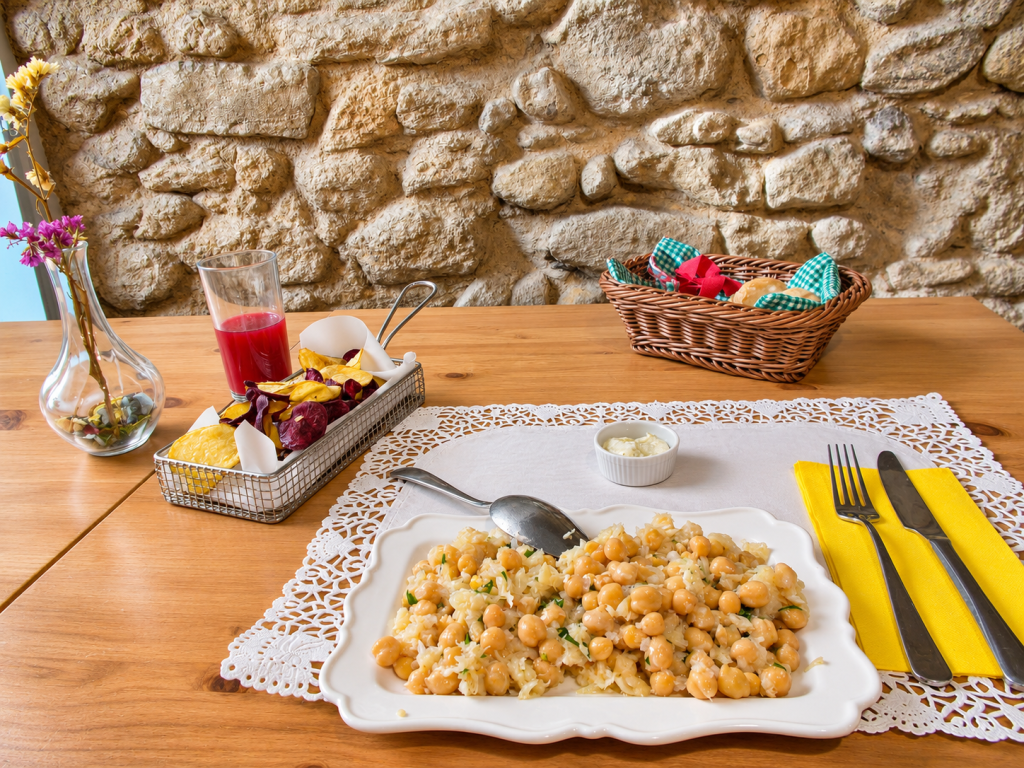
I remember visiting on a Sunday when the restaurant was almost completely empty. The atmosphere felt languid, unhurried, almost sleepy. In the streets, the pace of life seemed to have slowed considerably. Some shops were closed, and I remember seeing people relaxing in cafés and taverns, watching football. What a contrast with the frantic productivity culture we so often celebrate! There was something deeply appealing about a place where Sunday appeared to have retained its original purpose: doing very little, eating something delicious and hearty and allowing time to pass.
And the extraordinary thing is that I don’t merely remember eating these meals. I remember the atmosphere surrounding them. The quiet restaurant, the rustic walls, the bread basket, the sense of having nowhere particularly urgent to be. Those details are precisely what turn a meal into a memory.
Faro Cathedral: Baroque Splendour, Human Bones and Memento Mori
On another day, I visited the magnificent Sé de Faro, the Cathedral of Saint Mary. According to my journal, admission cost just €3.50 at the time. What an astonishing amount of beauty and history for such a modest price! The cathedral contains richly decorated Baroque altars, elaborate gilded woodcarvings, religious sculptures and an extraordinary collection of sacred art. I remember being particularly fascinated by the ornamentation surrounding the figures of saints and the plump little cherubs decorating some of the religious imagery. There was something almost theatrical about the abundance of gold, the intricate carving and the overwhelming enthusiasm with which every available surface seemed to have been embellished.
Climbing the stone steps to the cathedral tower was another unforgettable experience. From above, I could admire Faro’s rooftops, narrow cobbled streets, lemon and orange trees, church towers and the surrounding landscape. I remember the old bells, the sunlit buildings and the wonderful feeling of seeing the city arranged beneath me like a miniature architectural model. The cathedral itself has a fascinating history, with medieval origins and later Baroque additions, while its museum preserves religious art, ceremonial vestments, silverwork and reliquaries associated with centuries of Catholic worship.
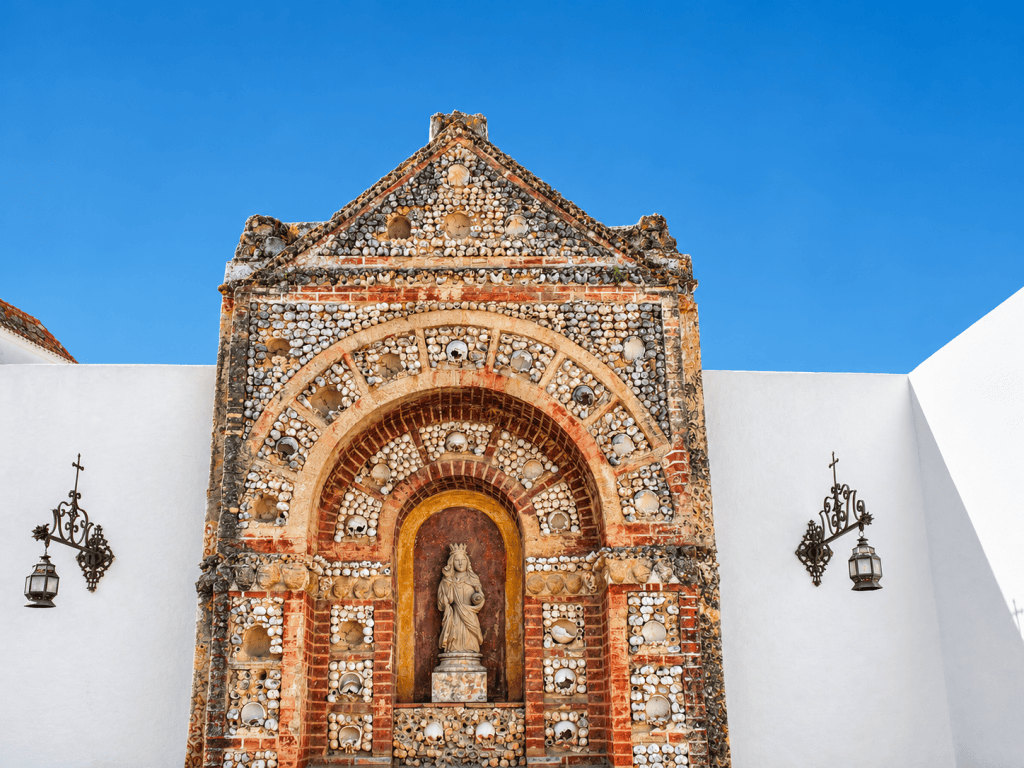
But perhaps the most extraordinary discovery was a small chapel or shrine incorporating actual human bones and skulls! Yes, human skulls! There they were, arranged as part of a religious structure, transforming the remains of people who had once been very much alive into a startling architectural statement. I remember thinking that the Portuguese were an extraordinarily resourceful nation. Using human skulls as building material — now THAT is resourcefulness taken to a rather extraordinary level! Of course, these ossuary traditions were intended to communicate something much deeper than architectural ingenuity. They expressed the ancient Christian idea of memento mori: remember that you must die. Surrounded by those silent skulls, I found myself contemplating the extraordinary fragility of human existence. All those people had once eaten, laughed, argued, loved, worried and hurried through their days, just as we do. And now their remains were confronting visitors with the one destination that awaits us all. A slightly macabre attraction, perhaps, but certainly not one I was likely to forget.
A Train to Lagos and my First Atlantic Dip
My Portugal journal also records a trip to the beach on Faro’s Proximo bus, Line 16. The journey took approximately twenty-five minutes, and I remember arriving at a clean beach with a flat shoreline and no cliffs. Instead of soft, powdery sand, the beach had a coarse, gritty texture, with rough grains that scraped lightly against my feet. I stepped into the Atlantic Ocean for the first time in my life. That alone was worth recording! There is something strangely thrilling about entering a body of water you’ve only previously encountered on maps.
On 31 July 2018, I took a train from Faro to Lagos. My return ticket cost €14.80, and the journey lasted approximately an hour and a half. The train was almost empty apart from a handful of German-speaking tourists. It arrived well ahead of departure, which I found wonderfully convenient, although the air-conditioning was so powerful that the inside felt positively refrigerated. I remember the ticket inspector greeting passengers with a cheerful bom dia, and I remember arriving at the modern station in Lagos, with its glass walls and wooden flooring.
In Lagos, I joined a short motorboat excursion in search of dolphins. The boat was also full of German tourists! We spotted marine creatures that, from a distance, reminded me of orcas. It was another of those lovely little adventures that might have disappeared from memory had I not written about it afterwards. And notice how specific these recollections are: not merely I visited Lagos, but the price of the ticket, the cold train, the sound of Portuguese greetings and the details of the station. This is the remarkable power of paying attention and writing things down.
Porto: Cork Shops, Passion-Fruit Cake and the Smell of the Atlantic
By 3 August, I was in Porto, planning a visit to Foz do Douro, the coastal district where the Douro River meets the Atlantic Ocean. I remember sitting in a café, drinking refreshing lime juice and enjoying a delicious passion-fruit cake while investigating the bus routes. That combination of citrus freshness and sweet, fragrant passion fruit remains lodged somewhere in my sensory memory. Afterwards, I wandered through shops displaying an extraordinary variety of products made from cork: shoes, sandals, handbags, purses, pouches and little accessories. Cork seemed to have been transformed into practically everything imaginable! I bought a charming little pencil case and remember wishing I could have afforded more. Some products cost €30–€50, which seemed rather extravagant to me at the time. I was saving towards a deposit for my first home, so even beautiful cork handbags had to compete with my much larger financial ambitions.
Eventually, I bought a forty-eight-hour hop-on, hop-off sightseeing ticket that also included a cruise along the River Douro. I travelled towards Foz and spent a large part of the day exploring its beaches. These weren’t the smooth, inviting stretches of sand I had imagined. There were pebbles, rocks and enormous underwater boulders covered in slippery algae. I attempted to swim, but the sensation of my feet encountering those slimy submerged obstacles was rather unsettling. At one point, I even became entangled among them! Nevertheless, the cooling sensation of the Atlantic against my skin was delightfully refreshing, particularly because Porto was experiencing temperatures of approximately 35°C during my stay. That was exceptionally hot for me.
But what I remember most vividly isn’t the heat. It’s the smell of the Atlantic at Foz. That rich, slightly sweet, wonderfully marine aroma of seaweed and algae, rising from the coastline and drifting through the warm air. I can still remember it as I sat on the upper deck of the open-top sightseeing bus, breathing in the sea breeze while the Portuguese coastline unfolded around me. There was something intoxicating about that combination of warmth, salt, vegetation and ocean. A photograph could have captured the coastline perfectly, but it could never have preserved that smell. My journal, however, recorded it. And when I read those words now, the sensation seems to return.
After several hours by the ocean, I went exploring again and eventually visited a thoroughly bizarre art exhibition. That particular adventure deserves an article of its own. For now, let me simply say that Portugal was proving remarkably generous in supplying me with eccentric experiences!
Porto’s Blue Tiles, Extraordinary Sandwiches and Six Bridges
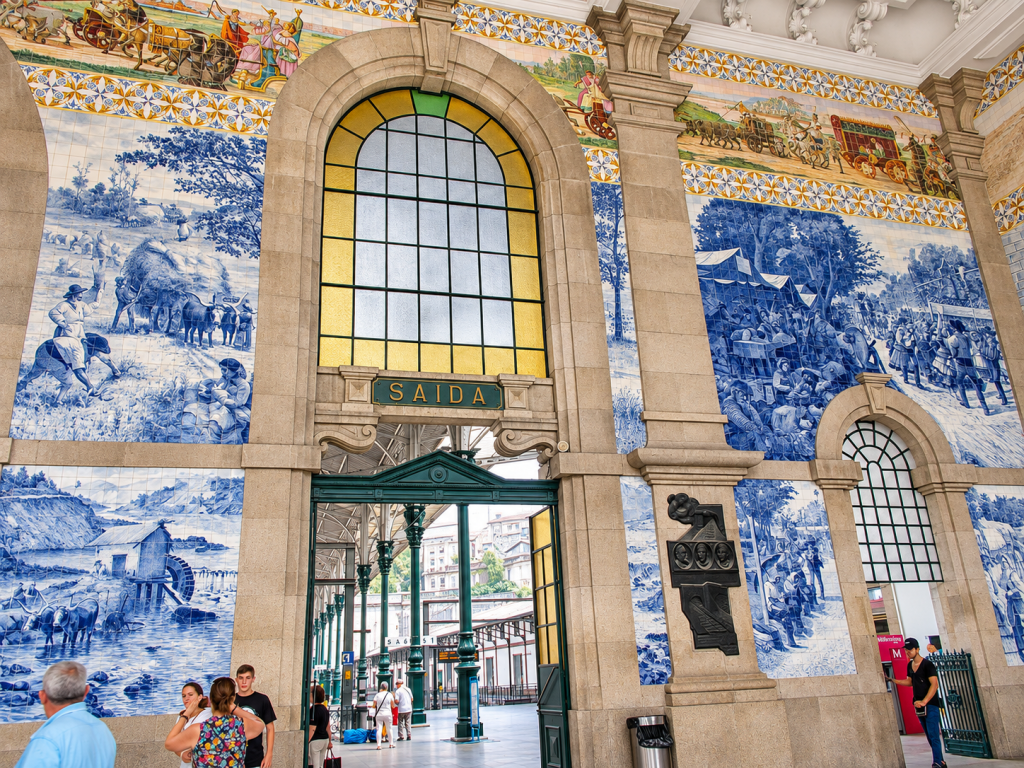
On 4 August, I spent a considerable amount of time sitting beside the Douro River, close to one of Porto’s enormous bridges, simply admiring the surroundings. I also visited São Bento railway station, which is surely one of the most beautiful railway stations I’ve ever encountered. Its walls are covered with magnificent blue-and-white Portuguese tiles, known as azulejos, depicting scenes from the country’s history and everyday life. Imagine going to catch a train and finding yourself surrounded by an enormous work of art!
The following day brought one of my most memorable culinary discoveries: the legendary francesinha, Porto’s famously indulgent sandwich. I ordered a vegetarian version, priced at €7.50 according to my journal. What arrived was glorious! A towering, layered beauty filled with cooked vegetables including cabbage, carrots and sweetcorn, covered with melting cheese, topped with a fried egg and surrounded by a generous pool of savoury sauce. It was less a conventional sandwich than an entire culinary 3D delight held together by cheese. My taste buds were euphoric! I also enjoyed salgadinhos, small savoury snacks in a shape resemblin Polish dumplings, including a delicious crunchy pastry filled with potato, spinach and cheese. One cost just €1.
I spent another long day travelling around Porto on the sightseeing bus. Sometimes I was almost alone on the upper deck, which felt like having my own private moving observation platform. I listened to recordings about Porto’s history, architecture and culture, with the gaps filled by beautifully nostalgic Portuguese songs. Those melodies, combined with the sunshine and views of buildings climbing the hillsides, created such an atmospheric experience. The houses seemed layered on top of one another, their varied colours and shapes forming a dense, picturesque landscape.
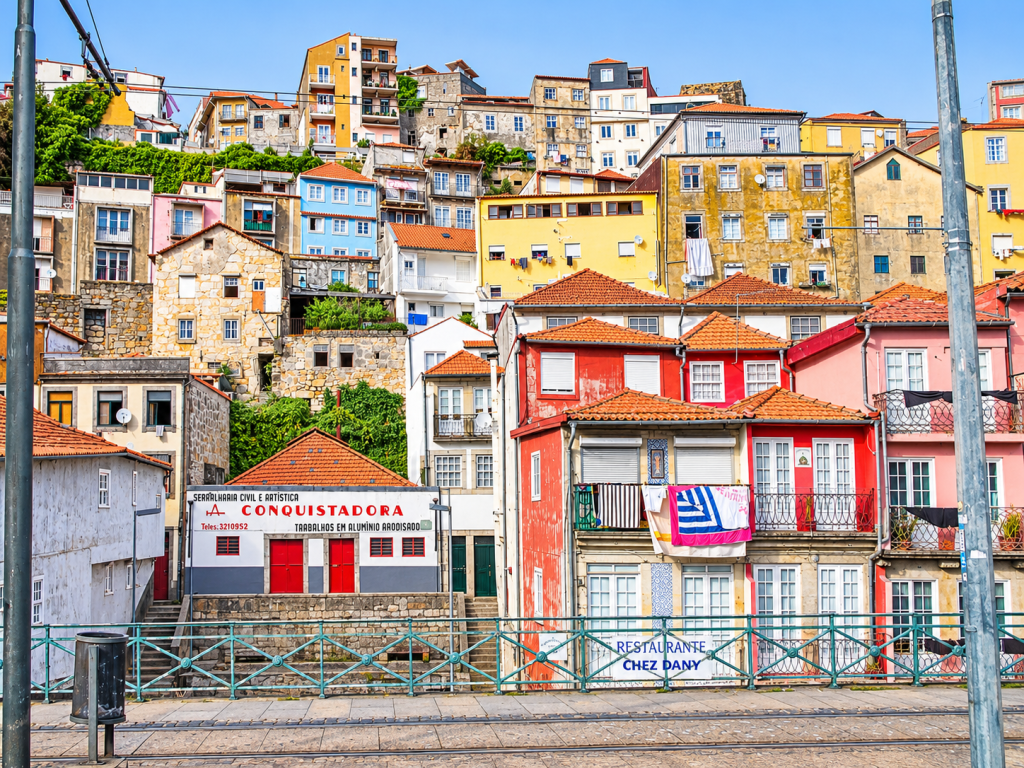
The ticket also included a cruise beneath Porto’s famous six bridges. I had expected something rather brief, but the journey lasted approximately forty minutes. What a pleasant surprise! The boat glided along the Douro while the city rose around us in tiers of colourful buildings. I remember the reflections dancing on the water, the warmth of the sunshine and the pleasure of watching enormous bridges pass overhead. Once again, I wasn’t trying to capture every possible angle for social media. I was simply sitting there, looking, listening and absorbing the experience.
Livraria Lello: A Bookshop That Led Me to Another Book
One of my favourite discoveries in Porto was Livraria Lello, the extraordinarily ornate bookshop famous for its sweeping red staircase, elaborate wooden details, decorative plasterwork, stained glass and shelves filled with books in numerous languages. I remember admiring the carved ornamentation, including rosette-like decorative details.

At the time, the shop was widely associated with J. K. Rowling and the magical world of Harry Potter. I later learned that this popular story wasn’t accurate: Rowling clarified in 2020 that she had never visited Livraria Lello while living in Porto. But honestly, the bookshop is sufficiently magnificent without requiring any fictional connection to Hogwarts!
What I find especially interesting now is that my journal records some of the subjects and names I encountered while browsing its shelves. I became curious about the Bauhaus movement, the influential German school of art and design, and about the Portuguese poet Fernando Pessoa. And then I discovered a book whose premise fascinated me: Blindness, by the Portuguese Nobel Prize-winning author José Saramago.
The novel imagines an epidemic in which people suddenly begin losing their sight. As the mysterious condition spreads, the authorities attempt to isolate those affected, placing them in quarantine inside an institution that gradually descends into fear, cruelty and disorder. It’s a disturbing premise, raising questions about civilisation, vulnerability, power and what might happen when the ordinary structures of society break down. I remember finding the description so intriguing that I wanted to read the book immediately. Yet somehow, eight years later, I still haven’t got around to it! Perhaps rediscovering this journal is the universe’s way of reminding me that I have some unfinished literary business.
Later that afternoon, I enjoyed enormous battered prawns and an ovo mole, one of Portugal’s wonderfully sweet egg-yolk confections. The filling was bright yellow-orange, rich and sticky, quite unlike anything I was accustomed to eating. Another flavour added to the collection!
Lisbon: Ghostly Howling, Purple Streetlights and an Exploding Bus Tyre
And then came Lisbon.
My journey there began under rather extraordinary circumstances. The night before my departure, I barely slept because of continuous howling noises coming from afar. I couldn’t establish whether they were coming from dogs or some other animals, but they sounded strangely wolf-like and deeply unsettling. Then, as morning approached, the streets became enveloped in thick, milky fog. The buildings appeared to dissolve into pale shapes, and the streetlights glowed through the mist in eerie shades of yellow and purple. It was like walking through the opening scene of a horror film! There I was, dragging myself through misty streets in search of my bus stop, exhausted from the sleepless night and surrounded by mysterious lights. Not exactly the most cheerful beginning to a holiday excursion, but certainly memorable.
The bus journey to Lisbon was equally eventful. I managed to secure a front seat, allowing me to observe the road unfolding ahead, and my fellow passenger was a very large gentleman from New Zealand. Outside, the heat was intense. And then something happened that I certainly hadn’t anticipated: one of the bus’s front tyres burst!
Yes! An actual tyre blowout in the middle of a Portuguese journey!
We all climbed out and stood examining the shredded tyre, rather shocked by the situation. The sun was blazing, the heat was oppressive, and we waited approximately forty minutes for a replacement bus. Fortunately, nobody was injured. I remember feeling enormously relieved that the incident hadn’t resulted in anything more serious.
And then, after surviving the heat outside, I found myself freezing inside the replacement vehicle! The air-conditioning was turned up so much that my summer dress and flimsy scarf offered practically no protection. I sat there trembling, wondering how it was possible to experience both sweltering heat and near-Arctic conditions within the same journey. By the time I arrived in Lisbon, approximately four hours after setting off, I felt completely exhausted and numb.
Naturally, I revived myself with food. I bought a generous sandwich filled with goat’s cheese, a lemon-flavoured cheesecake with crushed chocolate biscuits, and a refreshing pineapple-and-mint juice. What an absolutely wonderful combination! Then came another adventure: finding my Airbnb accommodation without reliable digital navigation. I became hopelessly lost, wandered around an enormous portion of Lisbon’s old streets and eventually reached my destination in the evening, hot, tired, confused and thoroughly ready to collapse.
Would Google Maps have made that journey easier? Undoubtedly.
Would it have made such an entertaining entry in my travel journal? Probably not!
Why Writing About a Journey Can Be More Valuable Than Photographing It
Now, I haven’t described all these experiences simply to entertain you with stories about prawns, weird religious gatherings, slippery seaweed and exploding bus tyres — although I sincerely hope you’ve enjoyed them! I’ve described them because they demonstrate something I’ve come to appreciate enormously: the act of recording our experiences in words can transform how we remember them.
When I recently rediscovered my Portugal journal, I was astonished by the richness of the memories it contained. The descriptions didn’t simply remind me that I had visited particular places. They seemed to reconnect me with the sensations of actually being there. I could almost hear the storks clattering above Faro, smell the algae along the Atlantic coast, feel the freezing air-conditioning on the train and taste the vegetarian francesinha. Even the deeply unsettling howling before my Lisbon journey returned to my imagination with remarkable clarity.
There is an interesting psychological explanation for why this might happen. Memories are not perfect recordings stored somewhere inside our brains. They are reconstructed, and the details we notice, attend to and later revisit can influence what we remember. Writing a journal encourages us to select meaningful experiences, describe them, reflect upon them and return to them. It asks us to do something more demanding than simply point a camera at an object: it asks us to notice what makes that object, person or moment memorable.
Research also suggests that the relationship between photography and memory is more complicated than we might assume. In a study published in Psychological Science, researcher Linda Henkel found that participants who photographed entire objects during a museum tour sometimes remembered fewer details than those who simply observed them. Interestingly, photographing a specific detail more deliberately did not produce the same impairment. In other words, taking photographs isn’t inherently bad for memory, but the way we direct our attention matters.
And that, I think, is the crucial issue.
We can photograph a beautiful building without ever examining its architecture. We can record a video of the sea without noticing its smell. We can take twenty photographs of our lunch without paying particular attention to the flavours. We can become so preoccupied with capturing our experience with photos and videos that we forget to experience it in the first place.
Less Internet, More World
I increasingly wonder whether constant internet access has changed not merely how we travel, but how deeply we immerse ourselves in the places we visit. The smartphone is an extraordinary invention, and I certainly wouldn’t suggest abandoning it altogether. Navigation, translation, emergency communication, transport information and accommodation bookings are enormously useful. But somewhere along the way, many of us seem to have developed an almost automatic compulsion to consult our screens whenever the outside world becomes temporarily quiet.
Waiting for a restaurant meal? Check the phone. Sitting on a train? Check the phone. Resting on a bench beside a beautiful river? Check the phone. Standing on a beautiful beach? Take photographs, upload them, check the reactions, perhaps scroll through somebody else’s beach photographs while standing on an actual beach yourself!
How wonderfully absurd!
During my Portugal journey, the lack of convenient internet access created enormous stretches of uninterrupted attention. I had time to wonder about the people inside that peculiar building in Faro. I had time to watch storks standing motionless on rooftops. I had time to study the decorative tiles inside railway stations and absorb the nostalgic music playing through the sightseeing bus’s audio system. I had time to sit beside the Douro River without feeling that I ought to be doing something else.
And, crucially, I had time to write.
I don’t believe every traveller needs to abandon the internet completely. But I do believe we could benefit enormously from deliberately creating periods of digital silence, especially when visiting somewhere new. Download the essential maps beforehand, arrange the practical necessities, let somebody know where you are, and then allow yourself a few hours without constantly checking the online world. Listen to the sounds of a foreign city. Observe its inhabitants. Smell the food drifting from restaurants. Study unfamiliar architecture. Let your mind wander. And when something delights, intrigues or unsettles you, write about it.
Not for an audience. Not for social media. Not because the experience needs to be converted into content.
Simply because you were there, and because being there deserves your attention.
My Return to Old-Fashioned Travel Journaling
My rediscovery of that beautiful purple-and-gold notebook has inspired a new resolution. I’m going to return to handwritten travel journaling. I have Cyprus planned for December and Marrakech, Morocco, for January, where I’m also hoping to pursue another of my increasingly ambitious running goals. And this time, I want to take more than photographs home with me. I want to record the little details that might otherwise vanish: the expressions people use, the smells drifting through streets, the texture of food, the sounds of conversations I can’t entirely understand, the unexpected inconveniences, the absurd coincidences and those wonderfully strange moments that never appear in travel brochures.
I want to write while sitting in cafés, waiting for meals, travelling on buses and relaxing in my accommodation after an exhausting day. Perhaps I’ll even disable mobile roaming occasionally, once I’ve made sure I have everything I need for navigation and safety. Imagine that! A twenty-first-century traveller voluntarily switching off the internet and opening a paper notebook!
How eccentric! 😂
And I want to encourage you to try it too. You don’t need an expensive leather-bound journal, beautiful handwriting or any particular literary talent. A cheap notebook and a pen will do perfectly well. Write a few sentences about something that surprised you. Describe the smell of a market, the taste of a new dish or the sound of birds outside your window. Record a conversation, an unexpected kindness, an interesting building or a small inconvenience that might become hilarious in retrospect. Don’t worry about composing beautiful prose. Write honestly, immediately and with curiosity.
Because one day, years from now, you might open that notebook and discover that the world you visited has been waiting patiently inside its pages.
Don’t Just Collect Photographs. Collect Experiences.
I still love photography. I enjoy beautiful images, and I understand the desire to capture remarkable places. But photographs preserve only part of a journey. They cannot reproduce the smell of seaweed on a hot afternoon, the taste of an extraordinary meal, the cold shock of air-conditioning system or the peculiar combination of fascination and unease inspired by people screaming in unison in a neighbouring building.
And even the most sophisticated camera cannot record exactly what it felt like to be you in that moment. Words can help us recover some of that feeling. Perhaps that’s why Portugal remains so vivid in my imagination. I didn’t simply travel through it. I paid attention to it, wrote about it and allowed its quikiness to occupy my mind. I gave ordinary moments the same consideration as famous landmarks. A stork on a chimney could become as interesting as a cathedral. A plate of food could become as memorable as a panoramic view. A broken bus could become an adventure rather than merely an inconvenience.
My journal didn’t make Portugal extraordinary. It helped me recognise just how extraordinary the ordinary moments already were.
So the next time you travel, by all means take photographs. Capture that magnificent sunset, that spectacular building and that ridiculous selfie. But consider putting your phone away afterwards. Sit somewhere comfortable, open a notebook and give the world your undivided attention. You may discover that the most precious souvenir isn’t something you can photograph, buy or upload.
It’s the experience you were fully present to live — and the memory you took the time to preserve.
A Little Note About the Photographs
Before you wonder why an article overflowing with vivid descriptions of Portugal contains so few actual photographs, I owe you a little explanation — and an apology!
I did take photographs during my 2018 adventure. Quite a few, in fact! Unfortunately, sometime afterwards, my laptop suffered a rather unfortunate encounter with a cup of tea. The tea won. My laptop was flooded, and I never managed to recover my Portuguese photographs.
The only pictures I still have are those I happened to share on Facebook after returning from the trip. So if the photographic documentation accompanying this article seems rather modest, that’s the reason. I’m genuinely sorry I can’t show you more of the places I’ve described.
And isn’t there something wonderfully ironic about that?
My digital photographs disappeared in a puddle of tea. My handwritten journal survived — and eight years later, it’s still taking me back to Portugal.
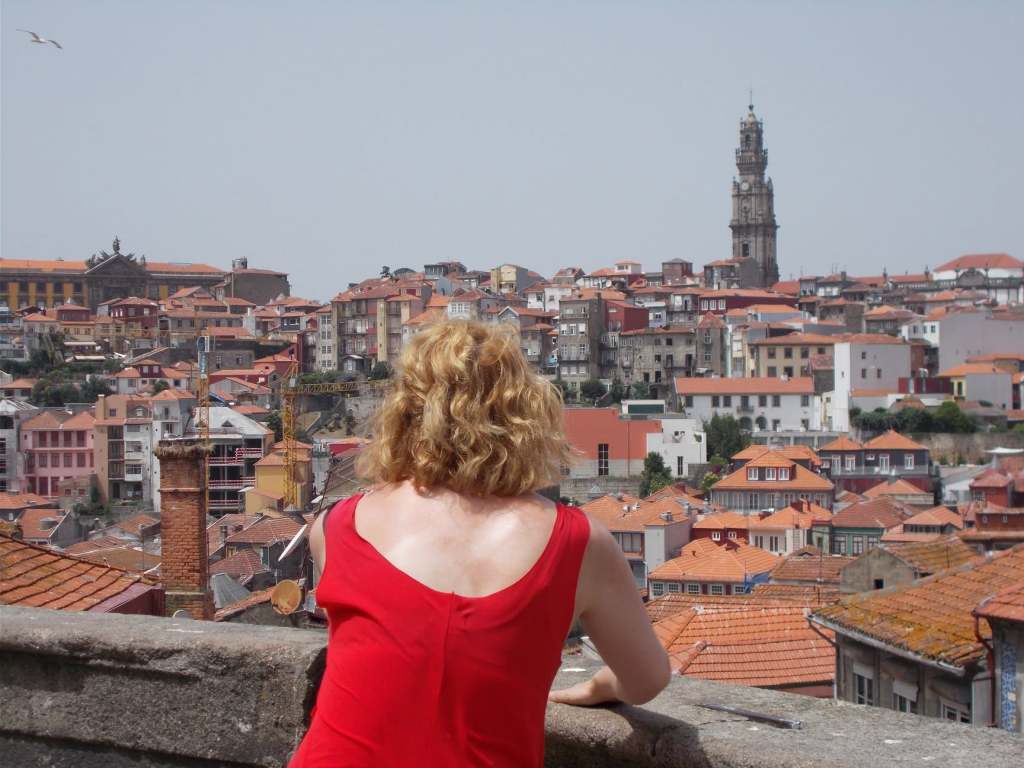
Dora in Porto 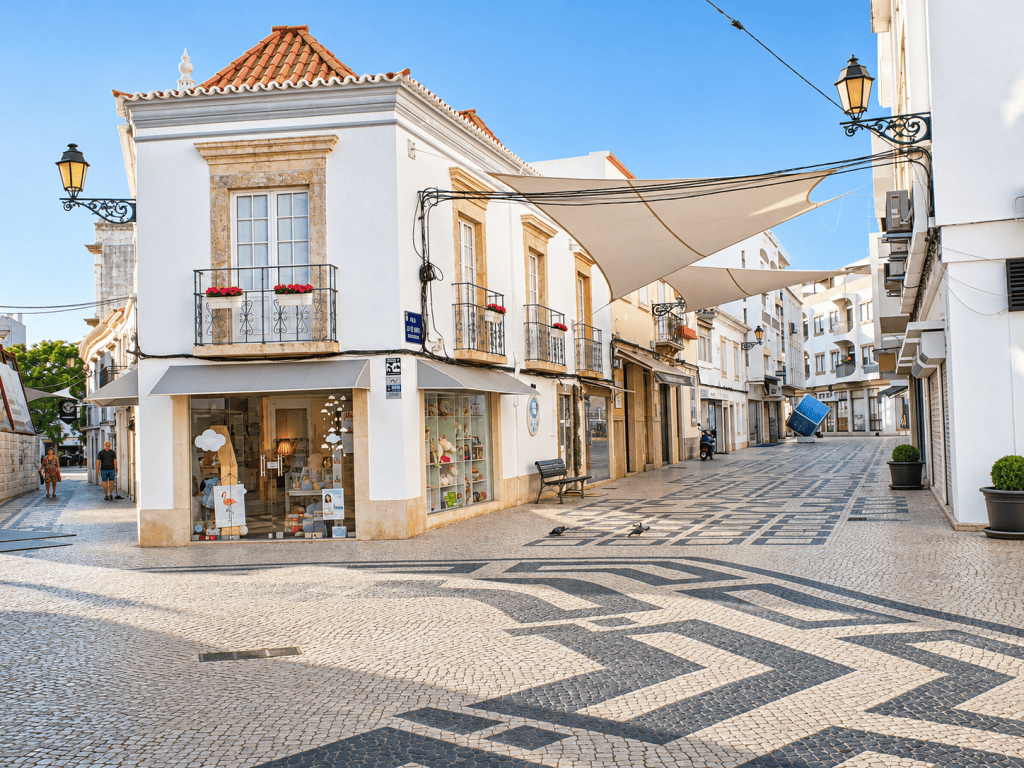
Faro city centre 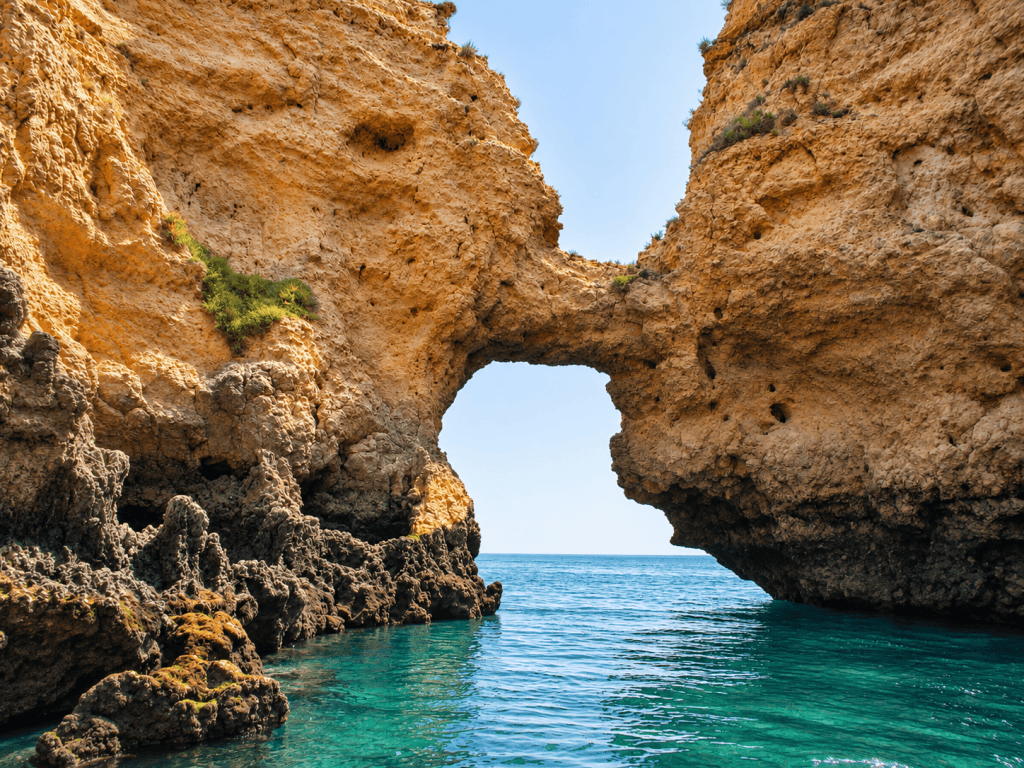
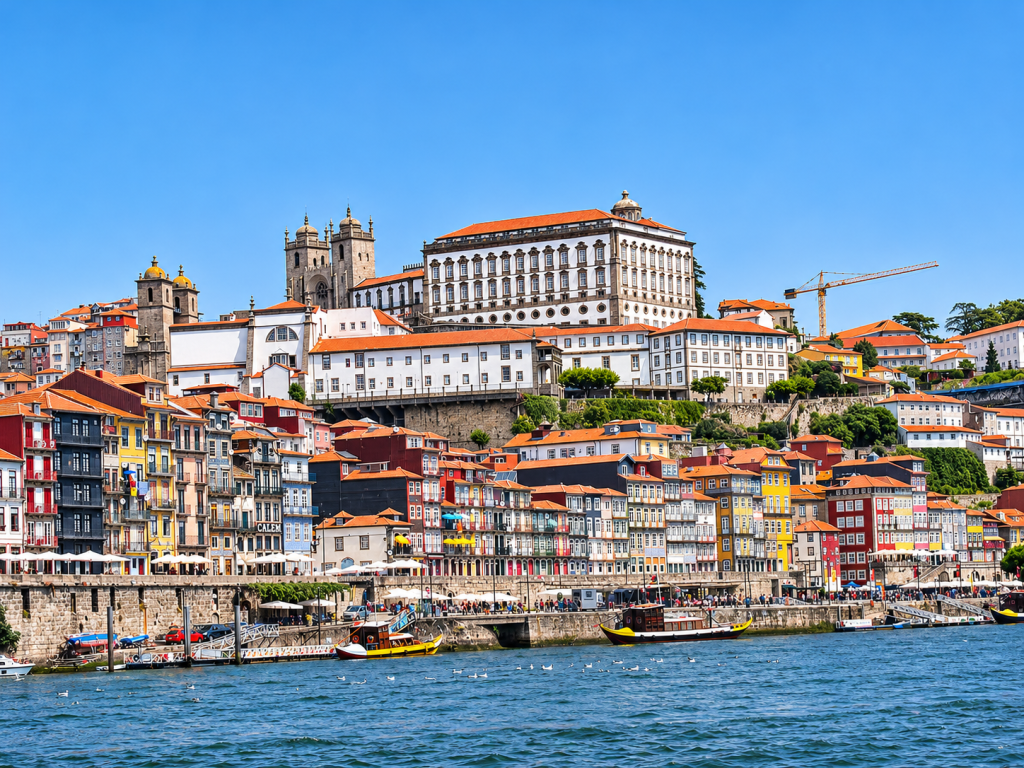
Cruising on Duoro river, Porto 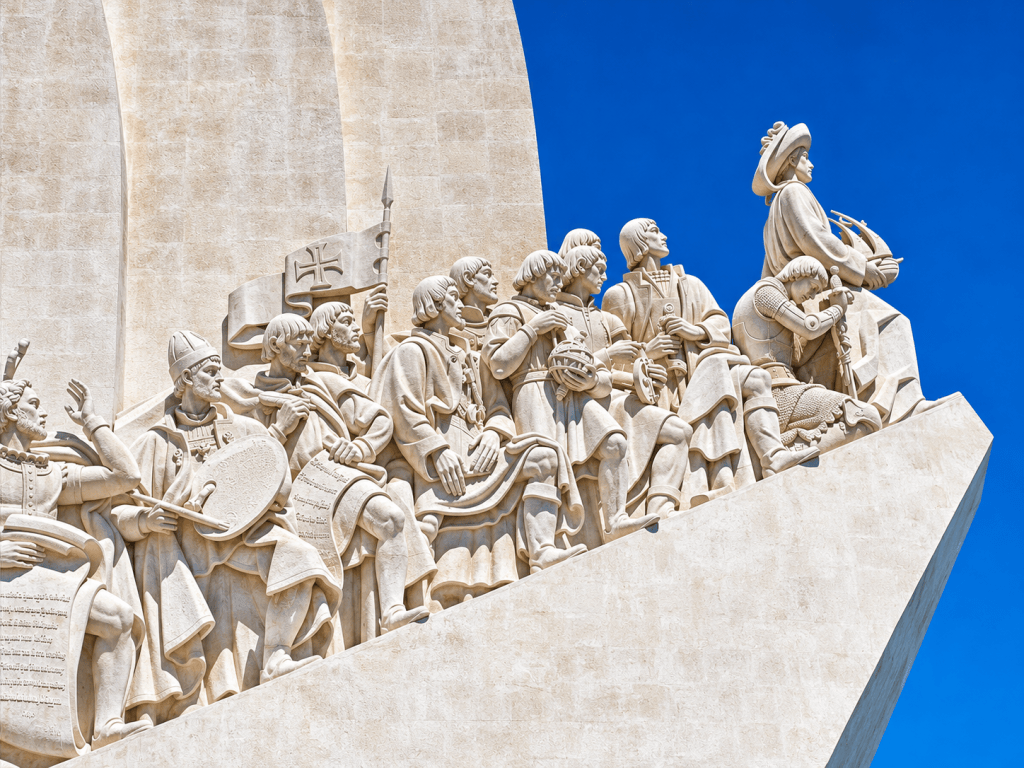
Monument of the Discoveries, Lisbon 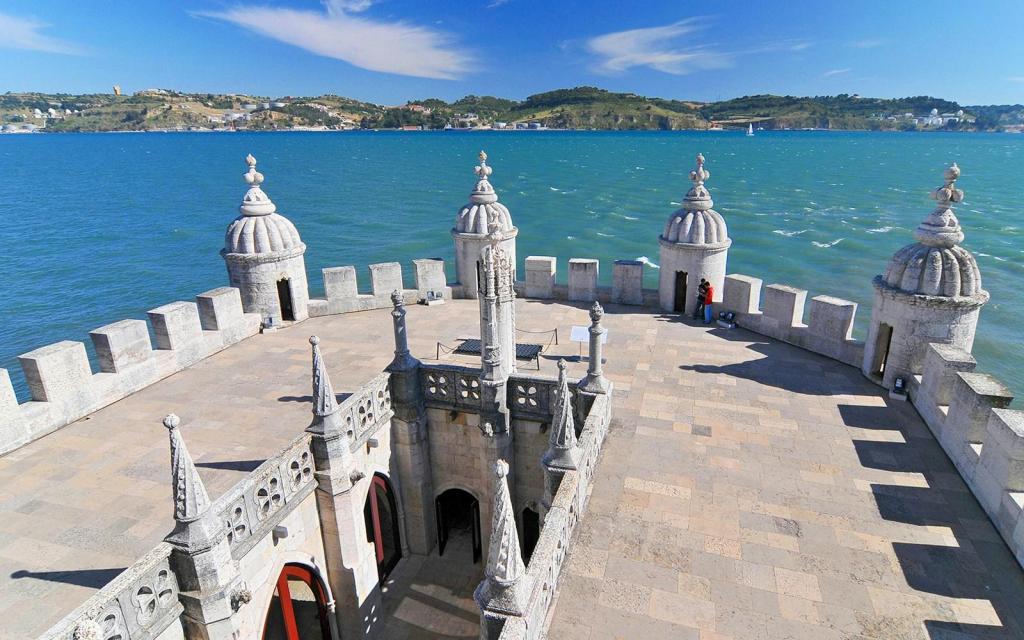
Belem Tower, Lisbon 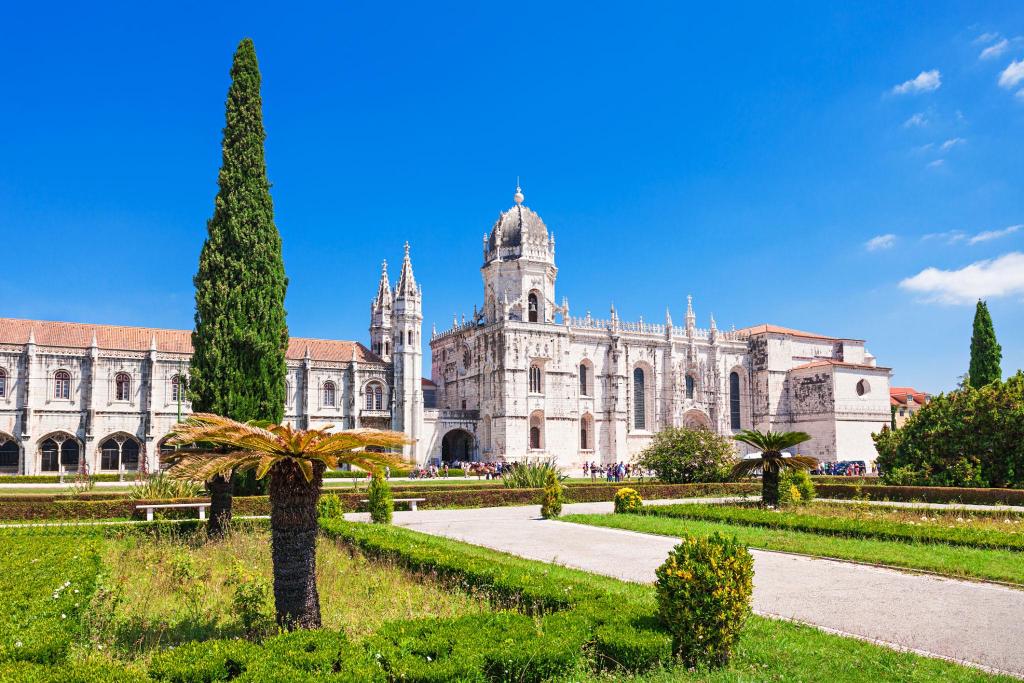
Jerónimos Monastery, Lisbon 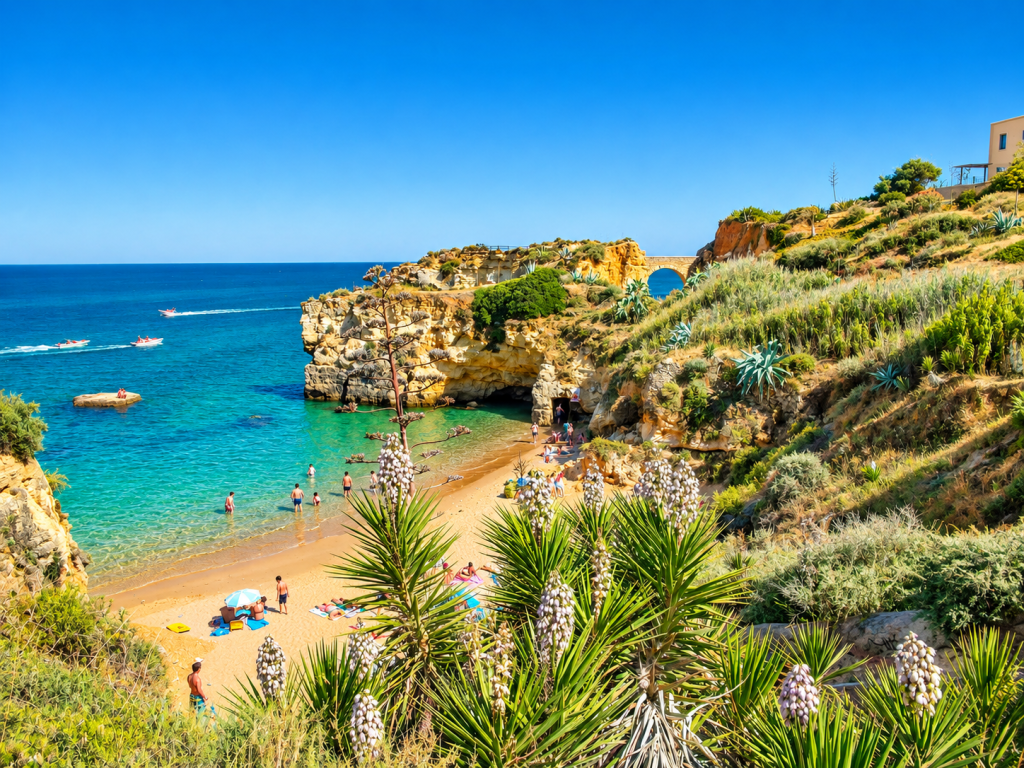
Lagos
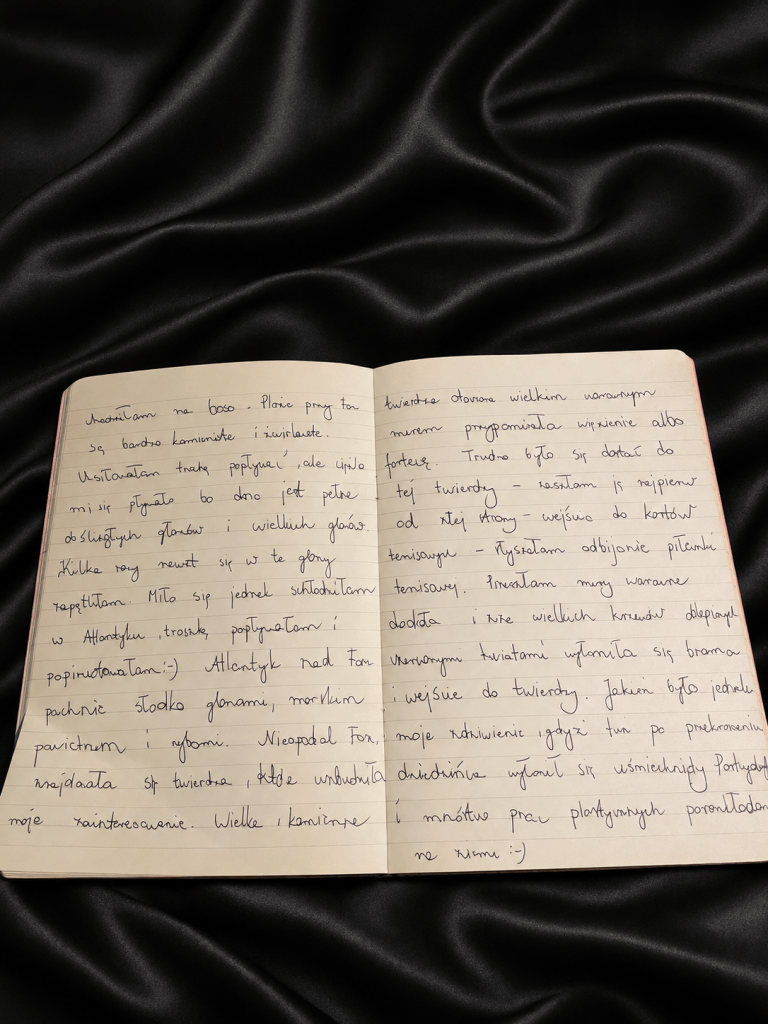
Eight years later, my photographs have largely disappeared, but my handwritten memories are still here — complete with all the tiny details I would otherwise have forgotten.
A Little Note About My Journal
First of all, please forgive my rather chaotic handwriting! These pages were written during my travels, often in a hurry, with far more enthusiasm than concern for calligraphy. 😉
You might also notice that my journal is written entirely in Polish, my native language. Back in 2018, Polish was still my preferred language for expressing my private thoughts. However, after 14 years of living in the UK, something fascinating has happened: English has gradually become my dominant language. I now use Polish so rarely in everyday life that English feels more natural to me, even when I’m writing, reflecting or talking to myself.
It’s rather extraordinary how moving to another country can change not only where we live, but also the very language in which we experience and interpret our lives!






Leave a Reply