
Why are parents and society so determined to make children and young people play it safe? Why is mediocrity promoted and celebrated, while authenticity, originality and extraordinary ambition are discouraged? Why are we so afraid of dreaming big?
Children Who Could No Longer Imagine Tomorrow
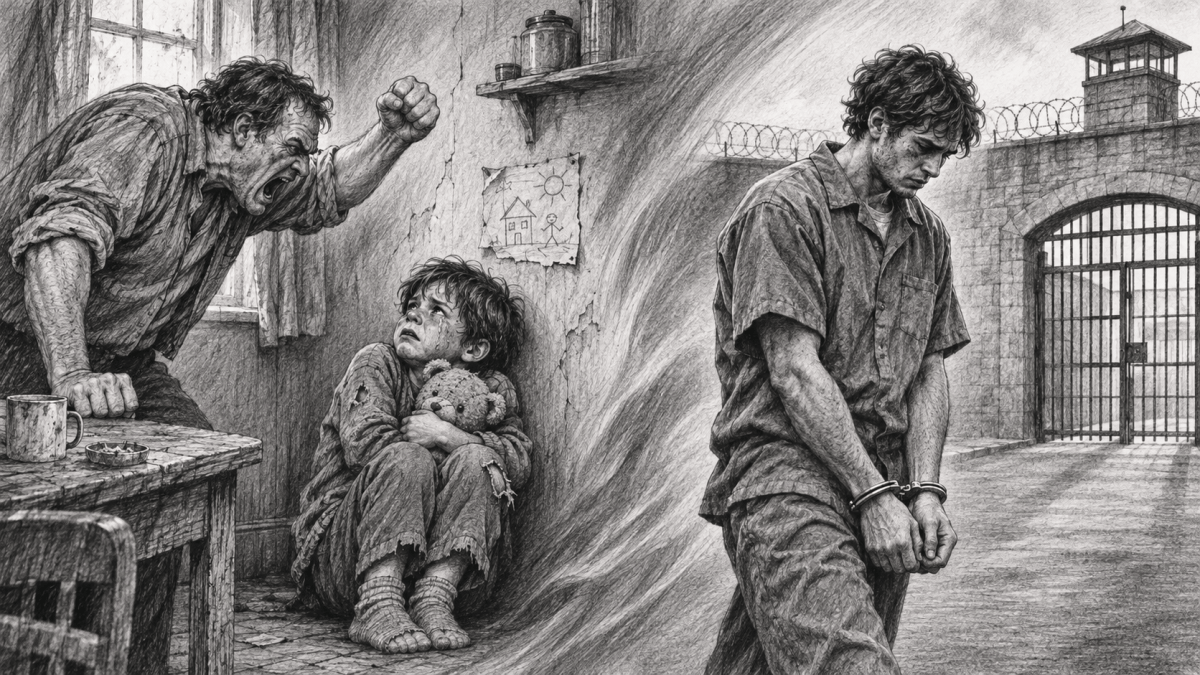
During my eight years working as a teacher in a specialist secure residential unit, I encountered young people whose lives had already been shaped by experiences that many adults would struggle to comprehend. Some had forensic backgrounds, others struggled with severe mental health difficulties, eating disorders or self-harming behaviours, and some were navigating complex questions surrounding their identity and gender. A number of my students had experienced profound adversity long before arriving at our institution. Many had lost trust in adults, in the world around them and, perhaps most painfully, in the possibility of a better future. Some engaged in extremely dangerous behaviours, including head banging, swallowing foreign objects and tying ligatures. Suicidal thoughts were part of the daily reality for some of the young people we supported. And I often wondered what happens to a person when tomorrow no longer represents possibility, but merely another day to endure.
Our students lived in the unit and attended lessons in a separate educational building. During the periods corresponding to ordinary school half-term holidays, we organised enrichment weeks. These were intended to break away from the usual curriculum and expose students to experiences they might otherwise never encounter. We offered yoga, meditation, arts and crafts, cooking, baking and other creative activities. External visitors occasionally introduced something entirely unexpected, such as wheelchair basketball, circus skills or fascinating artistic projects involving tyres and wheels from remote-controlled cars. I loved those weeks because they gave us an opportunity to approach education differently. We weren’t simply delivering lessons or working towards qualifications. We were introducing possibilities, experimenting with creative activities and encouraging young people to engage with the world beyond the walls of a specialist secure unit.
During one of these enrichment weeks, I decided to introduce my students to vision boards, bucket lists and the idea of deliberately imagining their future selves. I wanted to create something more meaningful than another pleasant craft session. I wanted these young people, some of whom could barely envisage surviving into adulthood, to spend a little time contemplating the possibility that their future might contain happiness, adventure, achievement and fulfilment. Not because I could promise them any of those things, but because I believed they deserved the opportunity to imagine them. If a young person has spent years experiencing rejection, fear, instability or disappointment, the future can become a frighteningly narrow and dark tunnel. A tunnel with no light at the end of it. I wanted to open a few sky lights along that tunnel, even if only in their imagination.
A Vision Board, Some Scrabble Tiles and a Future Worth Visualizing
My idea was simple. Each student would create a small board representing their future self. We used craft materials, decoupage, lovely embellishments and Scrabble tiles to construct words describing the qualities they wanted to embody or the experiences they hoped to have. Happy. Fulfilled. Daring. Adventurous. Confident. Independent. I deliberately encouraged them to think beyond their present circumstances. Not just what they wanted to do next week, or what might happen after their discharge, but who they wanted to become. What kind of person would they like to be? What experiences would make life exciting? Studying, travelling, volunteering? What might happiness look like? What would they attempt if their past did not have the final say over their future?
I wasn’t expecting a piece of canvas and a few wooden tiles to resolve years of trauma, psychiatric difficulties or social disadvantage. I understood perfectly well that my students needed specialist care, consistent support and opportunities extending far beyond a single enrichment activity. But I also believed that imagination had a place in their recovery and development. When a young person cannot envisage a worthwhile future, asking them to picture one is not a trivial exercise. It is an invitation to consider a reality that may feel entirely inaccessible. And even when the imagined future seems wildly ambitious, I would rather see a young person entertain an extraordinary possibility than abandon the very idea of having a future worth living for.
I think adults sometimes underestimate the importance of allowing children to imagine themselves differently from how the world currently sees them. A troubled teenager is not necessarily destined to become a troubled adult. A child who struggles academically is not condemned to a lifetime of mediocrity. Someone who has experienced rejection, instability or failure is not obliged to reproduce those experiences indefinitely. Human beings can transofrm themselves. Circumstances change. New opportunities emerge. Skills develop. Confidence grows. And while none of these transformations is guaranteed, I struggle to see how discouraging a young person’s ambitions could possibly improve their chances of experiencing them.
Yet during the preparation for this very workshop, I encountered an attitude that genuinely shocked me.
The Mother Who Didn’t Want Her Son to Dream Too Big
While discussing my planned activity in the staff office, one of my fellow teachers mentioned that she actively discouraged her young son from having excessively ambitious dreams. Her reasoning was that she wanted to protect him from disappointment. If he learned to keep his expectations modest, he would supposedly be less likely to experience the pain of failure. She considered this a sensible, responsible approach to parenting. Better to encourage realistic ambitions, she believed, than allow a child to become excited about something that might never materialise.
I remember feeling increasingly saddened as I listened.
And my internal reaction?
WTF?!
I couldn’t stop thinking about the implications of what she was saying. Here was an intelligent, educated adult who genuinely believed that restricting a child’s imagination was a form of protection. By teaching him to play safe she wanted to spare him emotional pain. But in attempting to shield him from disappointment, wasn’t she potentially teaching him that disappointment was something so terrible that it should be avoided at almost any cost? Wasn’t she communicating that the safest approach to life was to want less, attempt less and expect less? And what kind of future does that philosophy prepare a child for?
When did protecting children from disappointment become more important than teaching them how to cope with it?
I imagined a parent standing beside a young bird, carefully explaining that flying too high was dangerous. The bird might fall. It might injure its wings. It might break a bone or two. Better to remain close to the ground, where everything is familiar and predictable. Better not to risk the pain of falling. And yes, the bird might remain perfectly safe. It might live a long life without ever experiencing a life-threatening accident. But it would also miss the extraordinary sensation of soaring above the landscape, discovering extraordinary places and experiencing the freedom for which its wings were designed.
Have We Confused Disappointment with Disaster?
I find it extraordinary how frequently adults treat disappointment as though it were a psychological catastrophe rather than an inevitable part of being human. We cannot protect children from every rejection, failure, setback or unfulfilled ambition. Nor should we attempt to construct an entirely disappointment-free existence for them. Life simply doesn’t operate that way. People fail examinations, lose competitions, experience rejection, change careers, abandon projects and discover that certain ambitions are either unattainable or no longer desirable. Sometimes we work tremendously hard and still don’t achieve what we wanted. That can hurt. It can be frustrating, humiliating and deeply upsetting. But disappointment is also something we can learn to understand, tolerate and recover from.
If a child dreams of becoming an astronaut, why should our immediate response be to explain how statistically unlikely that ambition is? Why not ask what fascinates them about space? Why not introduce them to astronomy, physics, engineering or the history of exploration? Perhaps that child will never travel beyond Earth’s atmosphere. But their fascination could lead them towards science, technology, research, aviation or an entirely unexpected career. They might discover a passion that shapes their whole life. Even if the original ambition never materialises, the pursuit itself may produce extraordinary results.
Imagine telling a child who dreams of becoming a professional musician that the music industry is brutally competitive and that most aspiring artists never become famous. Technically, the observation might be correct. But what is the point of presenting it as the conclusion of the conversation rather than its beginning? Why not encourage the child to learn an instrument, experiment with composition, perform, practise and discover what they’re capable of? They may never become an international superstar or a professional musician, but they could develop discipline, creativity, confidence, emotional expression and a lifelong source of pleasure. Is that really such a terrible outcome?
I believe dreaming big is valuable even when the original dream remains unfulfilled, because the process of pursuing it can transform the person doing the dreaming. And that transformation is often far more important than the destination itself.
Are Adults Protecting Children — or Projecting Their Own Fears?
I also wonder how much supposedly sensible advice reflects the limitations of the adult offering it. When someone tells a child not to aim too high, are they genuinely assessing the child’s potential, or are they projecting their own anxieties, disappointments and beliefs about what is possible? Have they attempted something ambitious themselves and failed? Were their own dreams ridiculed? Did they grow up in an environment where standing out was considered arrogant, where financial success inspired suspicion or where extraordinary ambition was dismissed as unrealistic nonsense?
I recognise some of those attitudes because I grew up surrounded by them. I absorbed beliefs about money, achievement and possibility that took me years to question. I wasn’t encouraged to imagine an exciting future filled with creative accomplishments, financial independence, international adventures and unconventional pursuits. The horizons presented to me were considerably narrower. Be sensible. Be realistic. Don’t expect too much. Don’t get carried away. Be normal. Don’t stand out. Don’t imagine you’re somehow different from everyone else.
And I think this is one of the most unfortunate ways limiting beliefs travel between generations. An adult who has spent decades suppressing their own ambitions may genuinely believe they’re helping a child by encouraging them to do the same. They interpret caution as wisdom and modest expectations as maturity. But what if they’re simply passing down a collection of fears that were never properly examined?
I’m not suggesting that parents should tell children they can achieve absolutely anything merely by wanting it badly enough. That would be equally unhelpful. Talent, circumstances, resources, opportunity, health, effort and luck all influence outcomes. But there’s a considerable difference between helping a child understand the challenges involved in pursuing a dream and discouraging the dream before the child has even had an opportunity to explore it.
One approach says, “This will be difficult. Let’s explore what it would take.”
The other says, “This will be difficult. Better not bother.”
Those two messages can produce very different attitudes towards life.
My Own Vision Board: Why Did I Dream So Small?
I have a particularly personal reason for believing in the value of vision / action boards, because I’ve used them myself for years. When I created one of my earlier boards, I filled it with images and ideas representing the life I wanted to build. Among my aspirations were owning a small maisonette in a central location, developing my ideal level of physical fitness, achieving the body I wanted and spending an extended period travelling around Southeast Asia. At the time, some of these goals seemed distant. They belonged to a future version of myself whose circumstances were considerably different from my present reality.
Over the following years, I watched an astonishing number of those aspirations materialise. I bought my maisonette, transformed my physical fitness, developed a lifestyle centred around movement and creativity, and eventually spent approximately eight months travelling around Southeast Asia. Looking back at that original board, I estimate that around 95% of what I had put on it became reality within a relatively short period of my life.
Now, I don’t claim that pictures glued to a board possess supernatural powers. A photograph of a beautiful house won’t magically transfer the keys into your hand. My achievements required decisions, effort, financial planning, persistence and a willingness to change my habits. But I do believe the board played an important role in keeping my attention directed towards the life I wanted. It gave my aspirations a visible form. Instead of allowing them to remain vague wishes floating somewhere in the back of my mind, I turned them into something I could look at repeatedly, think about and gradually work towards. And then, after achieving most of what I’d originally imagined, something rather amusing occurred to me.
Why on earth had I asked for so little?
Why had I imagined a small maisonette rather than a much larger house? Why had I limited certain ambitions to relatively modest achievements? Why had my imagination stopped precisely where it had? The answer, I suspect, had less to do with my actual desires than with the boundaries of possibility I had inherited. I had been conditioned to dream within a particular range. My aspirations were ambitious enough to challenge my circumstances, but still constrained by the beliefs I carried about what someone like me could reasonably achieve. That realisation was almost more significant than achieving the original goals.
I hadn’t merely discovered that I could accomplish things I once considered difficult. I had discovered that my imagination itself had been operating under restrictions I hadn’t consciously chosen.
Upgrading My Dreams Instead of Downgrading My Expectations
Naturally, once I made that discovery, I decided my next vision board needed a rather substantial upgrade. 😂 My current ambitions are considerably more extravagant. I want to develop my creative projects, build the DoraLanga Empire, expand Eccentricize, create music, perform, develop and deliver Outlanga sessions and explore possibilities that previously I didn’t even have the capacity to imagine! I no longer want my dreams to be determined by what someone else considers sensible for a woman of my age, background or circumstances. I want to investigate what is possible when I deliberately challenge the limitations I’ve absorbed over the years.
And what is the worst thing that can happen? I might not achieve the level of success I’ve been visualising. So what? Even if I fall short of my grandest ambitions, I will have grown, experimented, learned and achieved things I might never have imagined otherwise. Some projects might never become commercially successful. Certain ambitions may take much longer than expected. Others might evolve into something completely different from what I originally imagined. I may have to revise my strategies, acquire new skills, confront uncomfortable truths or abandon ideas that no longer make sense.
So what?
I would rather discover my limitations through experimentation than inherit them unquestioningly from someone else’s imagination. One of the things I enjoy most about maintaining a vision board is noticing the gradual narrowing of the distance between my current reality and my imagined future. An ambition that once appeared impossibly remote begins to acquire small, tangible foundations. A new skill develops. A project takes shape. A piece of work gets published. A conversation opens a door. Another little block is added to the construction.
And suddenly, the dream is no longer merely a dream. It’s becoming something I can recognise in the physical world. That transformation is exhilarating. Not because it guarantees success, but because it gives me a reason to keep experimenting, getting to know myself and and venturing into new territories. I think adults should be helping children experience that excitement rather than teaching them to suppress it.
Six Impossible Things Before Breakfast
There’s a wonderful moment in Lewis Carroll’s Through the Looking-Glass that captures the spirit of what I’m arguing. Alice insists that believing impossible things is pointless. The White Queen responds that Alice simply hasn’t had enough practice and explains that, when she was younger, she sometimes believed as many as six impossible things before breakfast.
I adore that exchange.
The White Queen treats imagination almost like a skill that can be practised. Alice, meanwhile, represents the voice of conventional logic, insisting that impossible things are, well, impossible. And while Carroll’s scene is playful and absurd, I think there’s something wonderfully provocative about the idea of deliberately exercising our ability to imagine beyond the familiar. After all, the boundary between impossible and possible has shifted repeatedly throughout human history. Technologies, discoveries and achievements that once belonged to science fiction have become ordinary parts of modern life. That doesn’t mean every imaginary possibility will eventually become reality, but it does remind us that our present understanding of what can be accomplished is not necessarily complete.
I sometimes wonder how many extraordinary ideas have been abandoned before anyone even attempted to develop them. How many potential inventions, artistic creations, scientific discoveries or unconventional careers never materialised because someone was told, at an impressionable age, to be realistic? How many people have spent their lives following perfectly respectable paths that were never actually their own choices? And how many of those paths began with a well-meaning adult trying to protect a child from disappointment?
I think I’d much rather raise a child who occasionally believes six impossible things before breakfast than one who has already been trained to dismiss every unusual possibility before they’ve even finished their cornflakes. At least the first child might invent something cool or awe-inspiring.
Let Children Dream — Then Teach Them How to Build
Of course, imagination alone isn’t enough. I don’t believe we should encourage children to construct elaborate fantasies and then sit around waiting for the universe to deliver them. Dreaming needs to be accompanied by action, curiosity, experimentation and the willingness to confront reality. A child who wants to become a scientist needs opportunities to explore science. A child who dreams of becoming an athlete needs movement, practice and appropriate support. A young person who imagines writing books needs encouragement to read, write, experiment and develop their craft.
But that’s precisely my point. Our responsibility is not to reduce the size of children’s dreams until they fit comfortably inside our own expectations. It is to help them develop the skills, knowledge and emotional resilience required to explore those dreams.
If they encounter setbacks, we can help them understand what happened. If their plans prove unrealistic, we can help them reconsider their approach. If they discover that the original ambition is no longer meaningful, we can encourage them to redirect their energy towards something else. Failure doesn’t have to represent the collapse of a person’s identity. It can be information. It can be feedback. It can be a reason to change direction rather than abandon the journey altogether.
And I return to those young people in the secure unit, sitting around a table with their craft materials and Scrabble tiles, imagining future versions of themselves who were happy, fulfilled, adventurous and confident. I don’t know how many eventually achieved the particular futures they represented on their boards. I wouldn’t pretend that one activity could overcome the enormous difficulties some of them faced. But I still believe it was worth inviting them to imagine a life beyond their immediate circumstances.
Because how can someone begin building a future they have never even allowed themselves to imagine?
What If the Greatest Disappointment Is Never Having Tried?
I keep thinking about my colleague’s young son and the philosophy she was passing on to him. I wonder what he wanted to become. An astronaut? An inventor? A famous athlete? A musician? An explorer? Or something wonderfully unique that no adult around him had ever considered a sensible profession? I hope he continued dreaming anyway.
I hope he discovered that adults, despite their impressive confidence, don’t always know what is possible. I hope he eventually encountered someone who encouraged him to explore his ideas rather than immediately calculate his likelihood of failure. And I hope he learned that disappointment, while unpleasant, is not the end of the world. Because I think there’s a much more troubling form of disappointment than failing to achieve an ambitious goal.
It’s reaching the later stages of life and realising that you never seriously attempted the things you wanted because someone convinced you they were unrealistic.
I can imagine few regrets more painful than discovering that the limits governing your life were never truly yours. That you spent decades living within a set of invisible boundaries constructed by other people’s fears, assumptions and disappointments. That you repeatedly chose safety over exploration, not because you genuinely preferred it, but because you had been taught to regard ambition as dangerous.
I’d rather look back on a collection of spectacular failures, ridiculous experiments, abandoned projects and unexpected detours than spend my life wondering what might have happened if I’d dared to try. So please, don’t teach children that dreams are dangerous because they might not come true. Teach them that disappointment is survivable, imagination is precious, and the supposedly impossible sometimes turns out to be something nobody has figured out how to do yet.
Teach them how to work, how to question, how to recover, how to adapt and how to persevere. But above all, don’t clip their wings in the name of protecting them from falling.
Let them fly.
And if they occasionally crash-land, help them up, check that their wings are still attached and encourage them to reconsider their flight technique. As for me, I’m taking the White Queen’s advice very seriously. Six impossible things before breakfast sounds like an excellent daily exercise.
Although, knowing myself, I’d probably have another twelve before lunch.






A Sneak Peek into My Dream Reality!
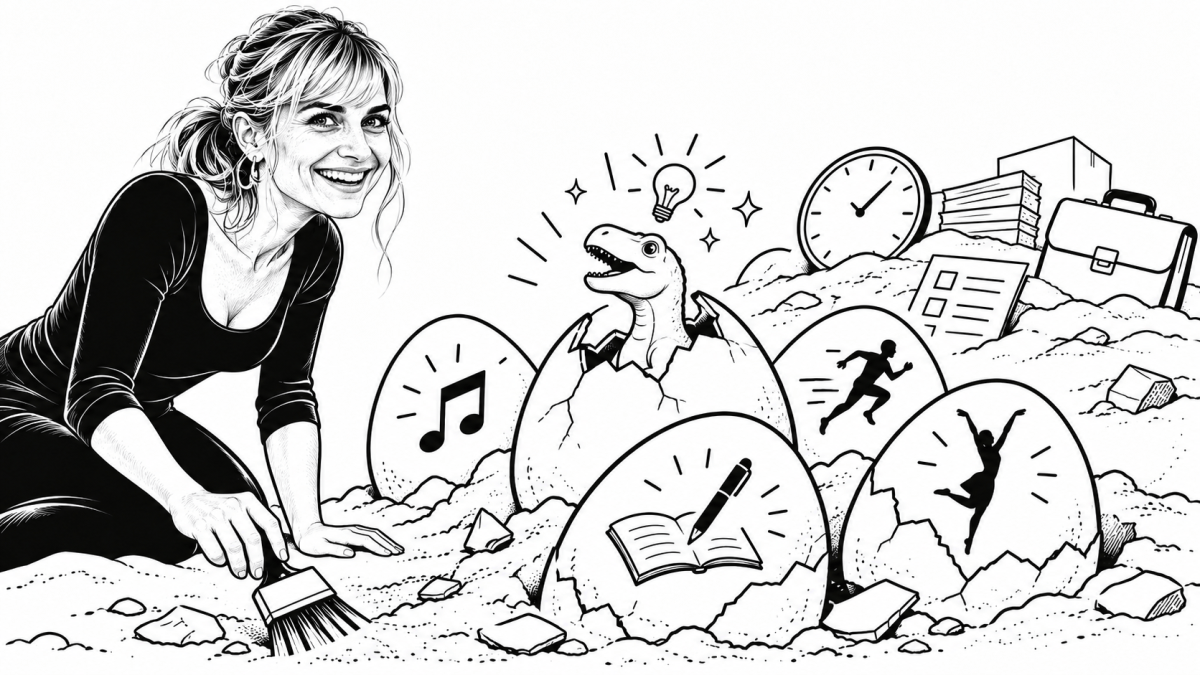
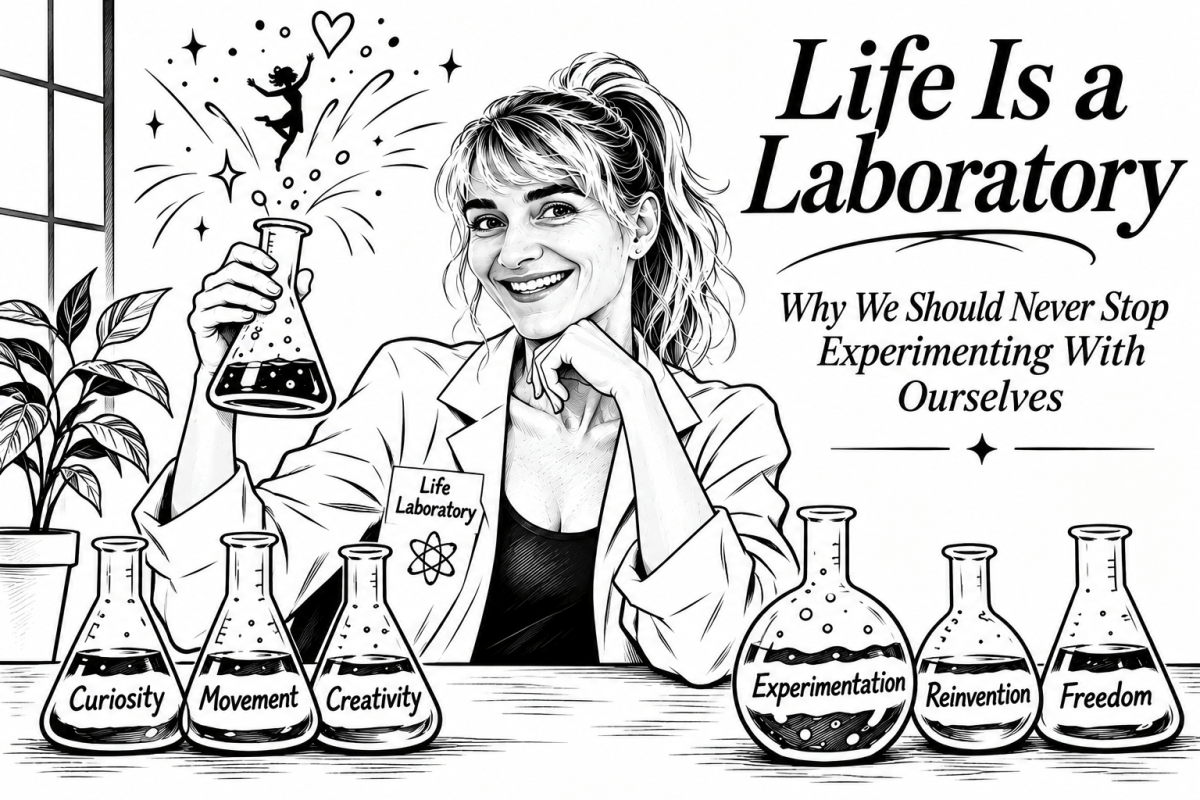
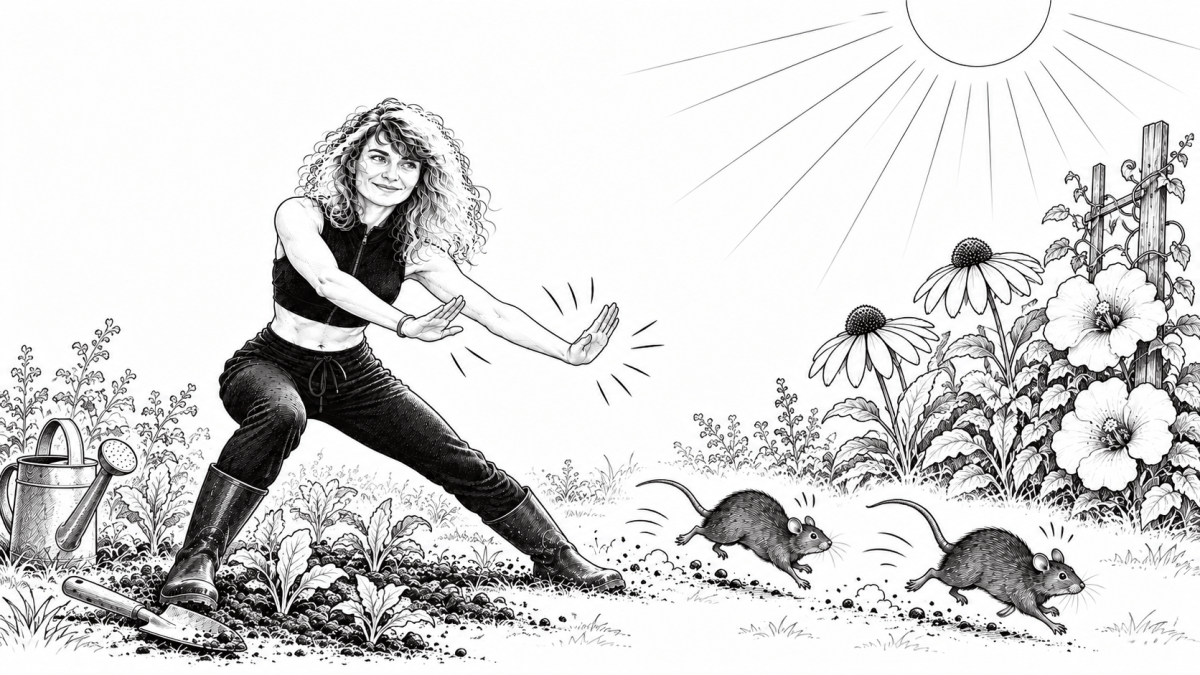
And since I’m encouraging everyone to dream big, I thought I’d share a few images from my own vision board! Yes, these images have been edited using AI, and no, I don’t currently own Villa Outlanga, a Ferrari or a private fitness studio. Not yet, anyway! 😉 These are visual representations of the future I’m working towards, not photographs of my present reality. After all, what’s the point of encouraging extraordinary ambitions if I’m too embarrassed to reveal my own?







Leave a Reply