Apparently, getting drunk in public counts as living. Staying home and exploring your own consciousness doesn’t.
The Girls Who Definitely Had a Life
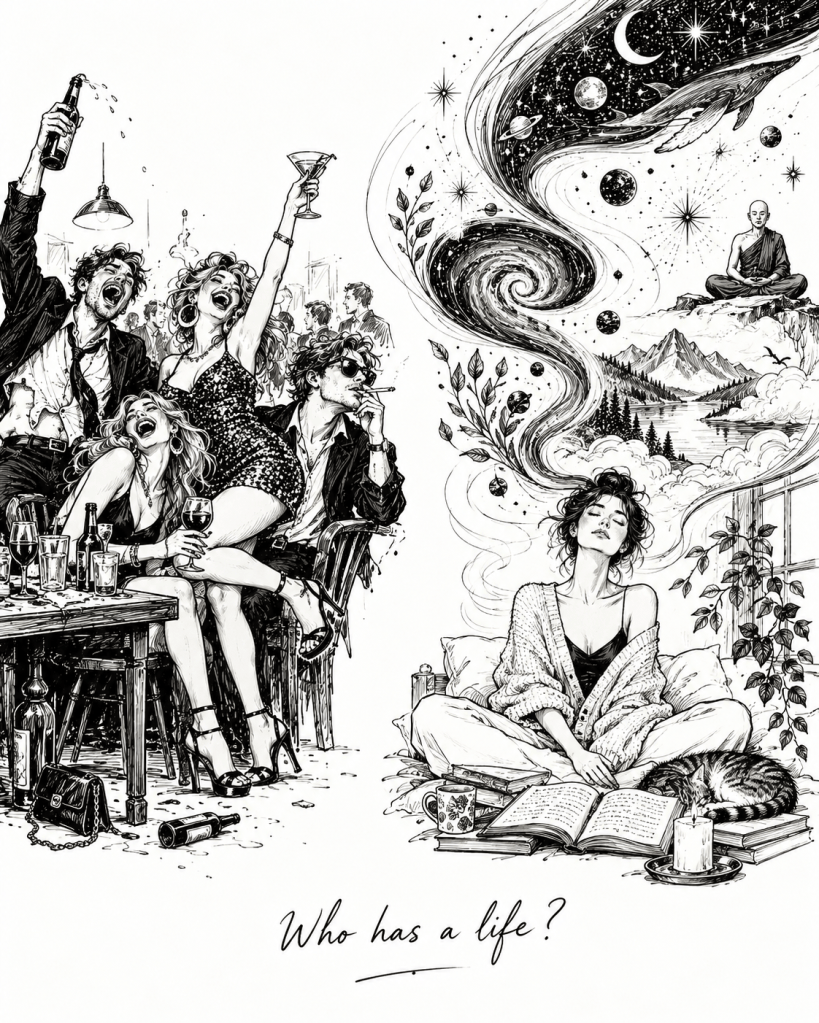
The other night, I was walking home after a long run when I passed a group of young women. They were loud, obviously drunk, dressed in tiny crop tops and shorts that were several sizes too small, with their bellies spilling over the waistbands. Their walking was unsteady, their shrieking voices carried halfway down the street. None of this seemed to concern them. They strutted along the pavement with the confidence of beauty queens and the kind of self-assurance that only alcohol and a remarkable lack of self-consciousness can produce. As I approached, I overheard them discussing another woman, apparently in her thirties. I didn’t catch the whole conversation, but I certainly heard the verdict, delivered almost in unison: “She has no life!” They sounded so certain that I was almost tempted to ask for their qualifications. Had they investigated this woman’s daily routine? Interviewed her friends? Examined her hobbies? Perhaps they were members of some unofficial committee responsible for determining who was sufficiently alive. Or perhaps they were simply a group of drunk young women who had decided that somebody else’s lifestyle was inferior to theirs.
I’ve heard this expression countless times, and it has always puzzled me. What exactly does it mean to have a life? Who invented the criteria? And why is the accusation so often made by people whose own evening consists of drinking, shouting and attracting attention? Judging by the standards of my pavement philosophers, having a life presumably involves going out, partying, drinking, having plenty of sex, meeting people and generally making yourself visible. You need places to go, people to see and stories to tell about what happened last Saturday. Ideally, some of those stories should involve questionable decisions and a hangover. Stay home reading a book, journaling, writing poetry or practising yoga or meditation, however, and things become suspicious. You might be developing a business, creating webinars, composing music or studying something fascinating, but never mind. You’re at home. You have no life. Meanwhile, somebody staggering down the pavement in undersized shorts has apparently discovered the secret of human existence. Wonderful.
Does a Buddhist Monk Have No Life?
I wonder what these girls would make of a Buddhist monk. Imagine a man who has spent decades studying philosophy, meditating, examining the workings of his mind and trying to understand human suffering. He doesn’t frequent nightclubs, drink himself senseless at weekends or maintain an impressive collection of drinking companions. He might have no romantic relationship, very few possessions and absolutely no interest in documenting his activities for public consumption. Does he have a life? What about a yogi living somewhere in the Himalayas, studying Sanskrit, practising pranayama and spending hours exploring consciousness? He might live alone, have no social network and go decades without attending anything resembling a party. Clearly, a hopeless case. Perhaps somebody should tell him to come down from his mountain and visit the nearest pub. A few shots of tequila, a one-night stand and an Instagram story should soon rescue him from this tragic existence. The idea is ridiculous, of course, but this is precisely what happens when we confuse visible social activity with actually living. A man can spend years exploring the deepest questions of human existence, yet somebody whose main interests are pubs and parties may regard his lifestyle as empty because it lacks the familiar signs of entertainment. The monk could be experiencing extraordinary peace, insight and mental activity while appearing to do absolutely nothing. Or he could simply be sitting there thinking about lunch. We don’t know. That’s the point. You cannot judge the richness of somebody’s inner world by how much noise they make outside it.
Travelling without Moving
And I don’t need to rely entirely on Buddhist monks or Himalayan yogis to make this argument, because I’ve had some extraordinary experiences during meditation myself. Some of my meditation sessions involve astonishing fractals, spirals and astonishing displays of colour behind my closed eyes. I’m talking about the most spectacular pinks, purples and yellows imaginable, colours so intense and beautiful that ordinary descriptions barely do them justice. On one occasion, I saw what appeared to be a vortex opening directly in front of my closed eyes. It was as though something in my visual field were unfolding into an enormous swirling space, a giant galactic funnel. I was simply meditating, with my eyes closed, and witnessing something that felt utterly extraordinary. Something that has haunted my imagination ever since, something I know I will never forget. During that session, I experienced a profound shift in my relationship with my own impermanence. For a moment, I seemed to glimpse something far greater than my everyday sense of self, something within the vastness of my own consciousness that made the prospect of one day leaving this physical plane feel strangely less frightening. I’m not claiming that I catapulted myself to another dimension. I’m describing how the experience felt from the inside, and it was powerful enough to change something fundamental in me. My fear of death loosened its grip. The experience remains one of the most remarkable things that has ever happened to me, and I didn’t need to go anywhere, meet anybody or spend a penny to have it.
Now imagine somebody looking through the window during that meditation. What would they have seen? A woman sitting quietly with her eyes closed. Nothing happening. How boring. No music, no alcohol, no conversation, no excitement. Clearly, a woman with no life. She should definitely get one! Meanwhile, inside my own consciousness, I was watching extraordinary waves of colours andpulsating spirals, experiencing something like a vortex opening before me and confronting one of the deepest human fears. I was sitting completely still while my inner world seemed to open into another dimension. That is the part I find so fascinating about consciousness: the outside appearance of an experience can be completely unrelated to its intensity. Meditation can sometimes feel more adventurous than travelling thousands of miles, because the territory you’re exploring is your own mind, and you have no idea what you might encounter there. Of course, not every meditation is spectacular. Some are uneventful, frustrating or downright boring. But that only strengthens the argument. An activity doesn’t need to be entertaining to an observer to be meaningful to the person experiencing it. Somebody sitting quietly may be having an experience more vivid than an entire night of socialising. Yet according to our strange cultural standards, the person dancing drunkenly in a nightclub is living, while the person exploring consciousness is somehow missing out. I would dearly love to know who came up with that arrangement.
The Reckless Teenager Is Normal. The Quiet One Needs a Psychologist.
I encountered another example of this peculiar attitude while teaching English online. An examination coursebook contained a reading passage about teenage risk-taking and compared two boys. The first was a daredevil who enjoyed speeding, pushing limits and testing how far he could go. He had narrowly escaped serious consequences but explained that there had been no other cars around, so apparently everything was fine. His behaviour was framed as relatively typical teenage experimentation. Teenagers take risks, teenagers push boundaries, teenagers do stupid things. Fair enough, except some stupid things can kill people. Then came the second boy, whose great offence was enjoying spending much of his free time in his bedroom playing computer games. He was quiet, occupied himself independently and apparently didn’t have much interest in going out. His mother became increasingly concerned and eventually sent him to a psychologist. WHAT THE FUCK? One boy is speeding around, potentially putting himself and others in danger, and we’re discussing normal teenage development. The other sits in his bedroom playing games, and suddenly there’s something wrong with him. I found the contrast extraordinary. Of course, excessive gaming can become a genuine problem if it affects sleep, education, physical health or relationships. Persistent withdrawal can also indicate distress. But enjoying solitude isn’t a disorder, and dangerous driving doesn’t become harmless because it’s considered typical adolescent behaviour. What bothered me was the underlying assumption that outward risk-taking is somehow understandable, while quiet, self-contained behaviour requires investigation. Why are we so quick to worry about the quiet child and so prepared to excuse the reckless one? Perhaps the first boy needed a serious conversation about responsibility. Perhaps the second boy was perfectly content. But somehow the quiet one had become the suspicious character.
Stop Treating Homebodies Like Lesser Human Beings
Let’s talk about homebodies: people who genuinely love being at home, don’t feel the need to go out every Friday and Saturday, and can spend an entire weekend alone without feeling deprived, abandoned or remotely bored. Why do we treat them as though something is wrong? Tell somebody you spent the weekend going to parties, meeting friends, drinking and visiting restaurants, and they’ll probably congratulate you on having a busy and exciting life. Tell them you spent the weekend chilling at home and watch their expression change. “Oh, you didn’t go anywhere? Didn’t see anyone? Are you okay?” Yes, I’m bloody okay. I was having a lovely time until you started interrogating me. There seems to be an assumption that staying home means doing nothing, as though everything worth doing must take place outside your front door, preferably in front of witnesses. But what do people actually do at home? They write books, learn languages, do online courses, compose music, paint, study, develop businesses, practise yoga, research obscure subjects, experiment with ideas and create things. Some spend hours mastering skills that might eventually transform their lives. Others enjoy cooking, gardening, reading or simply being left alone. And yes, some spend an entire afternoon doing very little. So what? Since when did every hour of somebody’s life have to produce a measurable achievement? Being quiet is not the same as being empty, staying home is not the same as wasting your life, and enjoying solitude is not evidence of a psychological problem. I find it bizarre that somebody can spend six hours in a pub talking nonsense and be described as sociable and fun, while somebody who spends six hours studying philosophy is assumed to need more excitement. And what if the philosopher is having a far better time?
When Did Being Visible Become the Same as Being Alive?
I suspect much of this nonsense comes from the fact that we judge other people’s lives by what we can see. A party is visible. A pub crawl is visible. A holiday is visible. A group photograph is visible. Social media provides endless evidence that somebody has been somewhere, met people and done something. But what does an evening spent thinking look like? Nothing much. A woman might spend four hours developing an idea that eventually becomes a book, an online course, a business or a piece of art. To somebody looking through her window, she’s just sitting there. Meanwhile, another woman spends four hours moving between pubs, shouting over music and drinking. Her evening generates photographs, stories and plenty of visible activity. Guess which one is more likely to be described as living life to the fullest? We have confused being seen with being alive, and social media has made the confusion even worse. If you went somewhere, photograph it. If you met somebody, document it. If you had fun, make sure everybody knows. But why should an experience need an audience to count?
Some of the most interesting moments in life happen when nobody is watching: a sudden idea, a breakthrough in something you’ve been practising, an unexpected insight, an hour of complete absorption in music, movement or writing. My own meditation experience is a perfect example. Nobody could have photographed what I was seeing behind my closed eyes. Nobody standing beside me would have understood the intensity of it. Yet it was more personally significant than many events that looked far more exciting from the outside. A meaningful experience doesn’t need witnesses, applause or photographic evidence. And not every fascinating journey requires leaving the house.
Why Is Recklessness So Easily Mistaken for Living?
Here’s another contradiction that bothers me. Drink too much, take drugs, have reckless sex, make stupid decisions and stagger home in the early hours, and people may tell you you’re young, adventurous and enjoying life. Stay home, eat well, exercise, read, do yoga, meditate and enjoy your own company, and somebody might decide you’re boring and need to get a life. How does that make any sense? Obviously, enjoying parties doesn’t automatically mean behaving irresponsibly. There’s nothing wrong with dancing, meeting friends or having a few drinks, and there is nothing inherently virtuous about staying home either. You can waste an entire weekend indoors just as efficiently as you can waste it in a nightclub. But the double standard is ridiculous. Why is somebody who spends every weekend drinking rarely told they should develop quieter interests, while somebody who prefers reading or researching a fascinating topic is constantly encouraged to get out more? Why is it considered normal to seek entertainment from other people every weekend, but strange to be perfectly happy entertaining yourself? And why do we so often confuse confidence with volume? The loudest person in the room isn’t necessarily the most confident. Sometimes they’re simply the loudest. Alcohol can make people uninhibited, but losing your inhibitions isn’t automatically evidence of courage, happiness, fulfillment or an interesting personality.
Maybe the Loud Ones Should Learn from the Quiet Ones?
Quiet people are constantly being told to change. Come out of your shell. Speak up. Socialise more. Meet people. Go out. Get involved. Stop being so quiet. Put yourself out there. Get a life! The message is always the same: become more like the outgoing people. But why does the advice only travel in one direction? Perhaps some people who spend every free evening surrounded by noise and company should try spending a weekend alone. No parties, no pub, no group chat organising the next outing, no need to tell everybody what they’re doing. Just themselves. Would they cope? Could they sit quietly with a book or journal for two hours, learn a a new skill, develop an interest that doesn’t involve other people or spend an entire day without needing somebody to entertain them? Perhaps they could. Perhaps they’d enjoy it. A little introspection wouldn’t do them any harm. Quite the opposite — it might actually enrich their lives. Perhaps they’d discover something about themselves that constant activity had been drowning out.
Why are quiet people always expected to learn from loud people, but not the other way around? I’m not arguing that everybody should become a lone wolf. Social interaction can teach us a great deal, and friendship, conversation and shared experiences can be wonderful. Quiet people can benefit from leaving their comfort zones and trying unfamiliar things. But highly social people could also benefit from introspection, concentration and learning to tolerate silence. Instead of treating solitude as a threat and discomfort, perhaps we should recognise the ability to enjoy one’s own company as a useful life skill. And perhaps those who constantly tell other people to get a life could occasionally try getting an inner one.
Apparently, You Need a Social Network to Qualify as Normal
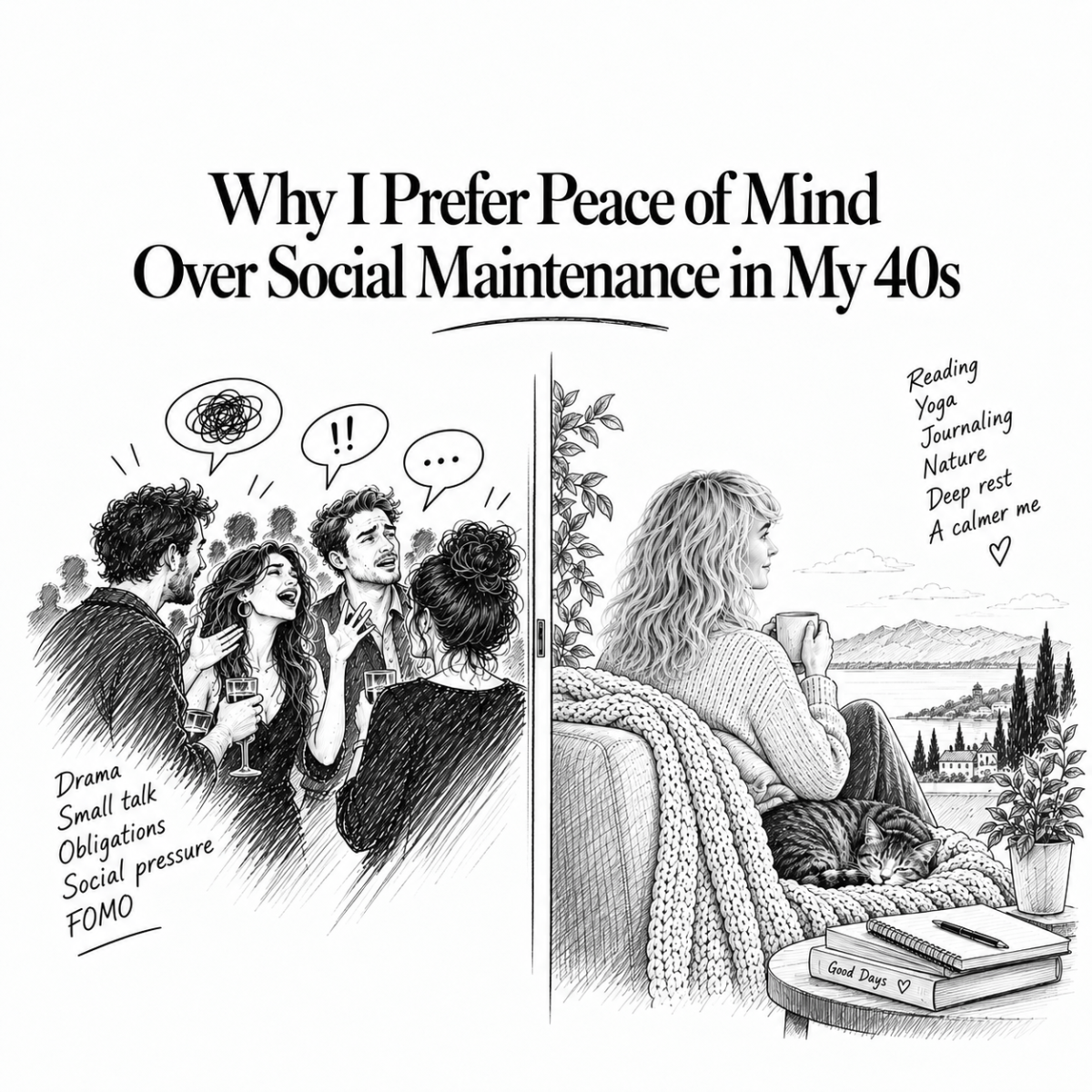
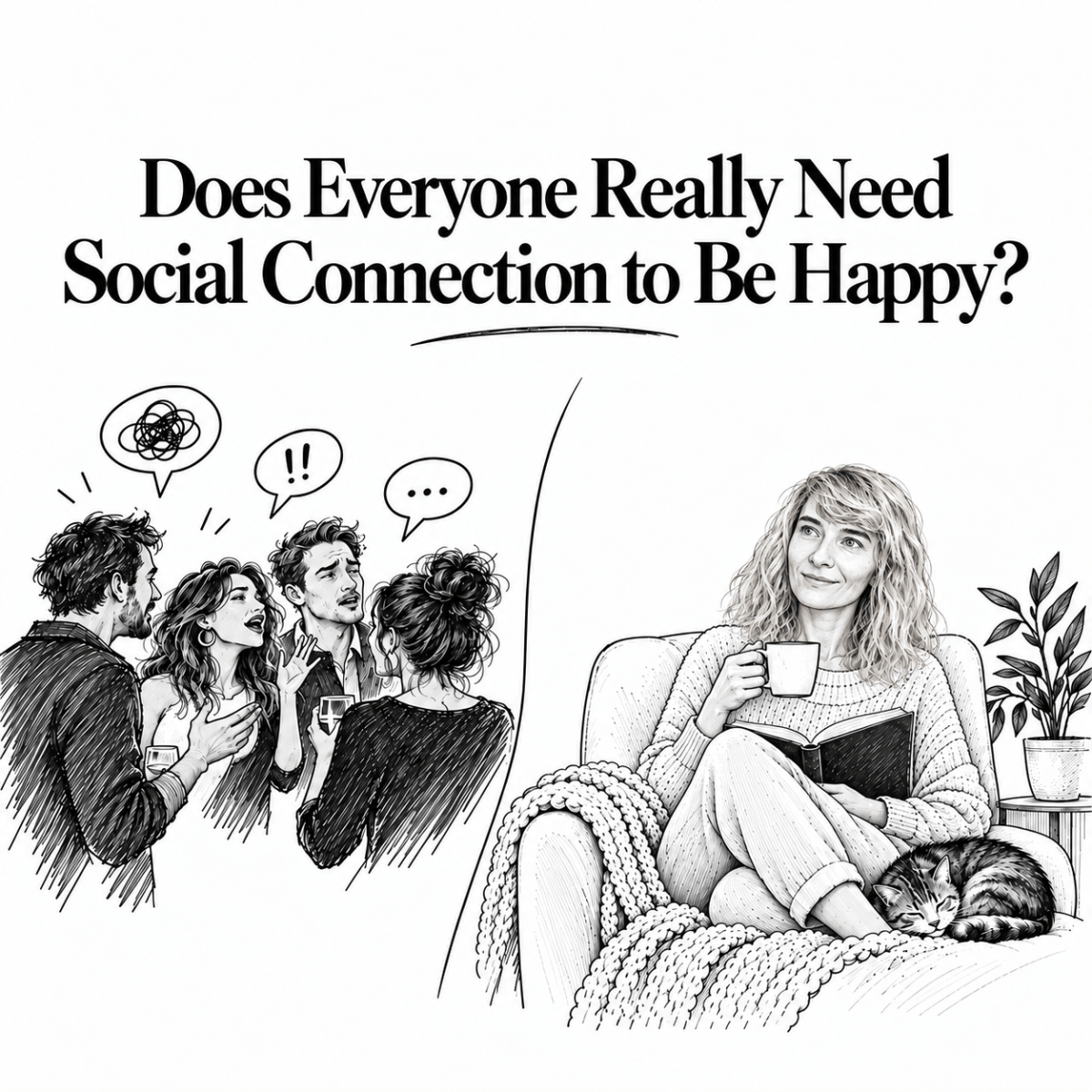
The same nonsense applies to friendships and social networks. People with lots of friends are often assumed to be happier, more successful and better adjusted. People with very few friends may be regarded with suspicion. Why? Since when did friendship become a numbers competition? You can have a hundred acquaintances and nobody you can really talk to, or two close friends who understand you completely. You can enjoy meeting people occasionally while spending most of your time alone. None of these arrangements automatically tells us whether somebody is happy. I find the obsession with building social networks especially strange. We are encouraged to make connections, maintain contacts, attend events, network professionally and expand our circles. For what purpose? To reach some magical number at which we officially become socially acceptable? Some people genuinely thrive in large groups. Others find them exhausting. Some need daily contact, while others prefer occasional meaningful conversations and plenty of independence.
Why should one arrangement be considered normal and the other deficient? There is also a huge difference between being lonely and being alone. Loneliness means lacking the connection you want. Solitude can mean having exactly the amount of company you want. A person who desperately wants friends but cannot make them may be suffering. A person who enjoys solitude and chooses it freely is in a completely different situation. Yet the two are constantly confused. Apparently, if you’re alone on Saturday night, the obvious assumption is that nobody invited you anywhere. Perhaps you were invited. Perhaps you simply preferred your own company.
Having a Life Isn’t a Competition
I have absolutely no desire to argue that quiet people are superior to outgoing people. That would be as foolish as the original assumption that outgoing people have more exciting lives. Some extroverts are thoughtful, creative and fascinating. Some introverts are boring. Some people love parties and philosophy. Others enjoy solitude but occasionally want to dance until sunrise. Human beings are complicated, thank goodness. What I object to is the arrogance of assuming that somebody else’s life is inferior because it doesn’t resemble yours. A woman who goes out every weekend might be genuinely happy. A woman who spends her weekends painting or playing the piano might be genuinely happy. A man who travels constantly might find his life exciting and meaningful. A monk who rarely leaves his monastery might find his life equally fulfilling. Who are we to decide otherwise? The real questions should be much simpler. Are you happy with how you spend your time? Do you find your activities interesting or meaningful? Do you have the freedom to live according to your own values? Do you have the relationships you want, rather than the relationships other people think you should have? And if the answer is yes, why should anybody care whether you spent Saturday night at a nightclub or at home reading about the history of Buddhism? We all have different appetites for stimulation, company, adventure, silence and reflection. One person needs constant movement and conversation. Another needs space and concentration. Most of us need some mixture of both. There is no universal formula.
So Who Actually Has No Life?
Let’s return to those girls I encountered after my run. They were loud, drunk, dressed in clothes that barely fitted and apparently having the time of their lives. Fine. Their evening, their choice. I wasn’t interested in interfering with it. But what gave them the authority to pronounce another woman lifeless? They knew something about her, presumably. Perhaps she didn’t go out much. Perhaps she didn’t have a partner. Perhaps she preferred staying home. Perhaps she simply didn’t participate in whatever activities they considered essential to existence. And that was enough. “She has no life.” I would have loved to ask them what they actually knew about this woman. What she reads, what she creates, what she thinks about, what makes her happy, what she dreams of doing and how she spends those supposedly empty hours. I suspect the answer would have been very little. And that’s what makes this expression so shallow. It reduces a whole human being to a few visible habits and then confidently declares the rest of their existence worthless. We need to stop treating quiet, solitary people as failed partygoers and defective socialisers.
Perhaps instead of constantly urging quiet people to get out more, we should encourage everyone to become more curious about ways of living that differ from their own. The quiet can learn from the loud, the loud can learn from the quiet, and everybody can stop pretending they’ve discovered the one correct way to exist. As for the woman those girls were discussing, I hope she was having a lovely evening. Perhaps she was scribing, dancing, reading, cooking, studying, listening to music or watching a film. Perhaps she was meditating, watching spectacular colours unfold behind her closed eyes and discovering something extraordinary about her own consciousness. Or perhaps she was doing absolutely nothing, enjoying the luxury of not having to listen to anybody. Perhaps she was happier than all of them. And perhaps the people who keep telling others to get a life should spend a little more time examining their own.









Leave a Reply