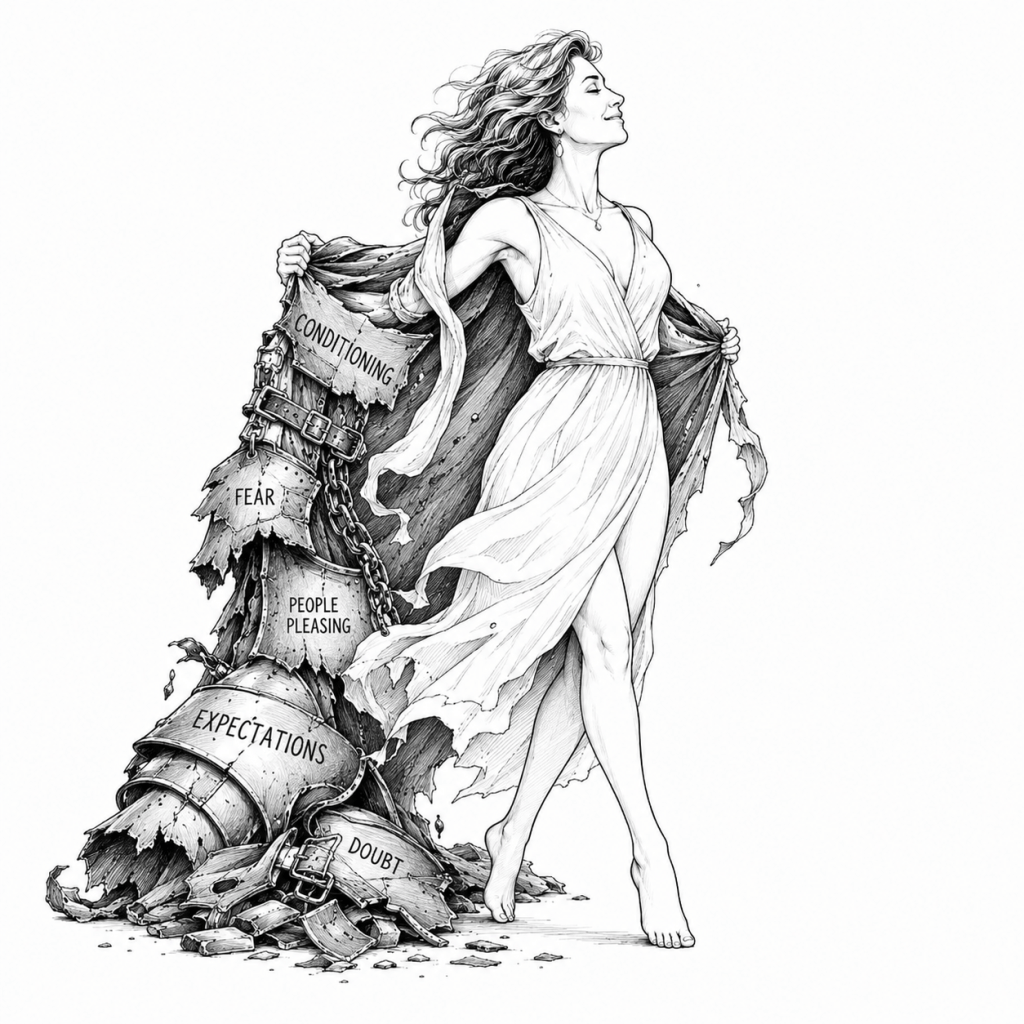
What if midlife is not a breakdown, but a return to yourself?
When I was 40, I started seriously toying with the idea of quitting my job and travelling the world for a few months. If you want to know why, you can read my earlier post, 5 Reasons Why I Decided to Quit My Job in My 40s to Travel the World. I will never forget how one of my colleagues reacted when I told him about this new goal: midlife crisis. I didn’t argue with him. I didn’t try to defend myself or explain the deeper reasons behind my decision. In fact, I quietly admitted that perhaps he was right.
I eventually quit my job and went travelling for eight months when I was 42. A lot of growth has happened since then. New experiences, new insights, exposure to different lifestyles and a complete reshaping of the way I want to live have made me question the very term midlife crisis. I have actually grown to dislike it. More than that, I now think it is often damaging, dismissive and badly outdated.
Why do we call wanting more from life a crisis?
The word crisis carries an unmistakably negative connotation. It suggests confusion, disorientation, instability, poor judgement, identity problems, even some kind of temporary malfunction. It implies that something has gone wrong. Yet what I have learned from my own experience is that wanting a richer, freer, more meaningful and more interesting life does not necessarily mean that something is going wrong at all. Sometimes it means that something is finally going right.
For me, midlife has not felt like a dramatic reinvention of myself. It has felt much more like peeling away layers that accumulated over decades: residue from external expectations, social conditioning, education, family dynamics, cultural norms and all the invisible rules about who I was supposed to be. Growing up in an environment where questioning authority was discouraged, where joy and happiness could be treated as indulgent, and where phrases such as “life is not a fairy tale” were used as if hardship were somehow morally superior to fulfilment can leave a person deeply disconnected from themselves. You can become diluted by other people’s fears and expectations until you are no longer entirely sure which parts of your life are genuinely yours.
Midlife brings a brutal but useful awareness of time
I think one of the most important things that happens in midlife is the growing awareness that time is not endless. At some point you realise, perhaps for the first time in a visceral way, that there may now be less life ahead of you than behind you. That realisation can be uncomfortable, but it can also be clarifying.
If time is becoming more precious, then there is less and less appetite for phoniness, performance and unnecessary social charades. You begin to question why you are maintaining facades that exhaust you, why you are living by rules you never consciously chose, why you care so much about the opinions of people whose lives you would never want to imitate. The veneers start to crack. The need to appear respectable, conventional or appropriately “grown up” may begin to lose its grip.
Of course, not everyone goes through this process. I know plenty of older people who remain deeply preoccupied with what the neighbours think, what the family will say, what is considered respectable, normal or appropriate. Some continue living lives they believe they are supposed to live without ever really asking what kind of life they themselves would have chosen. Age alone does not automatically create self-awareness. We can grow older without becoming more authentic.
We all begin with something valuable inside us
I believe we all come into the world with a particular combination of characteristics, sensitivities, talents, curiosities and capacities. I think of them almost like gems: personal treasures that belong specifically to us. But whether those qualities are developed depends enormously on the environment in which we grow.
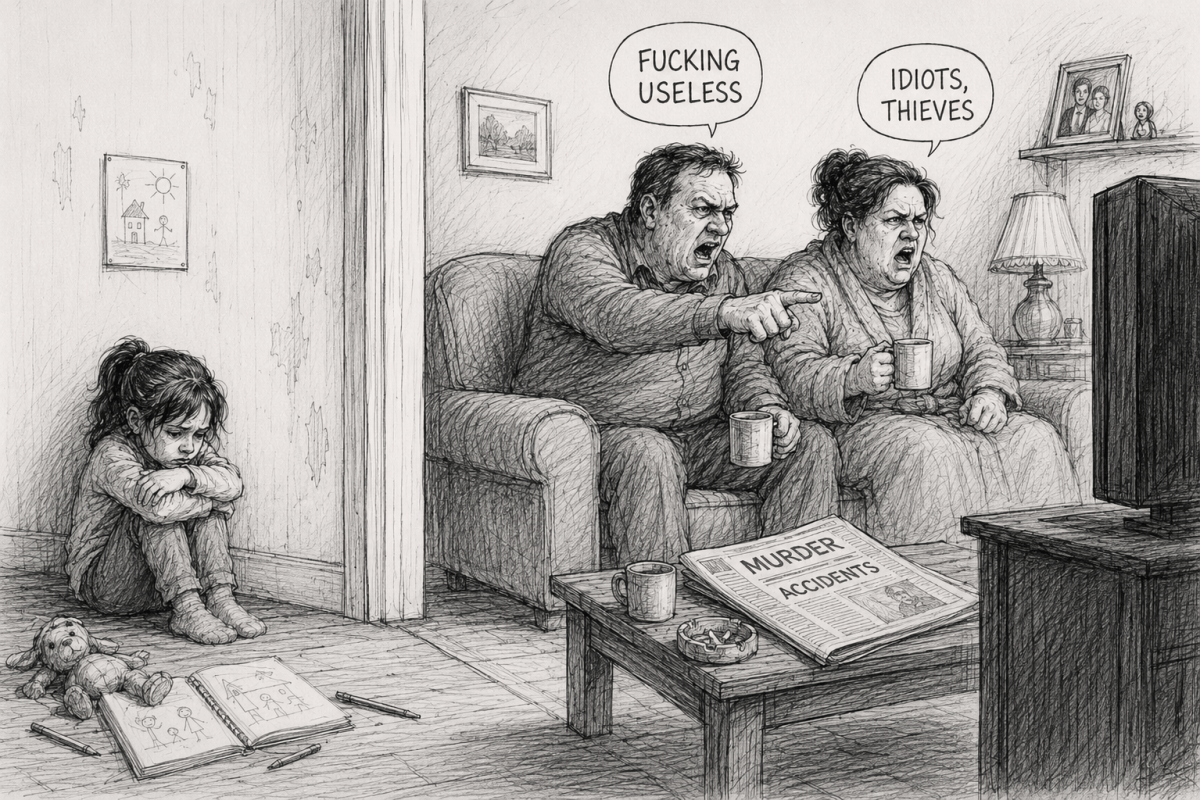
Some children grow up in nurturing homes where curiosity is encouraged, individuality is celebrated and unusual interests are allowed to flourish. Others grow up in environments where originality, sensitivity, quirkiness, creativity or intensity are mocked, discouraged or simply ignored. A child may quickly learn that being fully themselves comes with consequences. They may learn to hide, become quieter, more compliant, more conventional or more useful. They may become very skilled at fitting in while parts of their authentic personality remain stifled, repressed or buried.
That does not mean those qualities disappear. They may simply go underground.
Psychological capital and the debt some of us carry into adulthood
I often think of childhood in terms of psychological capital. A child who is nurtured, encouraged, mirrored and allowed to be joyful may enter adulthood with a positive balance. They already possess some self-trust. They have evidence that their interests matter, their emotions are valid and experimentation is safe.
Someone whose confidence has repeatedly been undermined may begin adult life with something closer to a deficit. Instead of using early adulthood to expand naturally, they may spend years simply servicing that psychological debt: trying to become acceptable, competent, employable, sensible, safe, useful, nice and amiable. A great deal of energy can go into simply becoming functional.
Then something may begin to shift later in life. You accumulate more experience. You understand patterns more clearly. You gain self-knowledge, self-awareness and perhaps greater independence. You begin to question the verdicts you inherited when you were too young to challenge them.
Slowly, that old debt can begin to shrink. Once the balance reaches zero, something interesting may happen: you finally begin accumulating positive psychological capital. Self-trust. Permission. Curiosity. Playfulness. Creativity. Courage. Experimentation. And that is often when forgotten parts of the self start resurfacing. The child who wanted to sing. The child who wanted to dance. The child who loved making strange things. The child who was curious, ridiculous, noisy and imaginative before somebody taught them to become smaller.
Perhaps we are not reinventing ourselves at all
This is why I am increasingly sceptical of another popular midlife phrase: reinvention. Reinvention implies that we are creating a completely new person. But sometimes I think the opposite is happening. We may actually be returning to parts of ourselves that existed long before social conditioning became so heavy.
We travel. We do therapy. We meet people from different cultures. We encounter alternative lifestyles. We leave jobs. We live alone. We spend more time in silence. We experience failure, grief, disappointment, independence, relief and freedom. Slowly, we begin noticing that the life we were taught to pursue is only one possible version of life.
Then we start asking better questions.
What actually energises me?
What kind of work suits my mind and temperament?
What kind of relationships make me feel expansive rather than diminished?
What would I do if I stopped caring about other people’s opinions?
What interests did I abandon because they were considered pointless, silly or impractical?
What parts of myself have been neglected for twenty or thirty years?
My own reclamation
Right now, I am 43, and I have started doing many of the things I was not encouraged to do as a child. I am more visible. More playful. More experimental. I dance. I experiment with different voices and imaginary characters and then record them. I create little melodies. I move in ways that do not belong neatly to one established discipline. I am creating my own movement practice called Outlanga and my own little musical experiments, which I call Dothleen tunes.
Would I call that a crisis? No. I would call it reclamation.
After years of unlearning patterns inherited through a dysfunctional upbringing heavily shaped by fear, negativity and emotional restriction, and after years of trying to heal, I finally feel that I have reached a stage where I have enough headspace, energy, time and peace to build rather than merely repair. That distinction matters enormously.
For a long time, growth may mean survival, undoing, understanding, protecting yourself, building boundaries and recovering from what depleted you. Later, growth can become something much more joyful. It can mean creating, exploring, experimenting, playing and asking, What else is inside me that I have never given a chance?
Midlife can be the point where the censorship weakens
I also think there is something powerful about the relationship between midlife and play. Adults are often heavily censored creatures. We are taught to monitor ourselves constantly: behave properly, speak appropriately, avoid embarrassment, stay productive, be sensible, act our age.
Children do not naturally live like that. They repeat things. Make noises. Dance badly. Invent characters. Sing nonsense. Ask strange questions. Copy accents. Move their bodies in ridiculous ways. They experiment without needing every experiment to become useful, profitable or respectable. Perhaps some of what happens in midlife is that the internal censor finally becomes weaker. The curious child begins to re-emerge while the inner examiner becomes less powerful. You stop asking, Will people think this is strange? And begin asking, Do I enjoy this? That may look eccentric from the outside. From the inside, it can feel very liberating and empowering.
Midlife reclamation
So no, I do not particularly like the phrase midlife crisis anymore. Sometimes there may genuinely be crisis, pain, grief, loss or confusion in midlife. I am not denying that. But I think our culture is far too quick to pathologise any dramatic change made by someone over 40, particularly if that change involves rejecting stability, convention or the expectations of others.
Travel alone? Midlife crisis.
Change career? Midlife crisis.
New relationship? Midlife crisis.
Buying a new car? Midlife crisis.
Perhaps the person is not experiencing a crisis at all. Perhaps they are finally reconnecting with the things they have always wanted, but were taught, conditioned or even brainwashed into believing were not available to them? Perhaps the so-called midlife crisis is actually a midlife reclamation — a return to the parts of ourselves that were buried under fear, duty, exhaustion and other people’s expectations, and a reclaiming of what should have been ours all along: joy, freedom, curiosity and authenticity. And perhaps the most radical thing we can do in midlife is not to become somebody new.
Perhaps it is to peel away everything that was never truly ours and discover who has been waiting underneath all along.






Leave a comment