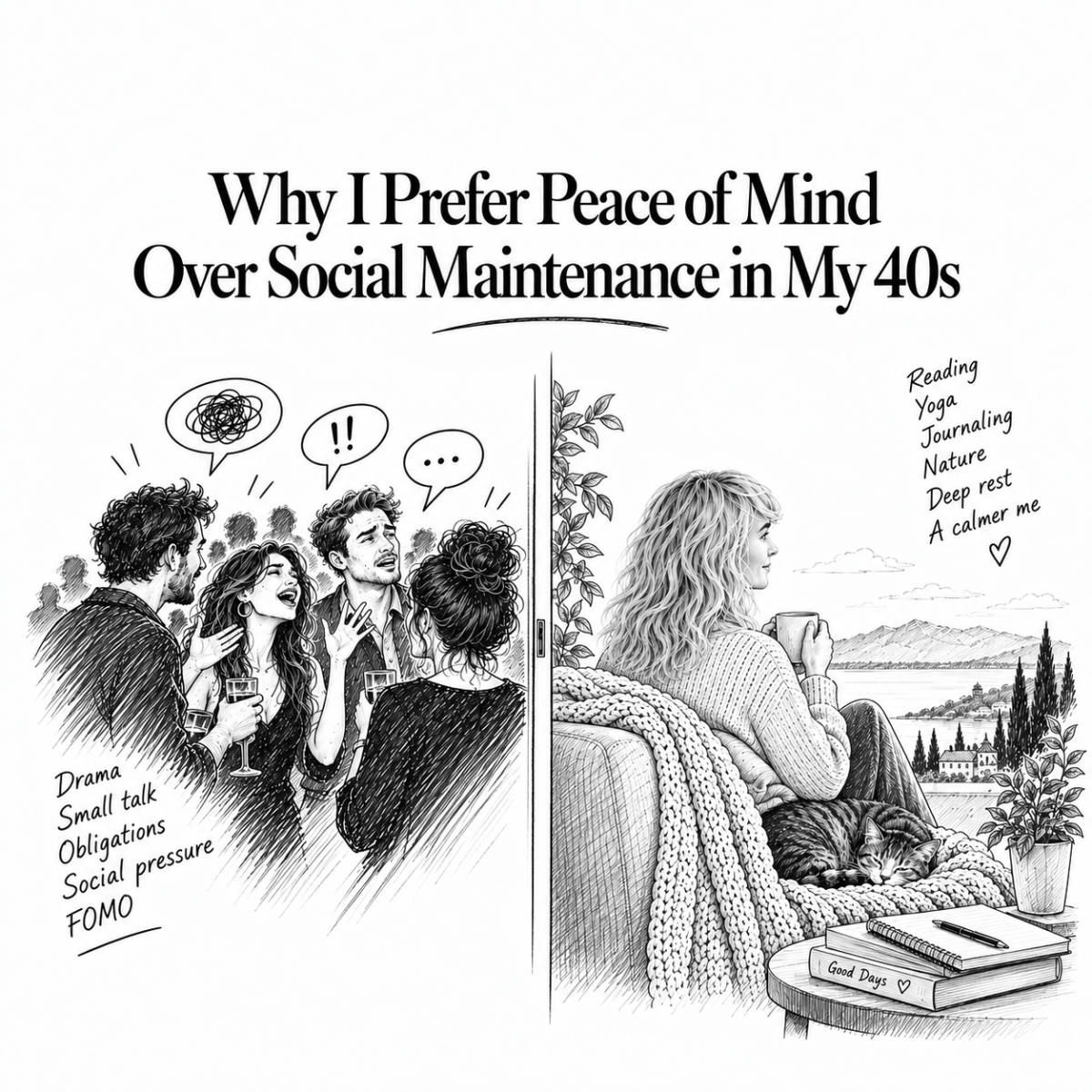
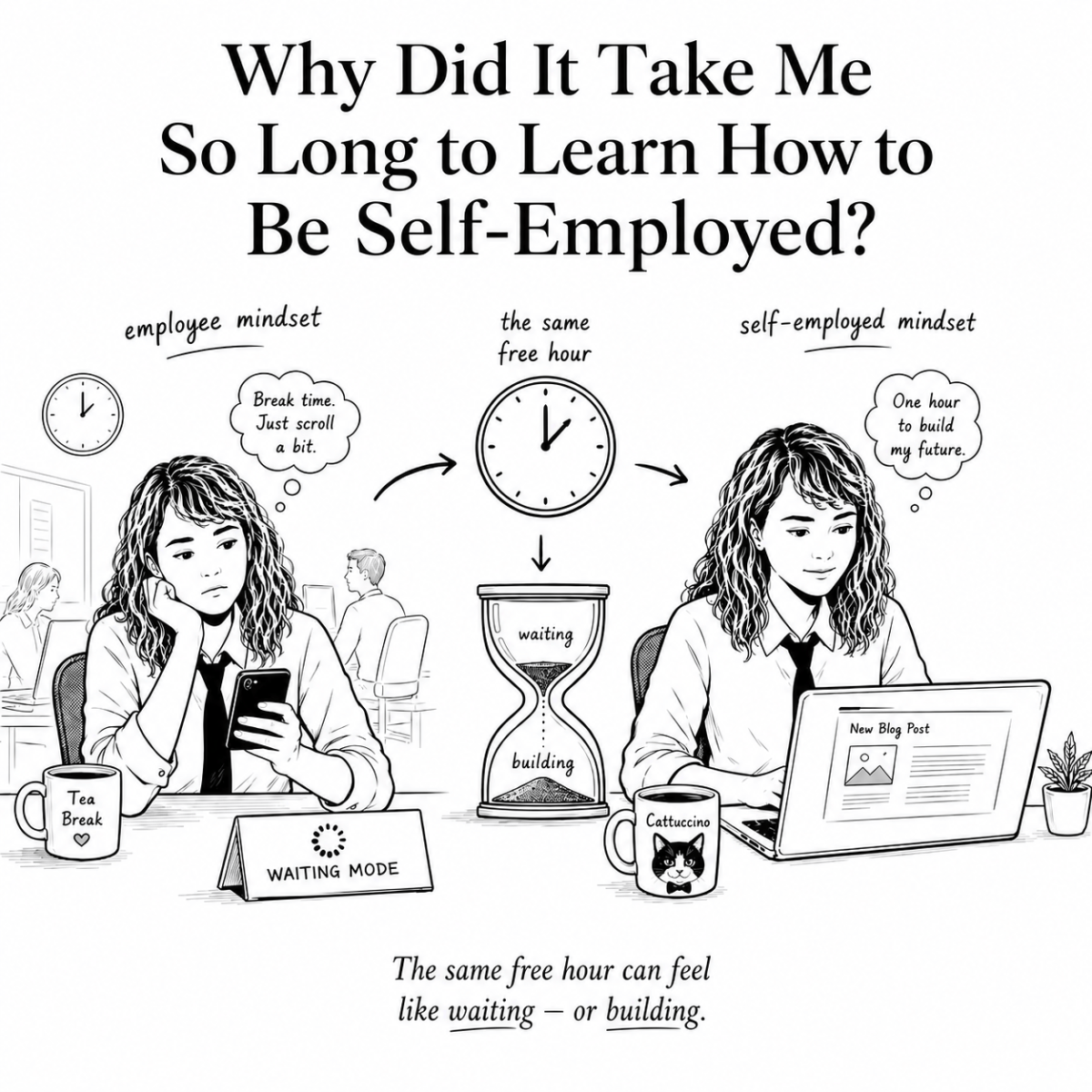
If you have been reading this blog for a while, you will probably have noticed that I am a big proponent of personal autonomy, freedom and authenticity. I have written before about the hidden costs of relationships and how difficult relationships can affect our inner weather, disturb our peace and fragment our concentration. I have also recently written about the pros and cons of being self-employed, particularly the surprising amount of headspace and personal freedom that can appear once we gain greater control over our time and environment.
These subjects may seem unrelated, but to me they are connected by the same question: what happens to us when we start paying attention to the effect that people, environments and expectations have on our internal world? Once we become more protective of our peace and more conscious of what drains or destabilises us, it becomes increasingly difficult to ignore relationships simply because they have existed for a long time.
Today I want to write about one of the most difficult versions of that question: going no contact, or low contact, with your family.
But they are your parents
When I was younger, the idea of deliberately distancing yourself from your parents seemed almost unthinkable. We have only one biological family and we do not choose it. Many of us were raised with powerful cultural and religious messages about honouring our mother and father, respecting our elders and maintaining family ties almost regardless of what happens inside those relationships.
But adulthood gives us the ability to ask questions that children cannot ask. What does honour actually mean? Does being somebody’s parent automatically entitle them to unrestricted access to their adult child forever? Should a relationship be preserved solely because it is biological, even if that relationship repeatedly causes distress, shame, fear, anger or emotional exhaustion?
I do not think these questions have simple answers, and I certainly do not think everybody with difficult parents should immediately cut them off. But I do think we should be allowed to examine family relationships with the same honesty we would apply to friendships, romantic relationships or workplaces. A family title should not make behaviour immune from scrutiny.
When the parent sees only their own pain
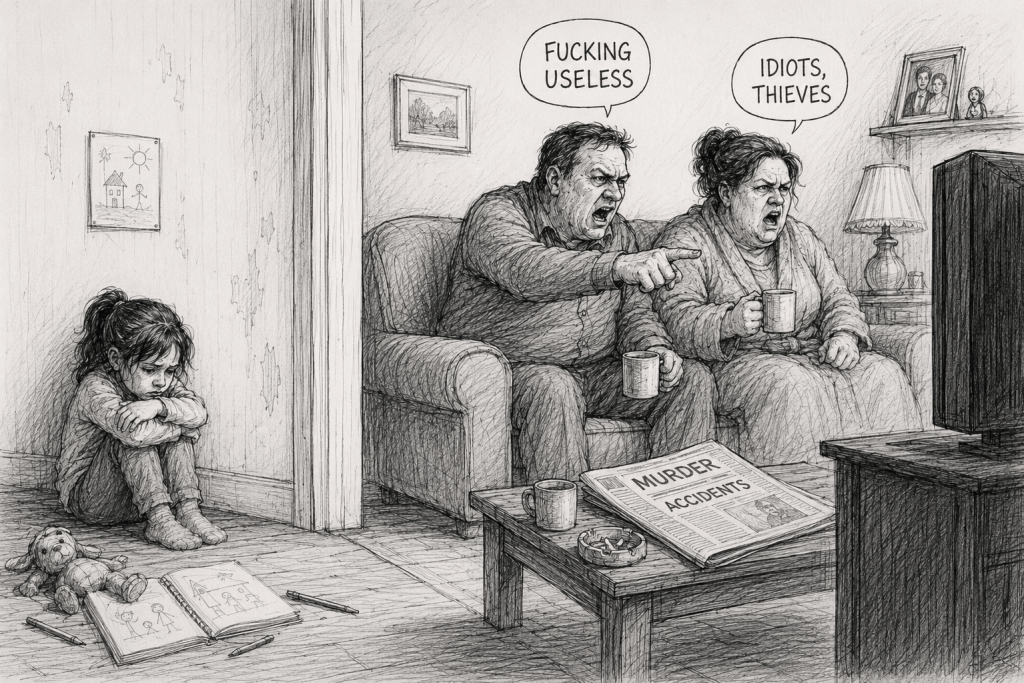
Recently I watched a Facebook reel made by a mother whose daughter, now around 30, had decided that she no longer wanted contact with her. The mother spoke openly about how shocked, hurt and lonely she felt. She mentioned some of her daughter’s complaints, including being shouted at as a child and feeling criticised when she divorced at a young age.
What struck me was not whether the daughter was objectively right or the mother wrong; we were hearing only one side of a complicated family story. What struck me was the complete absence of curiosity about the daughter’s experience. The mother spoke extensively about her own loneliness, rejection and suffering, but seemed unable to ask a much simpler question: what did my behaviour feel like to my daughter when she was small, vulnerable and dependent on me?
Instead, she described her daughter as cruel and entitled for withdrawing. She focused on the pain of losing access to her daughter rather than asking what might have led her daughter to conclude that distance was necessary in the first place. That distinction matters. Sometimes a person’s response to a boundary reveals precisely why the boundary was needed.
No contact is not punishment – it’s a consequence
Going no contact with a parent is often interpreted as an act of revenge: a dramatic punishment designed to hurt somebody. Sometimes it may be used that way, of course, because human relationships are complicated. But in many situations distance is less about punishment and more about self-preservation.
People sometimes reach the point of no contact after years of explaining, forgiving, negotiating, setting boundaries, reducing expectations and hoping that the relationship will eventually become healthier. At some point, they may conclude that continuing to expose themselves to the same dynamic is simply not helping anybody.
There is a phrase often used in discussions about healing: it is difficult to heal while remaining continuously exposed to the source of the wound. I would phrase it more cautiously: healing can become much harder when present-day contact repeatedly reactivates the same fear, shame, criticism or emotional instability associated with earlier experiences. Sometimes distance gives us enough psychological space to understand what actually happened.
Why adults sometimes distance themselves from their parents
One obvious reason is a childhood marked by neglect, emotional abuse, physical abuse, sexual abuse, addiction, instability or chronic criticism and humiliation. Those experiences can shape a person long after childhood ends, and adulthood may finally provide the autonomy that was impossible when they were dependent on their parents.
But sometimes the realisation comes much later and much more gradually. We change environments, meet different people and become exposed to different ways of living. We read, travel, go to therapy, learn about psychology, trauma, attachment, neurodivergence and emotional development. We become more self-aware and suddenly realise that behaviours we once considered normal were actually deeply dysfunctional.
Sometimes people grow older without growing emotionally
We often assume that age automatically brings wisdom, maturity, empathy and self-awareness. But that is simply not always true. Some people may be 70 or 80 years old and still function emotionally like toddlers. They may struggle to regulate themselves, take responsibility, apologise, tolerate criticism, recognise another person’s perspective or admit that they have caused harm.
Living longer does not automatically make someone more reflective or emotionally developed. If a person has never done any inner work, never questioned themselves, never examined their behaviour and never developed the ability to see beyond their own feelings, they may simply become an older version of the same emotionally immature person they were decades earlier.
This can be incredibly painful for adult children who have grown, healed, read, reflected, perhaps gone to therapy, learnt about psychology and developed greater self-awareness. At some point, you may realise that you have changed profoundly while your parent has remained fossilised in the same emotional form.
And that is when communication becomes almost impossible. You may keep waiting for acknowledgement, empathy, validation or an apology, but they may genuinely be incapable of offering it because they do not even perceive the situation in the same way. They may deny, minimise or justify everything. They may see no wrongdoing at all. Sometimes the most painful realisation is that you are expecting emotional maturity from someone who simply does not possess it.
Sometimes the problem is not the past. It is the present.
Even if we eventually process painful childhood experiences and reach some degree of forgiveness, a parent’s current behaviour may still make the relationship difficult. Perhaps they constantly put you down or find ways to puncture your enthusiasm. You tell them that you want to travel, change career, start a business or try something unconventional, and instead of curiosity or encouragement you receive catastrophe scenarios, ridicule or scepticism. Perhaps every dream you share becomes material for criticism.
Perhaps they cannot genuinely celebrate your achievements, or they communicate through fear: Freelancing? Unstable income. Solo travel? Danger, crime and natural disasters! Happily single? Spinsterhood! Their intention may even be protective, but the repeated effect can still be draining. At some point we have to ask whether the relationship is adding perspective to our life or merely importing somebody else’s anxiety into it.
Some family relationships are surprisingly shallow
Another uncomfortable realisation can be discovering that a relationship exists mainly because it has always existed. You call every Sunday because you have always called every Sunday. You visit because visiting is expected. But if you examine the actual quality of the interaction, there may be very little genuine curiosity or emotional connection.
Perhaps every conversation revolves around neighbours, relatives, gossip, television programmes, other people’s dramas and endless commentary about lives that have nothing to do with yours. Meanwhile, your parent rarely asks meaningful questions about your own life, thoughts, ideas, work, relationships or dreams. That can produce a strange moment of clarity: we are maintaining contact, but are we actually relating?Sometimes people eventually realise that they have outgrown the only form of connection their family knows how to offer.
When your lifestyle itself becomes the problem
Some parents struggle deeply when their adult children choose lives that do not resemble the conventional template they imagined for them. You may be happily single or childfree, live abroad, change careers in midlife, freelance, travel alone or build a life that looks unconventional from the outside. Instead of asking whether you are fulfilled, some parents remain preoccupied with appearances and what other people might think.
They may not say directly, “You disappoint me,” but the message can arrive through endless comparisons, questions, criticism or subtle disapproval. At that point the issue is not merely disagreement. It is whether your parent can respect an adult life that they would not personally choose.
Pay attention to what contact does to you
One of the simplest questions is also one of the most revealing: how do you feel before and after contact with them? Do you feel calm and connected, or apprehensive and braced for impact? After the conversation, do you feel supported and understood, or flat, angry, ashamed, guilty, deflated or strangely exhausted?
One uncomfortable conversation means very little. Every relationship contains friction. But repeated patterns matter. If interaction with somebody consistently destabilises you, it is worth becoming curious about why. The same applies to balance. Perhaps you have gradually become your parent’s therapist, sounding board, technology support service, educator, emotional regulator and interpreter of the modern world. You listen, explain, reassure and solve problems, yet receive very little curiosity, encouragement, appreciation or emotional support in return.
Family relationships do not need to be mathematically equal, but they should not permanently require one person to carry almost all of the emotional weight.
Information can become ammunition
One of the biggest lessons I have learnt is that we do not have to give everybody full access to our inner life simply because they are family. Sometimes information becomes ammunition. You mention a new freelance venture and immediately receive warnings about unreliable clients and unpaid invoices. You describe an exciting trip and receive a catalogue of everything that could go wrong. You share an idea while it is still fragile and somebody crushes it before it has even had the chance to grow.
It is not our job to convince people that our choices will work. If somebody repeatedly proves that they cannot receive personal information without turning it into criticism, ridicule, judgement or fear, giving them less information can be a perfectly reasonable boundary. You can remain cordial without submitting your entire inner world for inspection.
Low contact can be an alternative to no contact
Going completely no contact is not always necessary, desirable or even practical. For some people, low contact works better. That can mean fewer phone calls, shorter conversations, less personal information and more neutral subjects. Instead of discussing every decision, dream and difficulty, you may talk about everyday life, weather, food, television, their interests or whatever subjects feel emotionally safe.
If your family is accustomed to very frequent contact, reducing it can initially produce resistance. People are creatures of habit. A parent accustomed to weekly calls may question why those calls become fortnightly or monthly. There may be guilt trips or accusations. But boundaries often feel most dramatic at the beginning because they disrupt an established pattern.
You do not necessarily need to make a theatrical announcement. Sometimes distance can be introduced gradually. If you do not want to talk at a particular moment, you can simply say you are heading to the gym, a race, a language class, work or another commitment and will speak another time. Over time, the relationship can find a new rhythm. For some people, low contact becomes a permanent and workable arrangement. For others, it becomes a prelude to no contact. For others still, a period of distance eventually allows a healthier relationship to emerge.
There is no single formula.
What has worked for me
Complete no contact has not been straightforward for me, so I have found that lower and lower contact works better. Less information. Fewer opportunities for disruption. More control over when I engage and what I share. The benefits have been noticeable: more peace of mind, fewer emotionally dysregulating interruptions and more space to focus on my own life and creative pursuits. I no longer feel that every thought, plan or decision needs to be presented for family commentary or approval (read disapproval). That may sound insignificant, but psychological space accumulates. I feel calmer, happier, more creative and more confident.
Going no contact can come with guilt
None of this means distancing yourself from family is emotionally easy. Parents may be shocked, hurt or angry. They may call you selfish, cold-hearted, ungrateful, cruel or entitled. Other relatives may become involved. Cultural and religious expectations can intensify the guilt.
And sometimes we ourselves remain conflicted because the relationship contains both love and pain. A parent can have good qualities and still be damaging in certain ways. Childhood can contain moments of warmth alongside neglect or instability. Human relationships rarely divide neatly into villains and victims. Feeling guilty therefore does not necessarily mean you have made the wrong decision. Sometimes guilt simply means that you are violating a deeply ingrained rule about what a “good daughter” or “good son” is supposed to do. That is something each person has to examine for themselves.
Family should not be a life sentence
I do not think family estrangement should be romanticised, and I certainly do not think people should cut relatives out of their lives after every disagreement. Relationships require tolerance, compromise and the ability to repair conflict. But neither do I believe that adults should be condemned to maintain relationships that repeatedly harm them simply because those relationships are biological.
Sometimes reconciliation is possible. Sometimes clearer boundaries are enough. Sometimes low contact works beautifully. Sometimes distance is temporary. And sometimes the healthiest relationship you can have with somebody is no relationship at all. Perhaps the most important thing is giving ourselves permission to examine these relationships honestly rather than maintaining them automatically. It does not necessarily determine how much access they should have to it forever.







Leave a comment