
I have been meaning to write about this for a long time: the way relationships are pushed on single people, sometimes subtly, sometimes openly, as if being single were a temporary malfunction that ought to be fixed or a defect that must be urgently cured. It can be incredibly annoying. Coupled people often prescribe relationships as some kind of panacea, a cure-all for loneliness, sadness, irritability, dissatisfaction, boredom, existential confusion and apparently every other hardship known to humankind. If relationships were really that universally life-saving, we would not have divorce, break-ups, domestic abuse, miserable marriages, couples who barely tolerate each other, or therapists whose waiting lists are full of people trying to survive the emotional rubble of their supposedly successful relationships. Yet somehow the cultural message remains stubbornly simplistic: if you are single and unhappy, you need a partner; if you are single and happy; you need a partner; if you are single, tired, confused or going through a rough patch, apparently the prescription is the same. Get a boyfriend. Get a girlfriend. Problem solved. Quick fix.
Apparently, Every Problem Can Be Fixed With a Partner
When I worked in a typical 9-to-5 job, a surprising number of conversations revolved around relationships. Existing relationships, failing relationships, new relationships, ex-partners, spouses, dates, affairs, marriages, divorces. And if somebody happened not to be in a relationship, people often seemed almost compelled to diagnose that as the missing key component in their life. I had a colleague who was a lovely man: quiet, introverted, musically gifted and an excellent occupational therapist. His name was James. One colleague once remarked that James seemed a little subdued lately. Another colleague — let’s call him Roy — immediately jumped in and said that he should “get a girl or a boy.” I sat there listening, genuinely baffled.
Even if it were true that James seemed quieter than usual, why should anybody assume that his mood had anything whatsoever to do with his relationship status? He was a complex human being. He wanted to retrain as a music teacher. He had ambitions, worries, frustrations, plans and probably a whole private inner world nobody at work knew anything about. There could have been a hundred reasons why he seemed subdued. Yet somehow the conclusion was: partner required. What made it even more ridiculous was that Roy, the man prescribing romance as emotional medicine, did not strike me as particularly ecstatic himself. Of course, he would probably never have openly admitted that. But once, during another long workplace conversation about relationships, he casually said that he would quite happily live alone in a hut somewhere in a forest, travelling around by himself in a campervan. There it was: the secret fantasy of the supposedly happily married father of two — solitude, wilderness, freedom, nobody demanding anything from him. Sometimes people reveal what they really want from life in spontaneous moments like that.
No, A Relationship Will Not Fix You
I witnessed almost exactly the same logic another time. We had a teacher with serious anger-management problems. He was impulsive, short-tempered and repeatedly got into conflicts with young teaching assistants. Eventually, his behaviour became serious enough for disciplinary action. He left and found another job shortly afterwards. Some time later, I met an ex-colleague for a picnic, and she mentioned him. Let’s call him Tom. She said she believed he would probably be happier and less impulsive if he were in a relationship. Again, I was stunned.
I asked her why being in a relationship would suddenly tame his impulsive nature. Why do people think another human being can magically repair somebody’s emotional, psychological or behavioural problems? This is where the whole “relationship as cure-all” fantasy becomes genuinely dangerous. If somebody is impulsive, volatile, emotionally unstable, controlling or unable to regulate themselves, a relationship does not automatically heal any of that. In fact, it may simply provide a new person on whom to unload those unresolved problems. Love is not therapy, a partner is not medication, a girlfriend is not an anger-management programme and a husband is not a rehabilitation centre. If you refuse to work on yourself, no relationship is going to magically make you patient, emotionally mature, introspective, self-aware or empathetic.
The Myth of the Happy Couple
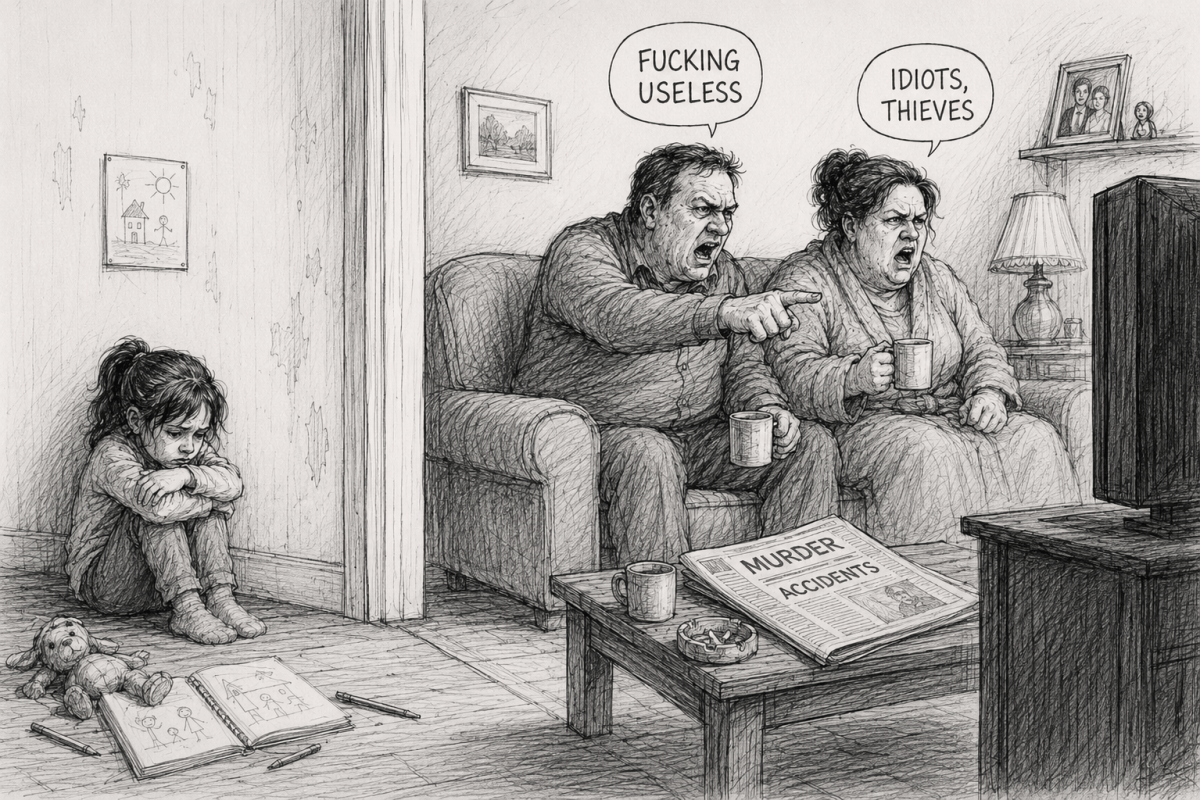
The idea that relationships automatically produce happiness is wildly overrated. Plenty of couples argue constantly, resent each other, feel trapped, tolerate each other out of habit, or live parallel lives under the same roof. Yet very few people openly admit that. We all know the classic scenario. You know a couple who appear perfect. Their photos are beautiful. They smile on holidays. They post anniversary messages. They have a lovely home, lovely children, lovely matching Christmas pyjamas and possibly even a Labrador strategically positioned in the family portrait. Then, a few years later, they split up and everybody is shocked. “But they were such a lovely couple!”
Were they? Do we seriously imagine that they were ecstatically happy for ten years and then, one Tuesday afternoon, the entire relationship suddenly combusted? Of course not. Things may have been unravelling quietly for years o r even decades. But once you are coupled, there is enormous pressure to perform coupledom properly. Smile. Say everything is fine. Post the holiday photos. Tell people your partner is wonderful. Keep the machinery running. You are far less likely to announce over coffee that your partner bullies you, frightens you, belittles you, controls you or makes your home life miserable. And that is where the fake plastic smile becomes much darker.
Relationships Can Be Deeply Isolating Too
A few days ago, a GP was found dead at her home, and her husband has since been charged with her murder. Looking at photographs of them beforehand, you could easily have seen what appeared to be a happy family: attractive couple, three children, smiling faces, blissful domestic life. But photographs tell us almost nothing about what happens behind closed doors. What I will not do is claim that we know there had been years of abuse in that particular case, because that has not been established. A murder charge is not proof of a previous pattern of coercion or violence, and the case has not yet been tried.
But the wider point remains: domestic abuse is real, common and very often hidden. Women’s Aid currently states that, on average, one woman is killed by a male partner or ex-partner every week in England and Wales, and that police recorded a domestic-abuse offence roughly every 40 seconds in the year ending June 2025. That should make people think before casually presenting “get into a relationship” as universal life advice. Relationships can be loving, supportive and enriching, but they can also be frightening, controlling, lonely and destructive.
Stop Treating Single People as Incomplete
This is what annoys me most: the assumption that a single person is somehow incomplete. If somebody is sad, perhaps they need rest. Perhaps they hate their job. Perhaps they are grieving. Perhaps they are overworked or overwhelmed. Perhaps they need some peace and quiet. Perhaps they need purpose. Perhaps they need therapy. Perhaps they need a new city, a new career, better boundaries, more money, more creativity, more sleep, more sunlight, more adventure or simply fewer irritating people offering unsolicited advice. Why does the answer always have to be: partner?
Single people do not need to be repaired by coupledom because there is nothing inherently therapeutic about being coupled. Coupledom itself can be full of doom and gloom: conflict, resentment, compromise, emotional exhaustion, control and disappointment. Singlehood, meanwhile, can be happiness, freedom, peace, fun, independence and the delicious ability to organise your life exactly as you please. A relationship is not an upgrade from an inferior operating system — singlehood is a perfectly functional, fully operational solo system of its own.
Do Your Own Inner Work
I am not saying every relationship is dreadful. Some relationships are probably genuinely wonderful, life-changing, supportive and deeply enriching. But I do think those relationships require two emotionally developed people who are capable of self-reflection, respect, accountability and genuine care. That does not happen automatically because two people fancy each other.
It takes work to become a psychologically mature person, and you can do that work alone. In fact, sometimes being alone gives you more space to do it properly. You do not need a partner in order to heal, evolve, become emotionally intelligent, fulfilled, interesting, stable or whole. Those things come from self-awareness, effort, honesty and growth, not from ticking the “in a relationship” box on some socially prescribed adult-life checklist.
Maybe You Need a Hut in the Forest
So next time you meet a single person who seems quiet, sad, restless, moody or dissatisfied, resist the urge to prescribe romance. Maybe they do not need a boyfriend. Maybe they do not need a girlfriend. Maybe they need something completely different. And you, the coupled know-it-all — are you never dissatisfied, unhappy, stressed, quiet, sad or anxious? Should we turn the tables and prescribe you single life and blissful solitude instead? Perhaps what you really need is a quiet hut in the forest, a campervan and nobody asking where you’ve been. 😉





Leave a Reply