It Took Me a Year to Learn How to Be Self-Employed
It took me almost a year of full-time self-employment to understand something that now seems painfully obvious: changing the way you work is not just about changing your schedule, your income or your location. It also means changing the way you think about time, usefulness, responsibility and even freedom.
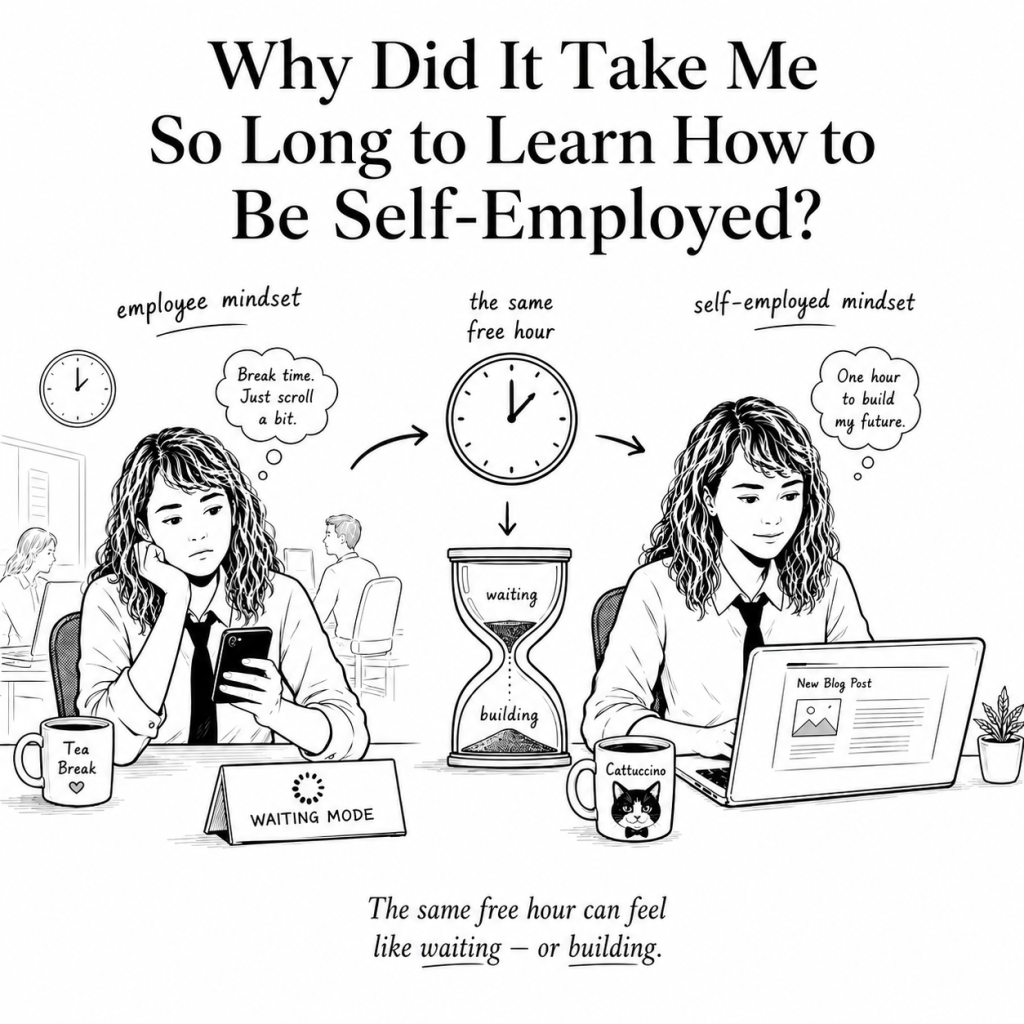
More than that, it involves a surprising amount of unlearning. I had spent most of my adult life in conventional employment, so I had developed habits and mental mechanisms that made perfect sense in that environment. Free time at work was something to fill, endure or waste. If I used a quiet hour for something that belonged to me — a personal project, a new idea, some future plan — I could feel strangely guilty, as if I were misusing time that morally belonged to the organisation. Yet scrolling, chatting or simply waiting for the next task felt socially acceptable because that was what people around me did.
When I first left conventional employment, I expected freedom to feel liberating immediately. Instead, it felt strange. It felt unfamiliar and suspicious. There was no boss, no office rhythm, no colleagues around me and no visible structure telling me when I was supposed to take a break, look busy or finally stop for the day. I was working from home, teaching lessons online, and suddenly there were gaps between them in the middle of the day. I could cook at 11am, dance at noon, do yoga at 1pm or go for a walk while everyone else appeared to be at work. And instead of feeling wonderfully free, part of me felt irresponsible.
What I did not realise at first was that I had brought the habits of employment home with me. I had changed the structure of my work, but not yet the structure of my thinking. I still treated gaps between lessons as something awkward and slightly illegitimate. I did not yet know how to organise that time for myself, so I often defaulted to the old pattern: wait, scroll, kill time, resume work.
It took months to start pruning those habits and replacing them with new ones. Gradually, I learned to treat spare capacity differently: as time to optimise, experiment, create, explore and test possibilities. Instead of asking, How do I fill this hour?, I started asking, What could I do with this hour that might improve my life, my work or my future? That was probably the deepest part of learning how to be self-employed. I did not simply need new routines. I needed to unlearn the routines that had trained me to waste time comfortably and invest in myself guiltily.
Looking back, the transition happened in stages. I moved from guilt and suspicion around free time, through mindless scrolling and passive waiting, towards the stage I am in now: time optimisation, experimentation and exploration. I began to see spare hours not as empty gaps between paid tasks, but as space in which new ideas, projects and opportunities could begin.
Then your stages become very coherent:
Stage One: Freedom and Flexibility Felt Suspicious
Stage Two: I Got Used to the Silence
Stage Three: Scrolling Still Felt Acceptable and Normal
Stage Four: Time Became Something I Could Build With
Stage One: Freedom Felt Suspicious
At the beginning, the pull to return to a conventional 9–5 was surprisingly strong. The strange thing was that I was working, earning and doing exactly what self-employment required of me, yet if I had a two-hour gap between lessons and decided to use that time to cook, move, walk or simply sit quietly, it felt almost as if I were cheating. There was a persistent thought in the background: This is a working day. Why are you behaving as if you are on holiday?
I had spent years inside environments where work was associated with physical presence, fixed hours, institutional routines and visible usefulness. Even when there was nothing urgent to do, you were still at work, and therefore the time somehow belonged to the organisation. Once that structure disappeared, freedom did not initially feel like freedom. It felt too good to be true. It felt as if I didn’t deserve it.
Stage Two: I Got Used to the Silence
Gradually, the peace and quiet stopped feeling unsettling. I stopped missing the office rhythm and stopped needing colleagues around me in order to feel as though I was doing something legitimate. The silence became normal, then pleasant, then something I actively valued.
But some of the old conditioning remained. Going for a walk at 11am still felt slightly illicit. Running at 1pm felt vaguely wrong, even though nobody was waiting for me and no work was being neglected. There was still some invisible rule in my head telling me that respectable adults were supposed to be indoors doing something recognisably productive during those hours.
Eventually, that faded too.
Stage Three: Scrolling Still Felt Acceptable
Another habit remained much longer: whenever I had free time, I often scrolled mindlessly.
That behaviour felt oddly normal because it was something I had seen people do at work for years. Senior staff did it. Colleagues did it. People chatted, browsed, checked their phones, made tea, killed time and waited for the next task. Nobody seemed to experience that as some great moral failure.
And this is where the psychology becomes interesting. When you are employed, especially in an institutional setting, your time starts to feel as though it belongs morally to the employer even when you have completed your immediate work. Scrolling social media can somehow feel acceptable because it is passive, unserious and temporary. You are not building anything. You are simply waiting for the next task.
But imagine opening a document called My Future Business Ideas. Imagine writing a blog post, building your own website, learning a new skill, creating a product, working on a side project or developing something that could eventually become financially valuable to you. Suddenly, the exact same idle hour feels different. It can feel as if you are diverting company time towards yourself.
And that is the absurd bit: wasting time can feel less disloyal than investing it in your own future.
The Moral Psychology of Paid Time
In employment, idle time is still paid time. You are being paid for your availability, your presence and your willingness to be useful to the organisation during those hours, and that creates a kind of moral obligation even when there is temporarily nothing meaningful to do. You still feel that the time belongs to them.
So if you scroll for twenty minutes, it can feel harmless because you are merely waiting for the next task. If you start creating something for yourself, however, the same twenty minutes can suddenly feel suspiciously entrepreneurial. Workplace culture reinforces this because passive time-wasting is often socially sanctioned. If everyone else is chatting, browsing, making coffee or killing time, you are simply participating in normal workplace behaviour. But if you quietly begin building something that might one day reduce your dependence on the organisation, it feels different. The behaviour has shifted from passive waiting to active self-investment, and that can trigger guilt.
Employment and Self-Employment Ask Different Questions
There is also a deeper identity shift underneath all of this. Employment trains us to ask:
“How can I be useful here?”
Self-employment gradually teaches a different question:
“How can I build something that compounds for me?”
Those are very different mental habits.
Neither mindset is inherently wrong. If an employer pays you for your time, labour and availability, then of course some obligation is real. The problem begins when the employee mindset leaks into every corner of your life and you become extraordinarily good at building other people’s organisations while remaining strangely hesitant about building yourself.
Employment teaches you to look outward for instructions, tasks, deadlines, approval and usefulness. Self-employment forces you to look inward and forward: What can I create? What can I improve? What could I start today that might create an opportunity six months from now? What can I build that still exists after the hour is over?
Stage Four: Free Time Became Development Time
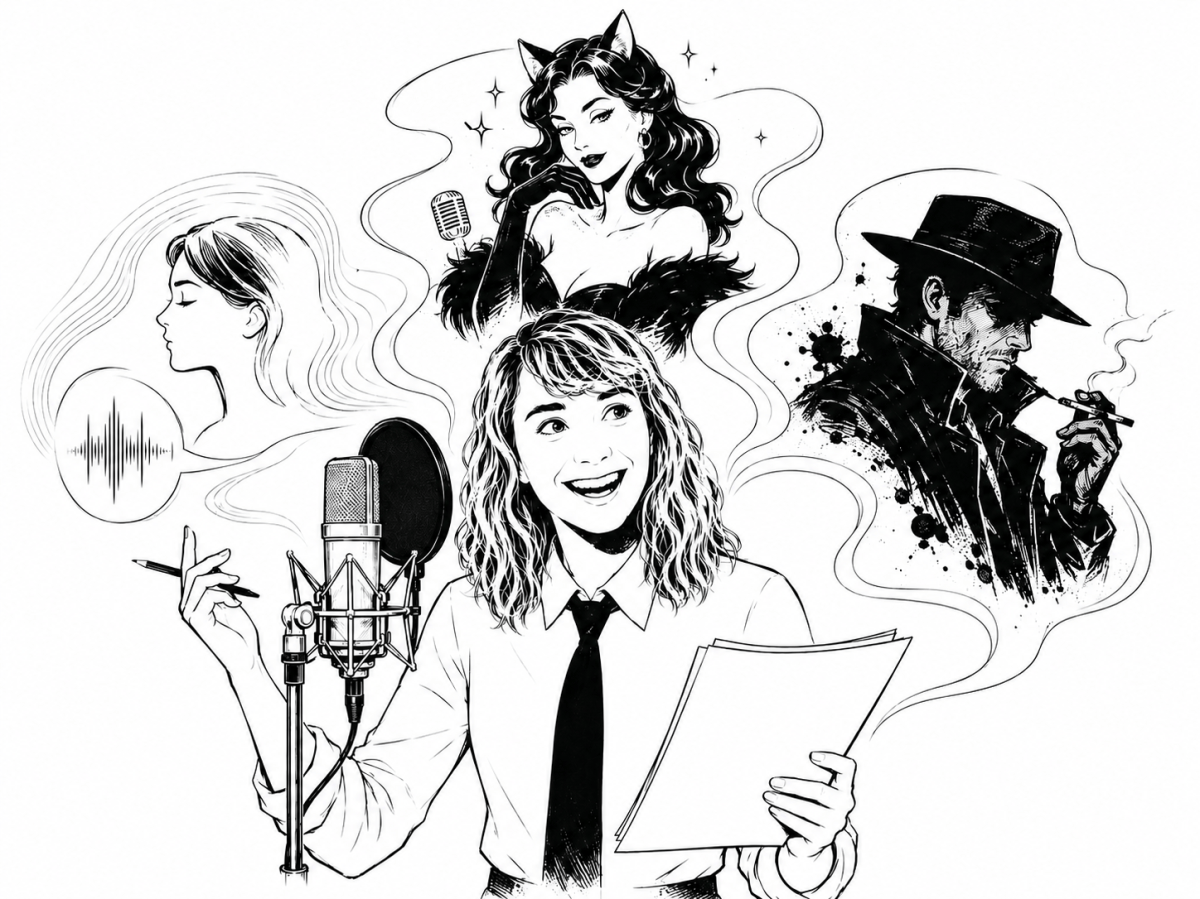
This was the final shift for me. I gradually stopped scrolling so much and began using those gaps differently. I worked on my professional profiles, created content, explored voice-over work, built Etsy listings, developed Outlanga, wrote more, experimented more and tested ideas instead of waiting for certainty.
And something interesting happened: the more I created, the more ideas arrived. A free hour stopped being something I had to fill, justify or waste. It became an opportunity to develop something. A post could lead to a new connection. A profile update could lead to a client. A portfolio piece could lead to a new type of work. A strange idea could become a project. A movement experiment could become something much bigger than I initially imagined. That is when the economics of self-employment finally made emotional sense to me.
No work can mean no income. No visibility can mean fewer opportunities. No ideas can mean fewer future gigs.
An idle hour suddenly has an opportunity cost, not because every minute needs to be monetised and certainly not because rest is somehow wrong, but because time begins to feel valuable in a different way. You stop asking only, “What am I being paid to do right now?” and begin asking, “What could I create now that might still matter later?”
The Real Missed Opportunity
When I look back at years of conventional employment, it would be easy to think: I had so much spare time. I could have written hundreds of posts. I could have developed projects. I could have built something. But that misses the deeper point. The real missed opportunity was not simply that I had free time. It was that I had not yet given myself permission to use spare capacity for my own development. I never felt particularly guilty wasting spare time. I felt guilty investing it in my own future. That distinction says a lot about the way employment shapes us psychologically.
It Took Me a Year to Understand This
This realisation did not arrive the day I became self-employed. It came slowly. First, I felt lost without structure. Then I got used to the peace. Then I stopped feeling guilty for walking or running in the middle of the day. Then I noticed that mindless scrolling was simply another old habit I had carried with me. Eventually, I began replacing passive consumption with creation, experimentation and development.
Now I understand that spare time is not necessarily empty time. It can be rest time, recovery time or play time, but it can also be development time. And perhaps the biggest sign that my transition into self-employment is finally complete is this: I no longer feel any pull to go back to a 9–5.





Leave a comment