When October Misbehaves
We have been extraordinarily lucky with the weather this October. Day after day, the sky has been almost cloudless, the sun has felt warm on my skin, and the mornings and evenings have been filled with those beautiful golden sunrises and sunsets that make even an ordinary street look gilded and slightly Mediterranean. I feel genuinely grateful for it. This is Britain, after all. October could very easily mean endless grey skies, drizzle, cold wind and that damp chill that somehow manages to penetrate every layer of clothing. Instead, we have been spoiled with warmth and sunshine, and I assumed, rather naively, that everyone else must feel just as delighted about it as I do.
A few days ago, that assumption was challenged. I was walking down the street when I overheard two work colleagues discussing the weather. The man sounded delighted and seemed to be enjoying it as much as I was, but the woman said she didn’t like it. He asked her, with obvious surprise, why not, and she replied that it felt strange, almost wrong, because it was October and yet it still felt like summer. I nearly collapsed in disbelief. What?! Here we were, being given glorious warmth in a month that is so often miserable, and instead of enjoying it she seemed disturbed because reality was refusing to follow the expected seasonal timetable. My immediate thought was that if the weather had been cold, wet and windy, she would probably have complained about that too. It struck me then how deeply attached people can become to repeated patterns, expectations and templates. Sometimes they are so committed to what life is supposed to look like that they struggle to enjoy what is actually happening in front of them.
The Invisible Rulebook
We absorb these ideas constantly. October should be gloomy. Forty should mean decline. Adults should become serious. Women should worry about ageing. People should marry. Couples should have children. Work should be exhausting. Bodies should become rounder and weaker with age. You should settle down. You should become sensible. You should stop doing your own thing because apparently adulthood is meant to be a gradual surrender of joy, optimism, curiosity, playfulness and experimentation. These assumptions are everywhere, and because they are repeated so often, they begin to feel less like opinions and more like laws of nature. The trouble is that when reality offers us some fun alternatives outside those familiar patterns, we sometimes distrust them instead of embracing them. Novelty is always suspicious and abnormal.
The Nurse Who Made Me Fear Forty
I will never forget a conversation I had with a nurse when I was a teenager. I had gone to hospital with my mother to visit my grandfather, and somehow the conversation turned to weight gain. I casually remarked that I could eat whatever I fancied and still remain slim. The nurse looked at me and said, rather condescendingly, “Wait until you’re forty. Your metabolism will slow down and you’ll start putting on weight. It is unavoidable.” I looked at her and thought she was probably in her forties herself and visibly overweight. Because she was a nurse, and therefore represented medical authority in my teenage mind, I absorbed what she said. I did not consciously sit there thinking, “Right, at forty my body will deteriorate,” but somewhere inside me a little file was created with that prediction. Over the years, society kept adding more documents to the file. Middle-aged people complained about aches and pains. Women over forty talked about becoming invisible. There were jokes about middle-aged spread. People spoke about youth as if it were some magnificent country you are permanently exiled from at approximately thirty-nine. I began to dread turning forty because the cultural narrative around it was so relentlessly negative.
Then I Turned Forty — and the Negative Script Fell Apart
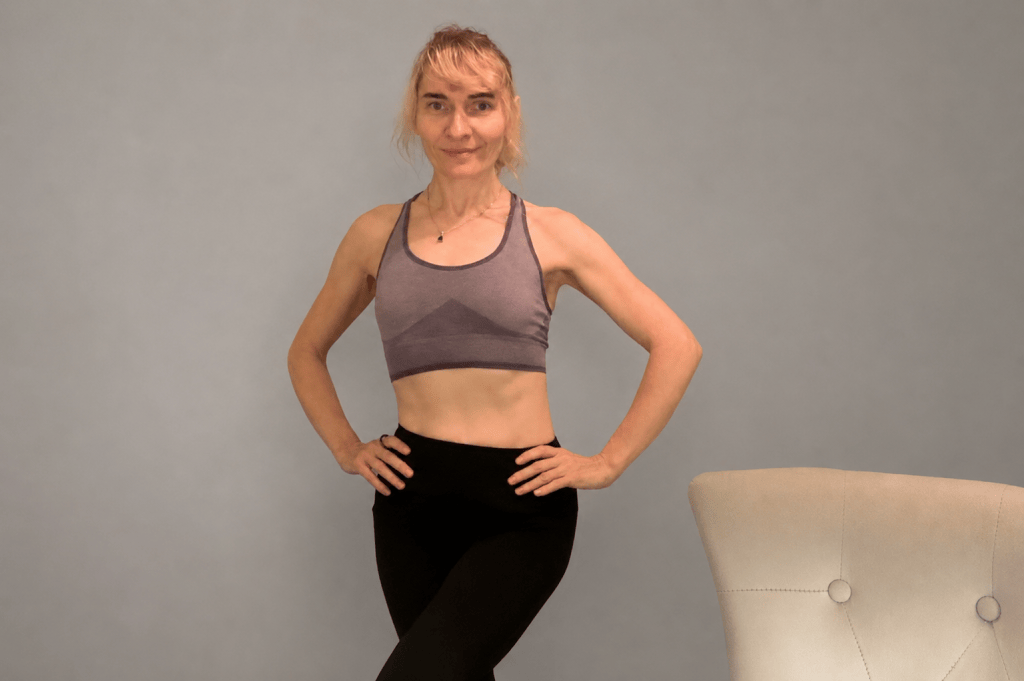
And then I actually turned forty, and the whole negative narrative around turning 40 began to disintegrate. I am forty-three now, and from my own experience I can say that my late thirties and early forties have been the best years of my life. I am in the best physical shape I have ever been in. For the first time in my life, I can actually see my oblique muscles. I certainly could not see them as a teenager, nor in my twenties or early thirties. Why? Because age was never the whole story. When I was younger, I knew nothing about nutrition and I did not exercise consistently. Growing up in Poland in the late 1990s and early 2000s, yoga and recreational running were non-existent, especially in the small town where I lived. Later, I discovered movement properly. I took up yoga, completed 500 hours of yoga teacher training in India, started running regularly, began covering half-marathon distances, and now I am training for my first full marathon. None of this fits the collective narrative that forty means inevitable physical decline.
Then Outlanga Arrived
Then there is dancing, or whatever the strange creature I created from dancing, yoga, tai chi, repetitive movement and instinctive expression should be called. I call it Outlanga. Since becoming a homeowner and finally having enough space to move freely, I have been doing much more of it, often several hours a week. It is expressive, repetitive, experimental, joyful and increasingly wild. It is great for self-regulation and mood-boosting! There are twists, jumps, belly movements, core work, skipping patterns and strange combinations that probably belong to no respectable school of movement whatsoever. Excellent. Outlanga has become fiercer, freer and more instinctive over time, and it has changed my body too. All that twisting, jumping and abdominal work has made my core stronger and more defined than it ever was when I was younger. At forty-three, I feel more at home in my body than I did at twenty-three. I do not feel invisible. I do not feel as though I am fading. Quite the opposite. I feel increasingly present.
What Happens When You Believe the Script
Sometimes I wonder what would have happened if I had obediently accepted the old narrative. What if I had reached forty and thought, “Well, this is when women gain weight. This is when everything starts hurting. This is when fitness declines. This is when you become less attractive. This is just ageing”? Perhaps I would have interpreted every small change as proof that decline was inevitable. Perhaps I would have stopped challenging myself physically. Perhaps I would have become passive and surrendered some of my agency before there was any reason to surrender it. That is one of the most dangerous things about cultural assumptions: once you believe something is inevitable, you stop asking whether you can influence it. You stop experimenting. You stop resisting. You begin to cooperate with the expectation.
Human Beings Love Default Settings
And ageing is only one example. We inherit astonishing numbers of paradigms without ever consciously choosing them. There is the career template: school, university, job, promotion, retirement. There is the relationship template: dating, marriage, house, children. There is the adulthood template: become sensible, stop playing, stop experimenting, become increasingly busy, tired and serious. There are expectations around beauty, money, ambition, family, clothing, lifestyle, sexuality, relationships, hobbies and success. What fascinates me is that people often defend these conventions even when the conventions make them miserable. Someone says they do not want children and immediately somebody predicts regret. Someone says they do not want to marry and someone warns them about ending up alone. Someone wants to change career at forty-five and is told they are too old. Someone wants to travel alone and is treated as frivolous, irresponsible, or as though they have Peter Pan syndrome — yep, I hear it from work colleagues. Someone wants to dance around their living room for two hours and, well, society has not developed an official objection yet.
History Is Full of Dead Rules
Human beings seem remarkably fond of default settings because they make life predictable. They tell us where we stand and what comes next. But predictability and truth are not the same thing. History is full of social rules that once seemed permanent, respectable and unquestionable, only to look absurd or cruel a few generations later. There were times when marrying outside your social class could cause enormous scandal. Interracial marriage was once legally prohibited in parts of the world and heavily stigmatised elsewhere. Same-sex relationships were criminalised and persecuted. People lost freedom, careers, reputations and sometimes their lives because they refused, or simply could not, fit the accepted model. Oscar Wilde was imprisoned because of his relationships with men. Alan Turing, despite his extraordinary contribution to Britain, was prosecuted for homosexuality and subjected to chemical castration. Today, many attitudes that once presented themselves as unquestionable morality are recognised as prejudice.
Maybe the Rebels Are Just Early
That should make us humble about the rules we obey now. Which of today’s so-called obvious truths will look ridiculous in fifty years? Which expectations are we following simply because everyone around us is following them? Which traditions, assumptions and social formulas are useful, and which are just old furniture that nobody has bothered to throw away? I think that whenever someone departs from an established pattern, they often look weird or like oddballs before they look normal. The first person to challenge a convention is strange, and the normals will try to punish them and put them back in the box. Think of the first woman who tried to run in a race. But races were only for men! Some men tried to push her off the course. Others helped her back onto the track. The thousandth becomes part of a movement. The millionth is ordinary. Someone has to go first. Someone has to say, “Actually, I do not want that life. Actually, I do not agree that ageing means decline. Actually, I do not want children. Actually, I do not need a conventional relationship to be happy and complete. Actually, I want to start running at forty. Actually, I want to change careers or start my own business. Actually, I want to travel alone. Actually, I want to dance around my house inventing a movement practice that technically did not exist before I started doing it.”
Tiny Acts of Rebellion
Perhaps that is how cultural change happens most of the time. Not only through huge political revolutions, but through millions of tiny personal refusals. One person decides not to marry. Another decides to start again at fifty. Someone else refuses to dress according to age. Another chooses to leave a prestigious career because it no longer fits. Someone else starts lifting weights at sixty. Someone else lives alone and is perfectly happy. Someone else has children and adores that life. The point is not that one path is superior to another. The point is that a life chosen consciously is different from a life lived according to an inherited template.
Look at Reality Before You Turn to the Rulebook
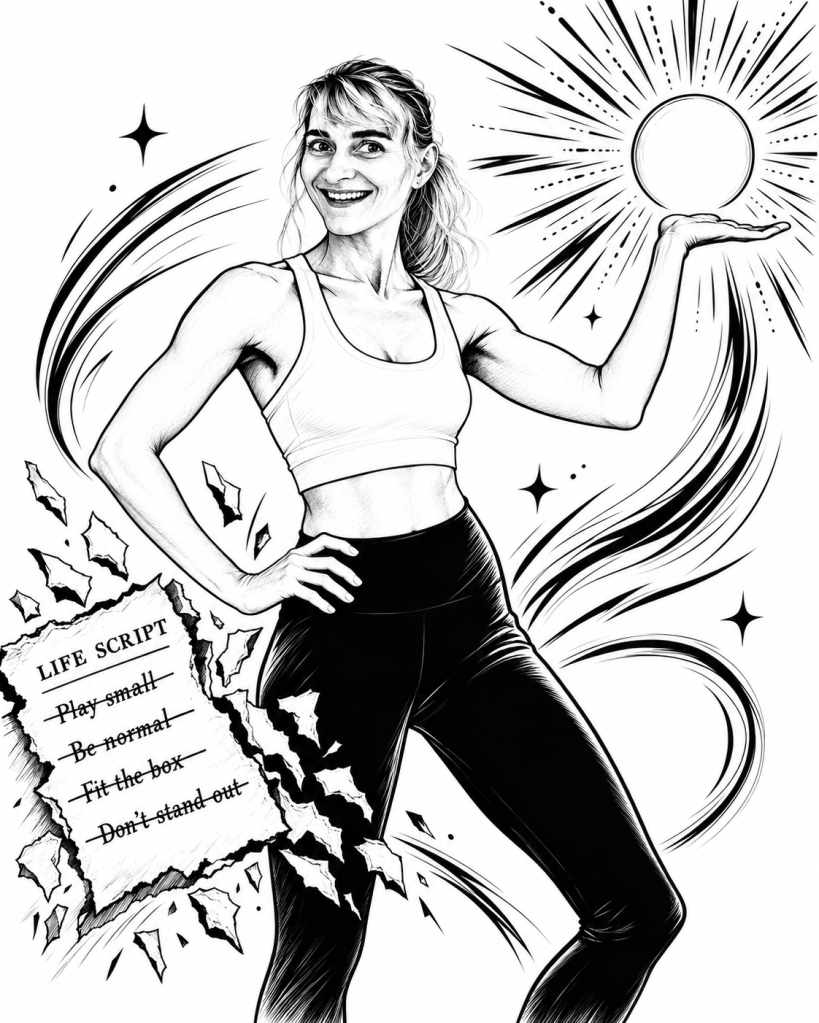
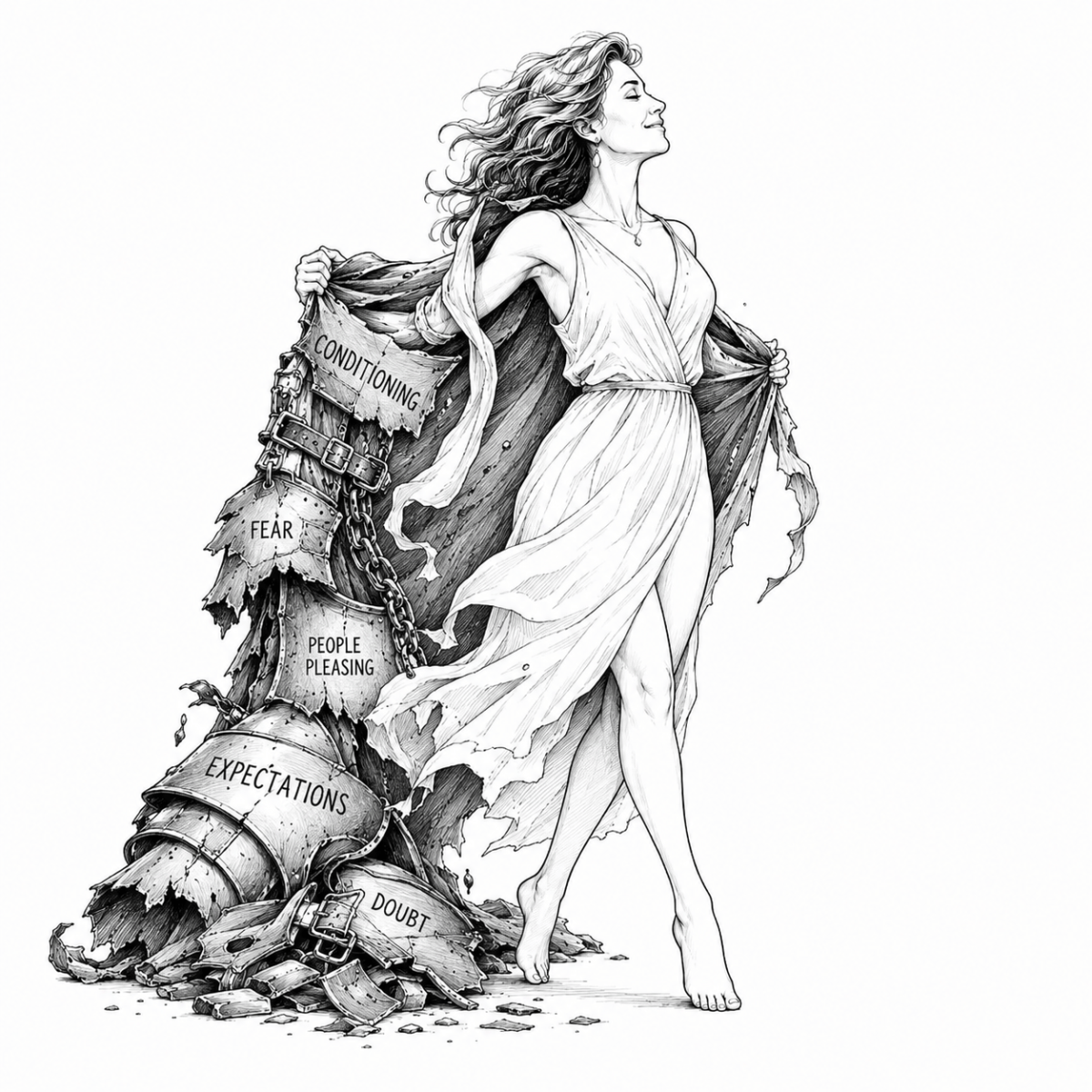
That woman complaining about the October sunshine probably has no idea that she inspired all these thoughts. But she did. She reminded me how easy it is to reject something beautiful simply because it does not match expectation. October should be cold. But what if it is not? Enjoy the sun. Forty should mean decline. But what if you have primed and trained your body and it is stronger than ever? Enjoy it. Adults should become sensible. Why? Your life should look like everybody else’s. Again, why? Sometimes reality is better than the rulebook, and when that happens, I think we should have the courage to throw the rulebook away, scribble all over it, tear out the useless pages, or preferably grind the bloody thing into powder.
Thanks for reading. I hope this post encourages you to look more closely at the assumptions, expectations, paradigms and inherited narratives operating quietly in your own life. Keep the ones that serve you. Question the ones that do not. And whenever possible, write your own.



Leave a Reply