On emotional illiteracy, inherited misery, toxic people, inner healing and the courage to reclaim your life.
I have been contemplating my life more than usual lately, wondering why I am so much happier in my forties than I ever was as a child, a teenager, or a woman in her twenties and early thirties. Isn’t that curious? We are constantly bombarded with messages suggesting that youth is the most glorious period of our lives, that everything begins to deteriorate once we pass a certain age, and that middle age is a gloomy territory populated by regrets, ailments, disappointments and existential crises. Yet my experience has been precisely the opposite. I became increasingly happy in my late thirties, and now, in my early forties, I seem to have entered an entirely new dimension of happiness. I have never felt more liberated, empowered, energetic, creative, curious or hungry for new experiences. Instead of shrinking into some socially prescribed version of a middle-aged woman, I seem to be expanding in every possible direction. I want to travel, run marathons, dance, write, create music, learn new skills, experiment, explore and generally cause a little harmless disruption to the established order of things.
What happened? Did the universe suddenly become kinder? Did I family fortune or discover a magical fountain of eternal happiness? Absolutely not. My circumstances are not outrageously luxurious, and my life is certainly not free from problems. What changed was something much more fundamental: my understanding of myself, my emotions, my needs and my relationship with the world. Happiness stopped being an elusive prize that might eventually be handed to me and became something I could actively cultivate.
I started wondering whether some of these discoveries might help other people. Perhaps someone reading this is unhappy without understanding why. Perhaps they’ve been searching for happiness in the wrong places, pursuing goals that don’t belong to them or carrying emotional baggage they never chose to acquire. Sometimes the easiest way to understand happiness is to identify its enemies.
So here are my five major thieves of happiness, identified through decades of personal experience, observation, reading, experimentation and occasionally making rather preposterous decisions.
1. Emotional Ignorance: Nobody Taught You How to Be Happy
I think the number one reason I was so unhappy in my younger years was sheer emotional ignorance. I had absolutely no understanding of how emotions worked, what they were trying to communicate or how much influence I could have over my internal emotional weather. I didn’t know that feelings could be observed, named, understood, regulated or transformed. I simply experienced them as invasive forces that descended upon me, sometimes causing tremendous suffering, and then waited helplessly for them to disappear. Nobody had taught me that emotional regulation was a skill, that our interpretations influence our feelings, or that the human mind could be trained to respond differently to life’s difficulties. I was emotionally illiterate, and so were most of the adults surrounding me.
I grew up in communist Poland during the 1980s. Tough times. Empty shelves in shops, queues, shortages, grimness, frustration, economic hardship and a general atmosphere of endurance rather than flourishing. And what was the preferred medicine for misery in the adult world I observed through my child’s eyes? Vodka. Or moonshine, if vodka wasn’t available. That was the coping mechanism I saw repeatedly. People didn’t sit around discussing emotional needs, attachment patterns, psychological resilience or the importance of validating one’s feelings. They endured, complained, shouted, drank, suppressed their emotions and carried on. Of course, not every Polish family was like mine, and I am not pretending to describe everyone’s experience. I am describing the world I actually witnessed, and I refuse to romanticise it.
Expressions of affection were so foreign to my everyday reality that when I watched American films in which parents casually told their children, “I love you,” I was genuinely shocked. Unsettled. Almost destabilised. What on earth was this strange behaviour? Parents openly expressing tenderness towards their children? Hugging them? Encouraging them? Speaking lovingly instead of issuing instructions or criticism? It seemed like something from another planet. In my immediate environment, emotions were rarely discussed constructively, and affection was not something I expected to hear expressed aloud. I had no language for my inner world and no framework for understanding it. Looking back, it is hardly surprising that I spent so many years struggling with feelings I couldn’t even identify.
In my thirties, I decided that if I wanted to become a happier person, I would have to study happiness deliberately. I approached it almost like learning a foreign language. I started reading books about emotional intelligence, psychology, wellbeing, meditation, self-awareness and emotional regulation. I observed people who appeared genuinely content with their lives. What did they do differently? How did they plan their days? How did they respond to disappointments? Why did some people recover from setbacks while others remained trapped in bitterness for years? Could I learn from them? Could I borrow their habits, test their techniques and adapt their approaches to my own personality? I was determined to find out.
And so began my experiments. Journaling, morning pages, gratitude journals, meditation, visualisation and affirmations. I tried different methods, discarded those that didn’t suit me and developed some wonderfully eccentric variations of my own. At one point, ordinary affirmations became far too boring, so I started composing little melodies and singing them like cheerful private mantras. Why merely repeat something encouraging when you can turn it into a song? I discovered that emotional practices don’t have to be solemn or serious. They can be playful, ridiculous, musical and entirely personal.
There is a substantial body of psychological research showing that emotional regulation strategies, mindfulness practices and certain forms of cognitive reframing can improve aspects of psychological wellbeing. Gratitude exercises may also help some people, although their effects vary and they are not magical cures for depression or trauma. The important discovery for me was that my emotional life was not completely beyond my influence. I couldn’t control every event, every feeling or every difficult person I encountered, but I could learn to recognise patterns and respond more thoughtfully.
Happiness, I realised, is a skill. Not a permanent state of euphoria, not an obligation to smile through suffering, and certainly not proof that everything in life is perfect. It is something we can learn to cultivate, protect and nourish. And like any skill, it benefits from practice. Nobody had taught me how to do that when I was young. So I taught myself.
2. You Haven’t Defined Your Own Happiness: You’re Following Somebody Else’s Script
Here is another enormous obstacle to happiness: people frequently spend their entire lives pursuing things they have never seriously questioned. They absorb society’s definitions of success, fulfilment and respectability, then spend decades trying to meet expectations that may have very little to do with their actual needs or desires. Get a prestigious job. Climb the career ladder. Earn more money. Find a partner. Get married. Have children. Buy a bigger house. Acquire impressive possessions. Look successful. Behave appropriately. Repeat until retirement.
But what if your happiness has absolutely nothing to do with this script?
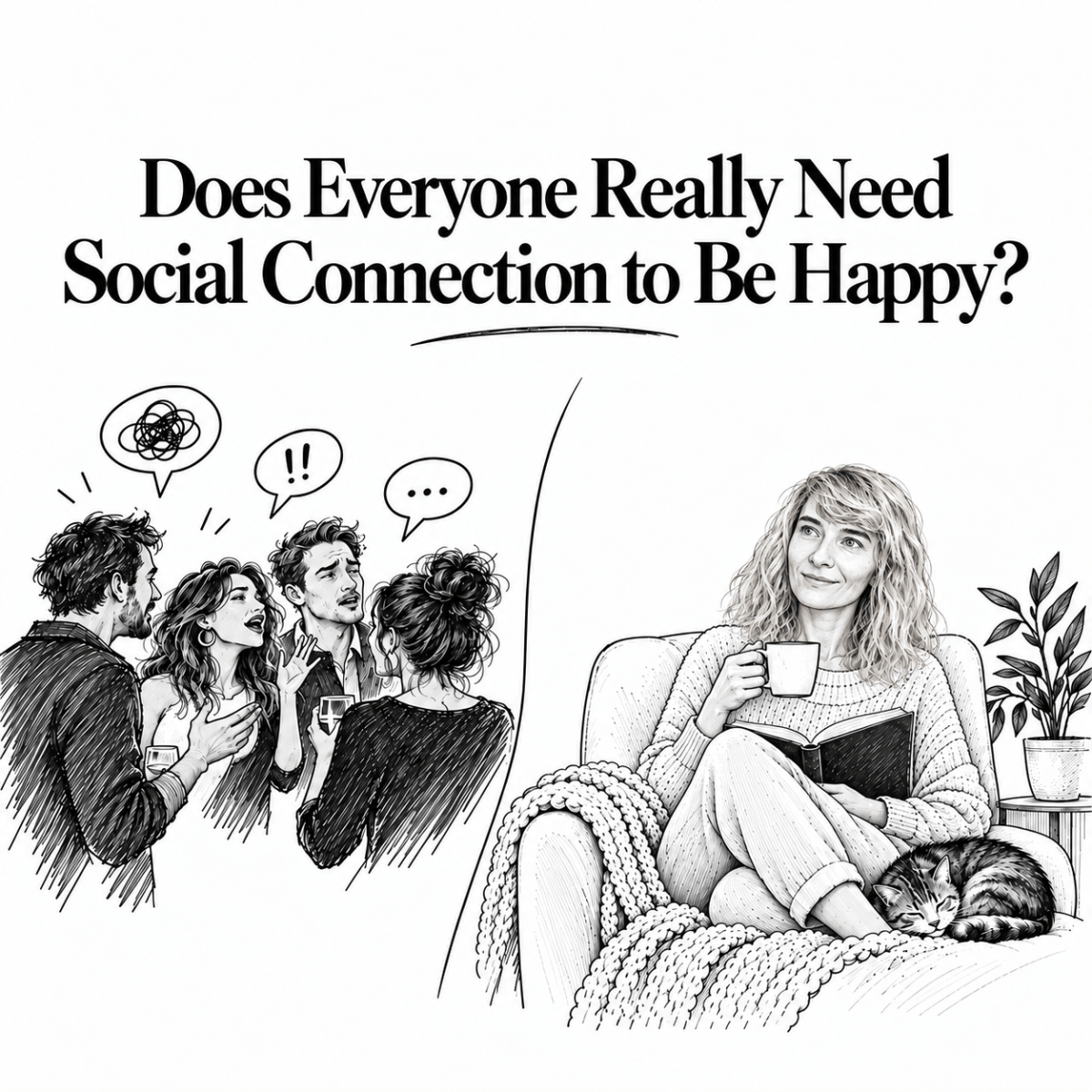
What if you don’t particularly enjoy large social gatherings, luxurious restaurants, expensive cars, corporate ambitions or conventional domestic arrangements? What if your idea of paradise is a peaceful home, comfortable clothes, delicious coffee, freedom to organise your own day, solitary adventures, spontaneous movement and the glorious absence of other people’s demands? What if you’d rather spend an afternoon inventing a strange new dance in the park than attending an event everybody insists you ought to enjoy? Does that make your happiness somehow inferior? Of course not. It simply means you have a different operating manual.
One of the most useful things I ever did was sit down and make a list of what genuinely made me happy. Not what impressed other people. Not what looked attractive on social media. Not what society insisted a woman of my age should want. My own happiness ingredients. Peace. Quiet. Freedom. Self-expression. Movement. Travel. Good sleep. A comfortable home. Delicious coffee. Nourishing food. Music. Creativity. Physical fitness. Fresh air. The ability to make decisions without seeking permission. The freedom to be gloriously, unapologetically myself.
None of these things required me to win anybody’s approval. Many were already available to me, provided I made room for them. That was a rather revolutionary realisation. Happiness wasn’t necessarily hiding somewhere in an expensive future. A surprising amount of it was available in the ordinary fabric of daily life.
Psychologists studying self-determination have identified autonomy, competence and relatedness as important psychological needs. In other words, people generally benefit from feeling that they have some control over their lives, that they can develop their abilities and that they can experience meaningful connection. But the way these needs are expressed can vary tremendously. One person finds autonomy through running a company. Another finds it through working independently. One person experiences meaningful connection through a large family, another through a few close relationships, creative communities or shared interests.
The point is not to discover the universally correct lifestyle. There isn’t one. The point is to discover what actually nourishes you.
I like to imagine happiness as a garden. Once you’ve identified the flowers you want to grow, you need to give them attention, sunshine, water and space. You cannot plant a beautiful garden and then spend every day nurturing the weeds while ignoring your flowers. Yet that’s exactly what many of us do psychologically. We give enormous amounts of attention to criticism, comparison, pessimism, resentment and imagined disasters, while the things that make us feel alive receive whatever scraps of time remain.
So make your happiness list. Write down everything that gives you a sense of peace, joy, fascination, fulfilment or freedom. Then look at your ordinary week. How much time do these things actually receive? Are you nurturing your flowers, or have the weeds taken over?
And while we’re discussing weeds, let me introduce you to one of my favourite visualisation exercises.
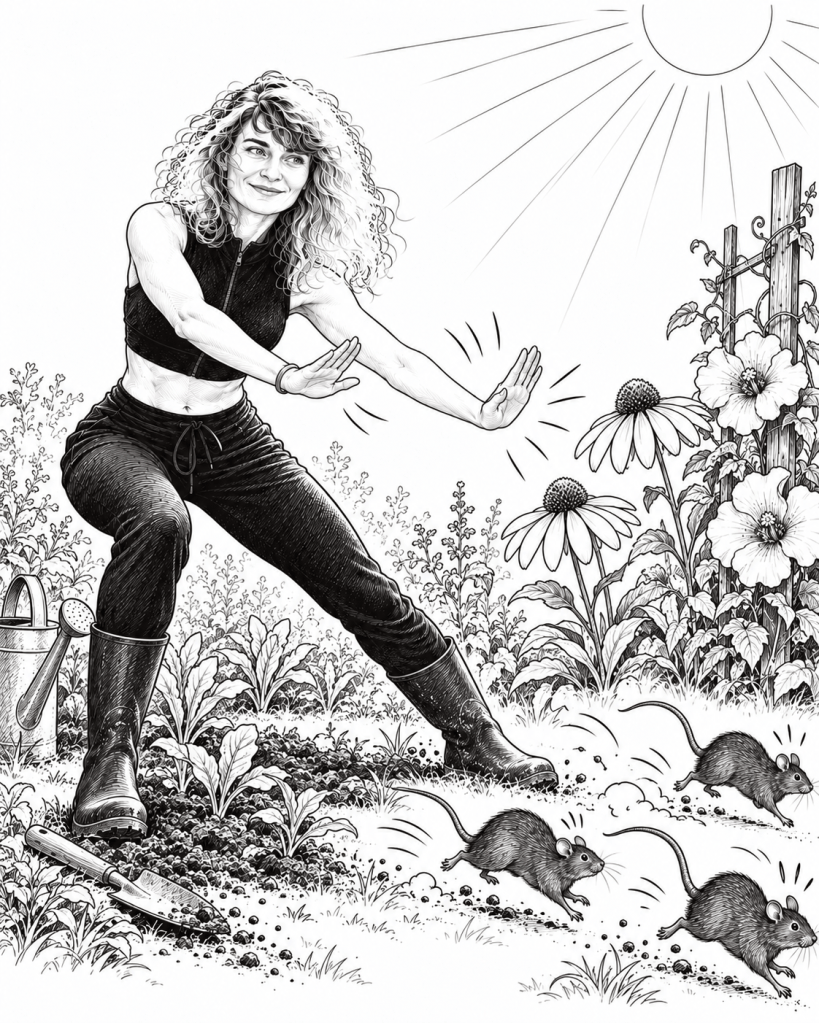
I imagine intrusive, ugly, unhelpful thoughts as rats. Yes, rats! Uninvited little pests attempting to establish residence in my mental garden. When one appears, I picture myself telling it, “SHOO! OUT!” Alternatively, I imagine dark thoughts as enormous black balloons floating across the sky, obscuring the sunshine. Then I take an imaginary slingshot — proca, as we say in Polish — and POP! Down goes the balloon.
Is this a clinically validated cure for every psychological difficulty? Certainly not. Persistent anxiety, trauma and intrusive thoughts may require more specialised approaches, and sometimes trying too hard to suppress thoughts can make them more persistent. But playful imagery can help me notice a thought without automatically treating it as a fact. The point isn’t to wage war against every unpleasant emotion; it is to stop handing every passing thought the keys to your entire mental kingdom.
Your thoughts are not always telling you the truth. Your fears are not prophecies. And your mental garden deserves space and sunshine.
3. You’re Surrounded by the Wrong People: Stop Letting People With Zero Abracadabra Ruin Your Magic
There is a popular saying that you are the average of the five people you spend the most time with. I wouldn’t treat that as a scientific mathematical formula, but the underlying idea is worth considering: our social environments influence our attitudes, habits, expectations and emotional wellbeing.
If you spend your days surrounded by chronic complainers, pessimists, gossips, scaremongers, critics and people who seem determined to discover a catastrophe lurking behind every opportunity, don’t be surprised if some of that atmosphere eventually gets inside your head. Negativity can become contagious. So can enthusiasm, courage, kindness and curiosity. Human beings influence one another through conversation, social norms, emotional reactions and everyday behaviour, often without realising it.
I have encountered people whose immediate response to almost any unusual idea is to explain why it cannot possibly work. You announce that you want to travel somewhere unfamiliar, and they produce a catalogue of disasters. You mention starting a business, and they remind you that most businesses fail. You contemplate learning a new skill, and they explain that you’re too old, too inexperienced or insufficiently qualified. You say you’re happy being single, and they inform you that one day you’ll regret it. You decide to run a marathon, and suddenly everybody becomes an amateur cardiologist predicting your imminent collapse.
Good grief! Imagine living permanently inside somebody else’s catastrophe factory.
There is, of course, a difference between constructive criticism and relentless discouragement. Someone who points out a genuine safety issue or helps you identify a weakness in your business plan may be doing you a tremendous favour. I don’t want to surround myself exclusively with people who applaud every ridiculous thought that enters my head. I want intelligent disagreement, practical feedback and honest conversations. What I don’t want is a permanent chorus of people who treat ambition, difference and experimentation as personal offences.
When we’re children, we have relatively little control over our emotional environment. We cannot choose our parents, siblings or the atmosphere of our family home. We may grow up absorbing dysfunctional thinking patterns, unhelpful coping mechanisms, criticism, fear or emotional neglect without even recognising them as such. What surrounds us becomes normal simply because it’s familiar. We might carry those patterns into adulthood, unconsciously recreating the emotional climate of our childhood in friendships, workplaces, romantic relationships and relationships with ourselves.
But adulthood offers something childhood often doesn’t: choice.
We can decide whom to spend time with, which conversations to participate in, whose opinions deserve serious consideration and where to establish boundaries. Sometimes that means limiting contact with people who repeatedly undermine our wellbeing. In more harmful relationships, distance or ending contact may be necessary. In others, a simple change of conversational habits can make a surprising difference.
When somebody begins an enthusiastic round of gossip, I enjoy the idea of introducing anti-gossip. Instead of joining in the character assassination, say something kind or acknowledge that we don’t know the whole story. When someone begins another elaborate prediction of doom, ask what practical action could improve the situation. When someone belittles an ambition, ask what evidence supports their objection. If they have a useful argument, listen. If they have nothing but reflexive pessimism, don’t invite it to become your inner voice.
And above all, remember my favourite rule:
DO NOT ALLOW PEOPLE WITH ZERO ABRACADABRA TO RUIN YOUR MAGIC!
Your enthusiasm is precious. Your curiosity is precious. Your unusual dreams are precious. Not everybody has to understand them, participate in them or approve of them. You don’t need universal applause before you begin living your own life. Choose your company thoughtfully. And if your current social circle is very small, remember that solitude can be infinitely more nourishing than constant exposure to people who leave you feeling diminished.
4. You Haven’t Done Enough Inner Work: You Cannot Bloom Beneath a Mountain of Emotional Debris
Imagine two people arriving in the world under very different circumstances.
The first grows up in a loving, emotionally supportive family. Their feelings are acknowledged. Their talents are encouraged. Their mistakes are treated as opportunities to learn rather than evidence of personal failure. They receive affection, reassurance, guidance, stability and opportunities to explore the world. Over time, they develop a reasonable sense of self-worth, emotional security and confidence in their ability to deal with life’s challenges.
Let’s imagine, purely for illustration, that this person begins adult life with 100 units of emotional capital.
Now imagine a second person. They receive food and shelter, but very little tenderness, encouragement or emotional support. Their inner world is largely ignored. Their achievements are taken for granted, their needs dismissed, their individuality discouraged. They may grow into adulthood without ever having experienced the ordinary reassurance that they matter simply because they exist. Let’s say their starting balance is zero.
Now imagine a third person growing up in a deeply dysfunctional environment, where neglect, humiliation, hostility or abuse are part of everyday life. Instead of being helped to develop confidence, they’re repeatedly taught to doubt themselves. Instead of learning healthy ways to regulate emotions, they absorb the coping strategies of adults who cannot regulate their own. Instead of feeling safe enough to explore, experiment and fail, they learn to monitor danger. Their emotional account begins at minus 100.
These numbers are metaphors, not clinical measurements, and human development is far more complicated than a simple balance sheet. But the underlying inequality is real. Adverse childhood experiences can influence emotional regulation, stress responses, mental health and relationships later in life. Supportive relationships and opportunities for recovery can make a meaningful difference, but some people enter adulthood carrying burdens that others have never had to contemplate. And yet society often expects everybody to function as though they started from the same position.
Why aren’t you more confident? Why don’t you take more risks? Why do you struggle with relationships? Why are you so sensitive to criticism? Why can’t you simply move on? Well, perhaps because one person began the race with comfortable running shoes, an encouraging coach and a clear route, while another began barefoot, carrying a sack of stones. It takes time to unload the emotional burden – an inherited sack of stones.
For me, inner work has involved examining inherited beliefs, recognising destructive patterns, learning emotional regulation, developing self-awareness and questioning the stories I had been told about myself. Some of those stories were never mine to begin with. They were other people’s frustrations, fears, limitations and judgements, deposited into my mind long before I had the ability to challenge them.
Healing, as I understand it, involves gradually separating what belongs to us from what was imposed upon us. It involves discovering which beliefs are useful, which behaviours protect us, which habits limit us and which fears are echoes of situations that are no longer relevant. It involves learning to distinguish our authentic preferences from adaptations we developed simply to survive.
Therapy can be enormously helpful in this process, especially when trauma or longstanding distress is involved. But I also recognise that not everybody can afford private therapy or easily access suitable support. Psychoeducational books, structured workbooks, reflective writing, supportive communities and evidence-based self-help resources can sometimes be useful starting points. They are not substitutes for professional treatment when that is needed, but they can offer language and practical tools for understanding ourselves.
One of my most significant discoveries was that healing wasn’t about becoming a permanently cheerful human being. It was about removing unnecessary obstacles to happy living. I return again to my beloved garden metaphor. Imagine that somewhere beneath years of weeds, rubble and accumulated rubbish, there is a beautiful garden waiting to emerge. You don’t need to cultivate the flowers from scratch. You need to create conditions in which their seeds can grow. You clear the debris, improve the soil, let in the sunlight and begin tending whatever has survived.
Sometimes the garden needs more than a little weeding. Sometimes it needs serious reconstruction. But that doesn’t mean it cannot bloom. And as the debris begins to disappear, something extraordinary can happen: you start acknowledging and honoring your true, authentic, unapologetic self. Not the version shaped by fear, obligation or other people’s expectations. Your actual self, with your peculiar interests, instincts, desires, talents, sensitivities and ambitions. That is where self-awareness begins to deepen into self-acceptance. And self-acceptance creates room for a much gentler and loving relationship with yourself.
I think that is one of the reasons my forties have felt so liberating. I’m no longer spending so much energy trying to become somebody else’s idea of a normal, average woman. I’m increasingly occupied with the far more interesting project of being truly myself.
5. You’re Living in Fear: Your Life Has Become a Waiting Room
And finally, we arrive at what I consider one of happiness’s most ruthless enemies: fear. Fear of failure. Fear of rejection. Fear of embarrassment. Fear of poverty. Fear of uncertainty. Fear of criticism. Fear of being alone. Fear of making the wrong decision. Fear of what other people might think. Fear of discovering that the life we’ve carefully constructed isn’t actually the life we want. Fear can become so deeply embedded in our thinking that we mistake it for common sense.
How many people remain in jobs they dislike because they’re terrified of changing careers? How many remain in unhappy relationships because being alone seems frightening? How many abandon their creative ambitions because someone might laugh? How many dream of travelling, studying, moving abroad, starting a business or learning something completely new, but keep postponing those experiences until some imaginary future when everything feels perfectly safe?
And when exactly is that magical moment supposed to arrive? Next year? After the mortgage is paid? After children grow up? After retirement? When everybody approves? When we’re younger, richer, thinner, wiser or somehow transformed into people who never experience anxiety? Life has a rather irritating habit of refusing to provide guarantees.
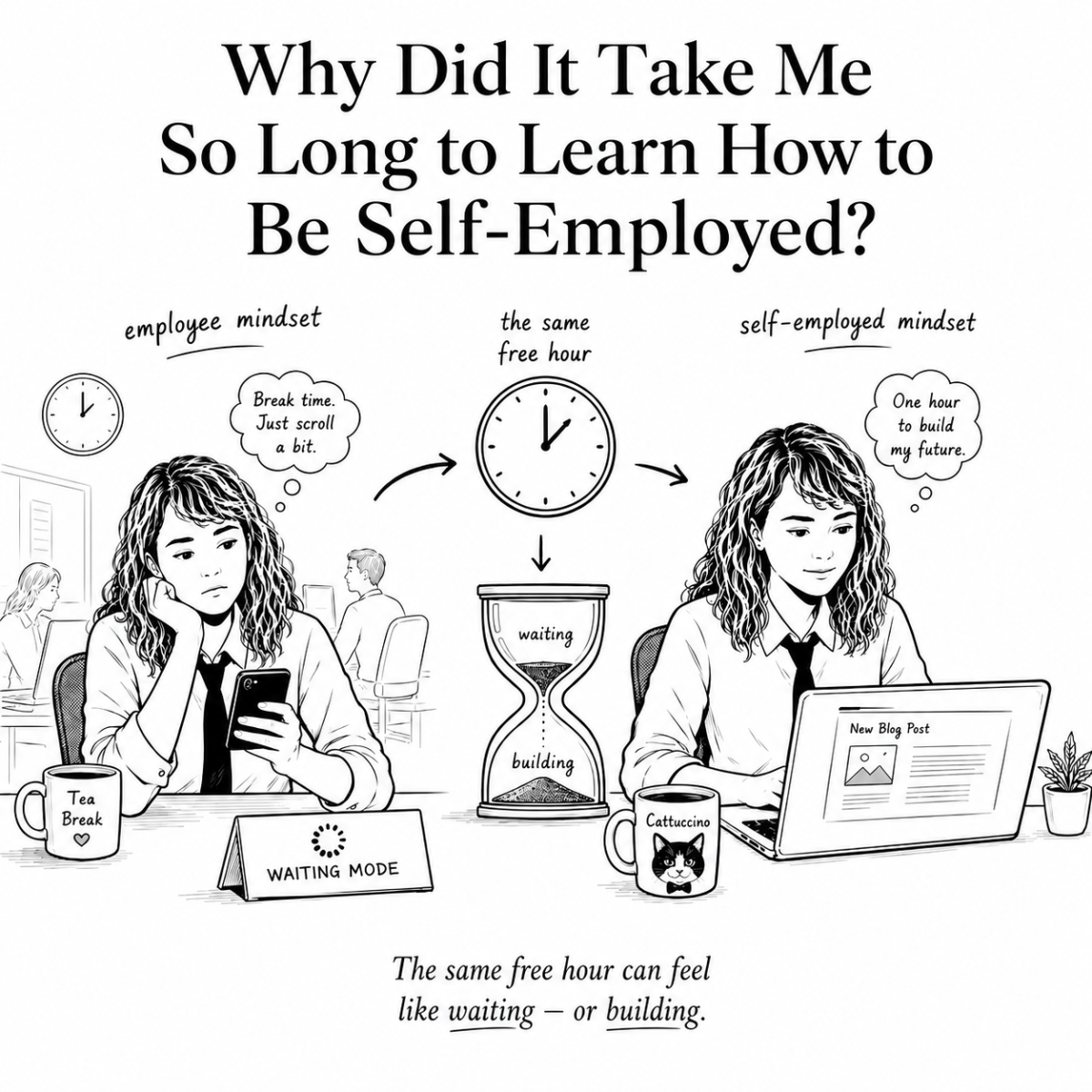
I think a great deal of unhappiness comes from spending too long in a psychological waiting room. We’re not necessarily living the lives we want; we’re waiting for permission, certainty, ideal circumstances or an absence of fear that may never arrive. Of course, fear serves an important biological purpose. It helps us detect threats and avoid unnecessary danger. And some constraints are very real: money, disability, caring responsibilities, health, housing and social circumstances can seriously limit the choices available to us. It would be absurd to tell everybody that all they need is courage and a positive attitude. Reality is more complicated.
But there is another kind of fear: the fear that keeps us trapped even when change is possible. The fear of disrupting the familiar, the status quo, our little universe. Human beings often prefer predictability, even when that predictability is miserable. An unhappy situation may feel safer simply because we know exactly how it works. A different life, however promising, requires us to tolerate uncertainty.
And that’s where experimentation becomes so important.
I have increasingly come to regard life as a playground. Not because life is always easy or because consequences don’t matter, but because experimentation is one of the most effective ways to discover possibilities we could never have imagined from the safety of our routines. Try something new. Learn something new. Go somewhere unfamiliar. Speak to somebody new. Create something new and improve it. Make an outrageous plan, then investigate whether any part of it might actually be achievable. Allow yourself to be a beginner.
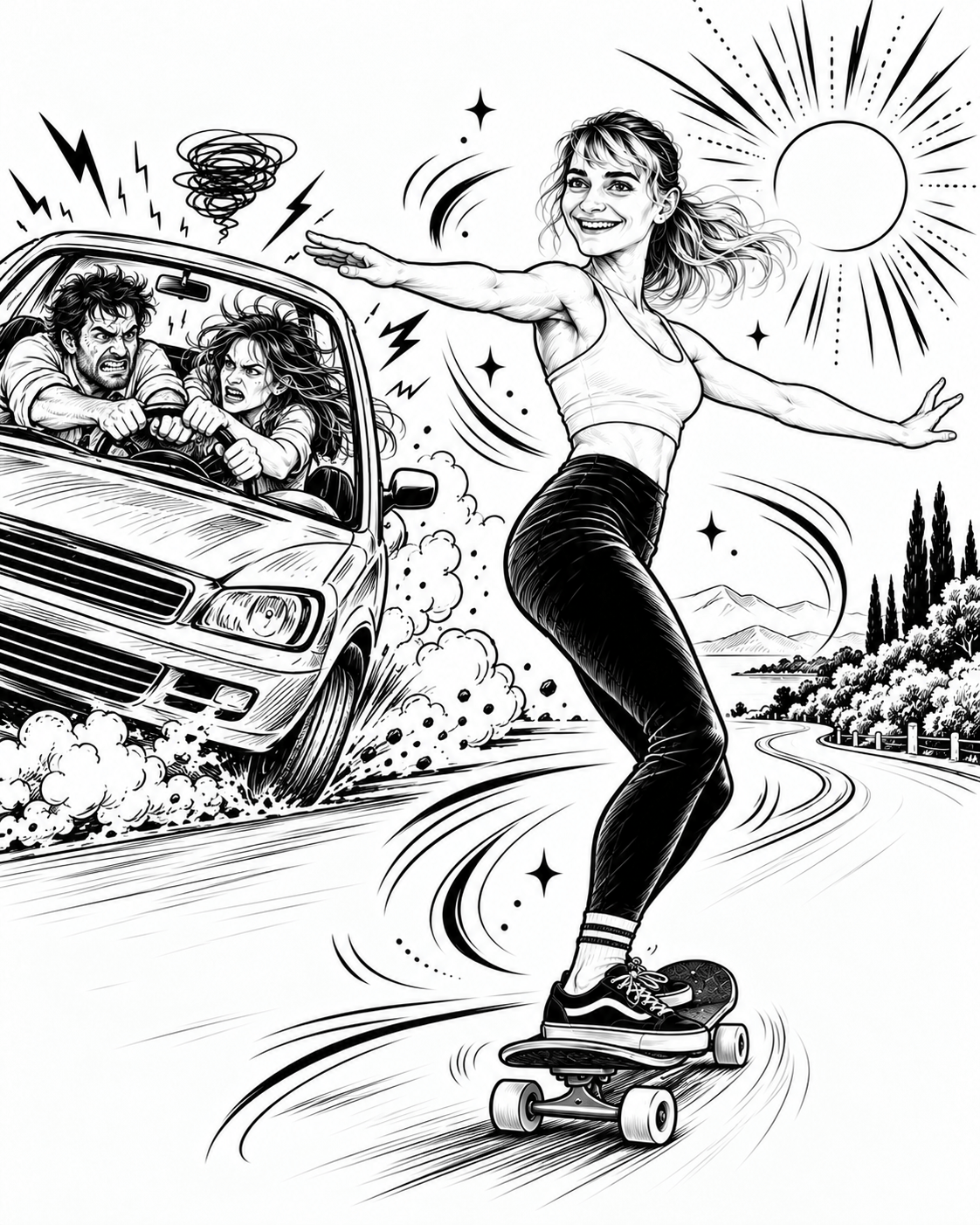
For example, I’ve just bought a skateboard and started learning how to ride it in my own house! My first attempts were absolutely hilarious! I screamed, wobbled, flailed my arms around and desperately tried to keep my balance. But who cares? I was having tremendous fun!
Allow yourself to look ridiculous occasionally. Laugh at your clumsiness, embrace the awkwardness and enjoy the sheer absurdity of being a complete beginner. Not every experiment will succeed, but every thoughtful experiment can teach you something. And sometimes, the greatest reward isn’t mastering a new skill — it’s rediscovering the delicious freedom of playing like a child! Psychological research on avoidance offers a useful insight here: avoiding uncomfortable situations can bring immediate relief, but when avoidance becomes habitual, it may reinforce anxiety and prevent us from discovering what we’re actually capable of handling. Gradual, manageable exposure to feared situations is one of the principles used in evidence-based treatments for anxiety. That doesn’t mean throwing ourselves recklessly into danger. It means recognising that confidence often develops through experience rather than appearing beforehand.
Sometimes a seemingly preposterous decision can introduce fresh air into a life that has become stale and suffocating. Sometimes we have to disturb our carefully maintained equilibrium. Shake the dust off the furniture. Open the windows. Let the breeze in. Allow something unexpected to happen.
And sometimes the most frightening decision is not the one that threatens our future. It is the one that might finally change it. I have become increasingly convinced that courage doesn’t mean never feeling afraid. It means recognising fear, considering the actual risks and deciding whether something matters enough to move forward anyway. Not every fear needs to be conquered. Not every boundary needs to be crossed. Some protect us for good reasons. But I refuse to let fear become the architect of my entire existence.
Why My Forties Have Become My Happiest Decade
When I look back across the different chapters of my life, I can see how these five thieves operated together.
Emotional ignorance left me unable to understand or regulate much of what I felt. Social expectations encouraged me to pursue versions of happiness that didn’t necessarily belong to me. Unhelpful relationships and environments influenced how I perceived myself and the world. Unresolved experiences created obstacles to confidence, self-acceptance and freedom. And fear sometimes prevented me from experimenting with possibilities outside the familiar.
None of these things disappeared overnight. I didn’t wake up on my fortieth birthday miraculously transformed into an exuberant, free-spirited creature who spends her days dancing, running, travelling, writing and dreaming up unusual projects. The transformation was gradual. There were books, experiments, therapy, difficult realisations, small victories, uncomfortable decisions and countless moments of questioning things I had once accepted without thought.
But over time, something shifted. I became less interested in pleasing people and more interested in understanding myself. Less preoccupied with conventional achievement and more concerned with the actual texture of my daily life. Less willing to sacrifice peace for approval. Less frightened of being unusual. More protective of my energy, freedom and creative instincts. And perhaps most significantly, I stopped viewing happiness as something that would begin once my life was finally complete.
Because when exactly is a life complete? There will always be another goal, another project, another country to explore, another skill to learn, another outrageous idea demanding attention. I have more plans now than I had at twenty, and substantially more enthusiasm for pursuing them.
I don’t feel as though I am winding down. I feel as though I am finally winding up.
My early forties have brought an extraordinary sense of liberation, reclamation and empowerment. I feel increasingly comfortable inhabiting my own body, expressing my personality and following my curiosity wherever it decides to wander. I have an enormous appetite for movement, creativity, learning, exploration and new experiences. Sometimes I feel like an overexcited child who has unexpectedly been handed the keys to the entire playground.
And perhaps that is what happiness feels like to me. Not perpetual ecstasy. Not a dream life. Not the absence of difficult emotions. Freedom from unnecessary fear, shame, conditioning and emotional debris that joy finally has room to breathe. If you’re unhappy, perhaps begin not by asking what you need to acquire, but by asking what you need to understand, question, heal, change or release. Learn about your emotions. Define happiness for yourself. Choose your relationships thoughtfully. Tend to your inner world. And don’t allow fear to make every important decision on your behalf.
Most of all, don’t assume that your happiest years are behind you simply because society has an obsession with youth. Mine certainly weren’t. I spent much of my younger life trying to understand how to live. Now, in my forties, I’m finally getting around to doing it. And goodness, there’s so much I still want to experience.
Don’t let people with zero abracadabra ruin your magic. And don’t let your own fear extinguish it either.
What has been the biggest thief of happiness in your life: emotional ignorance, living somebody else’s script, the wrong people, unresolved emotional baggage or fear? And what changed when you finally recognised it?







Leave a Reply