What Makes a Trip Truly Memorable?
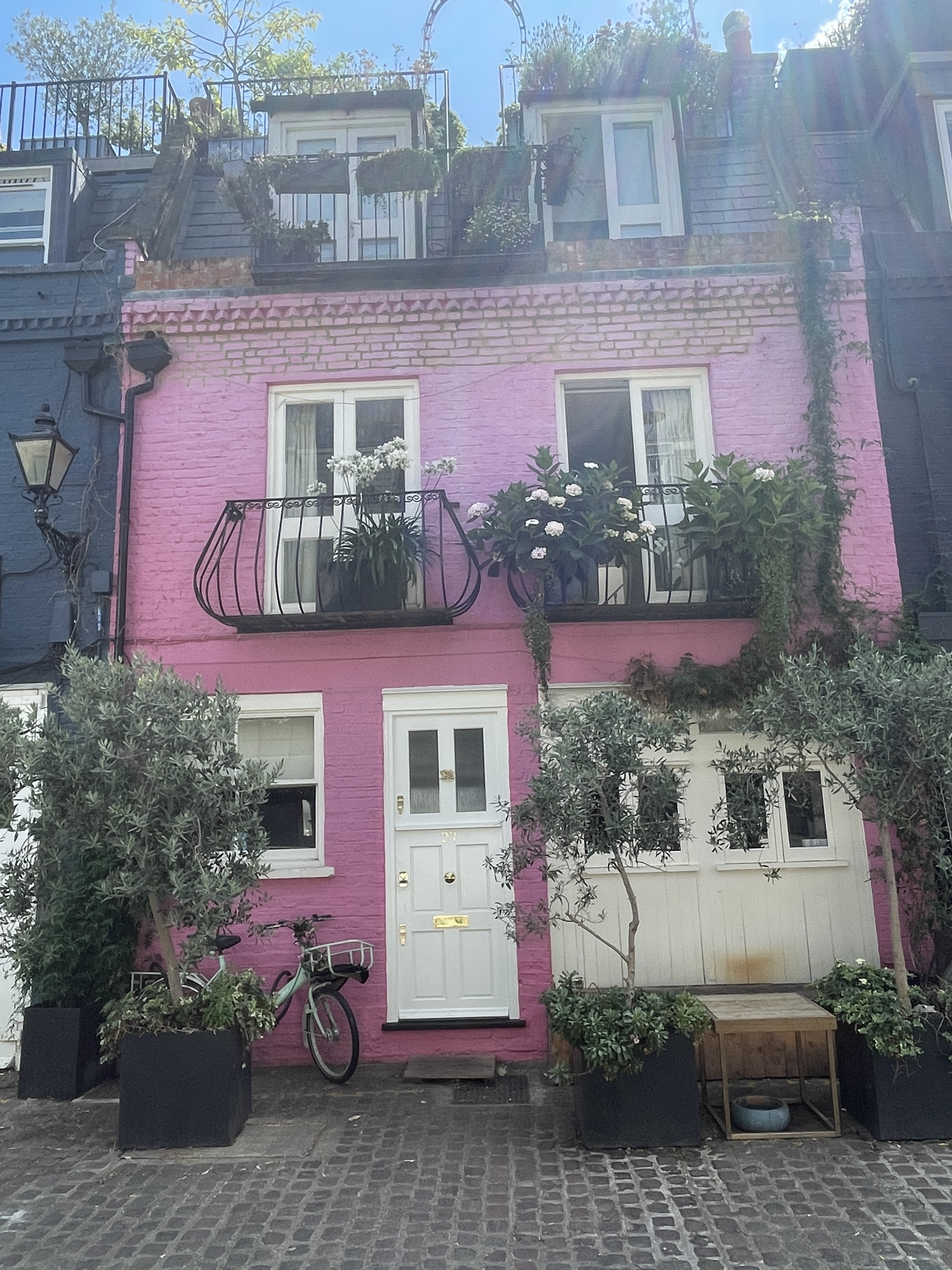
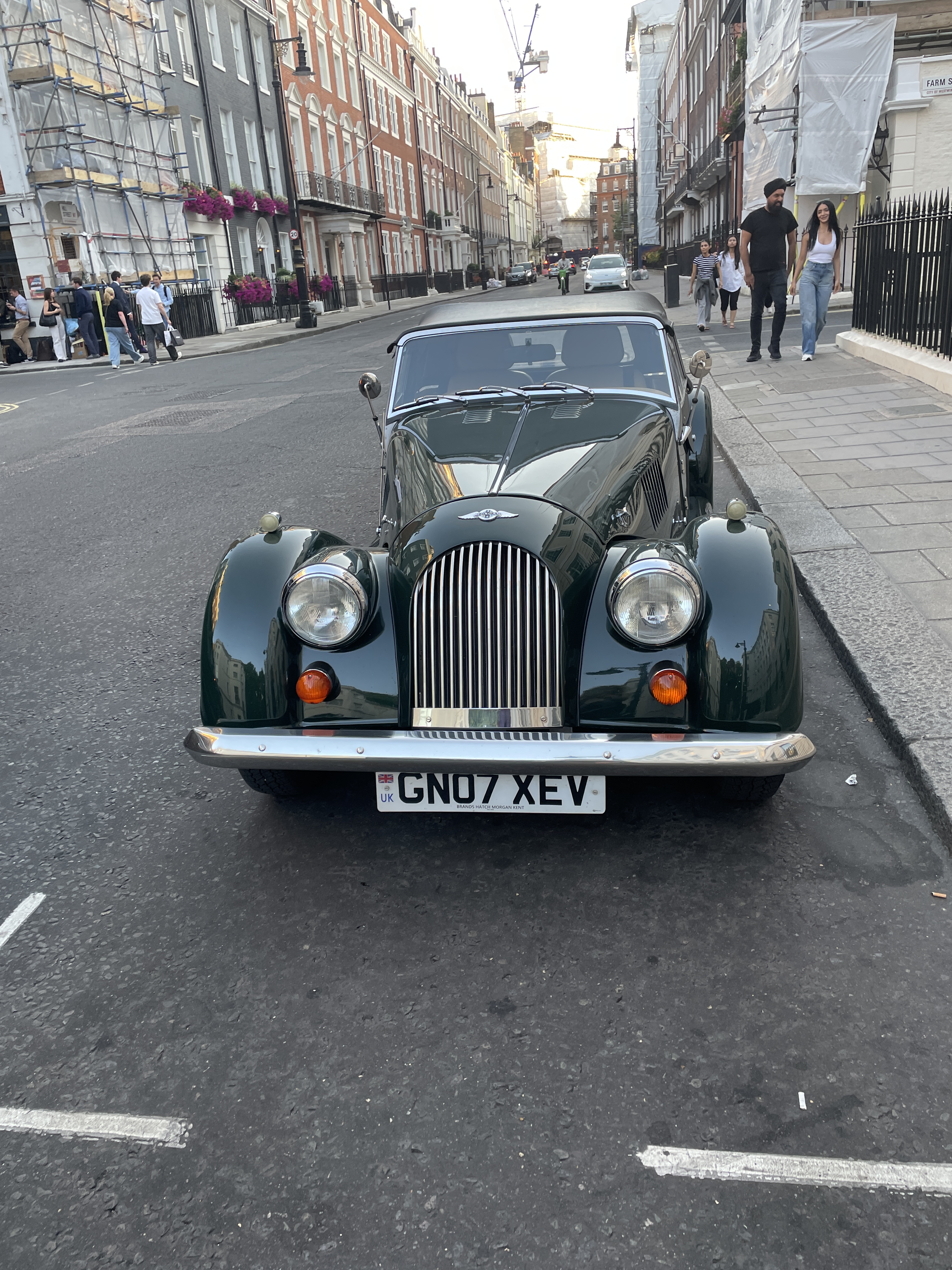
I went to London two weeks ago and I dare to say that it was one of the best day trips I have ever had. I spent the entire day walking and exploring — Belgravia, Notting Hill, Portobello Market, Primrose Hill, Regent’s Park, Fitzrovia, Soho and Westminster. By the end of the day, I had walked 30 kilometres. Much of it was brisk walking, but I never minded deviating from the planned route whenever something particularly interesting captured my attention. Sometimes it was a beautiful car. Sometimes it was an unusual shop. Sometimes it was simply a strangely shaped tree with long green fingers dangling from its branches like slim botanical pendulums. I walked quickly, but I wandered slowly. That combination suited me perfectly.
I love London not only for its diversity, but also for its spacious parks, elegant streets, sprawling markets and people with genuinely interesting senses of style. I wandered along broad avenues lined with stucco villas and ancient trees, disappeared into charity shops and vintage clothing stores, rummaged through jewellery and strange objects, and repeatedly found myself stopping because something had made me laugh or exclaim, “Oh my God!” There is a great deal of humour and delight hidden in London if you walk through it with your eyes open. This post is about some of the things that surprised me, delighted me, made me laugh or simply made me say: OMG.
Small London Oddities
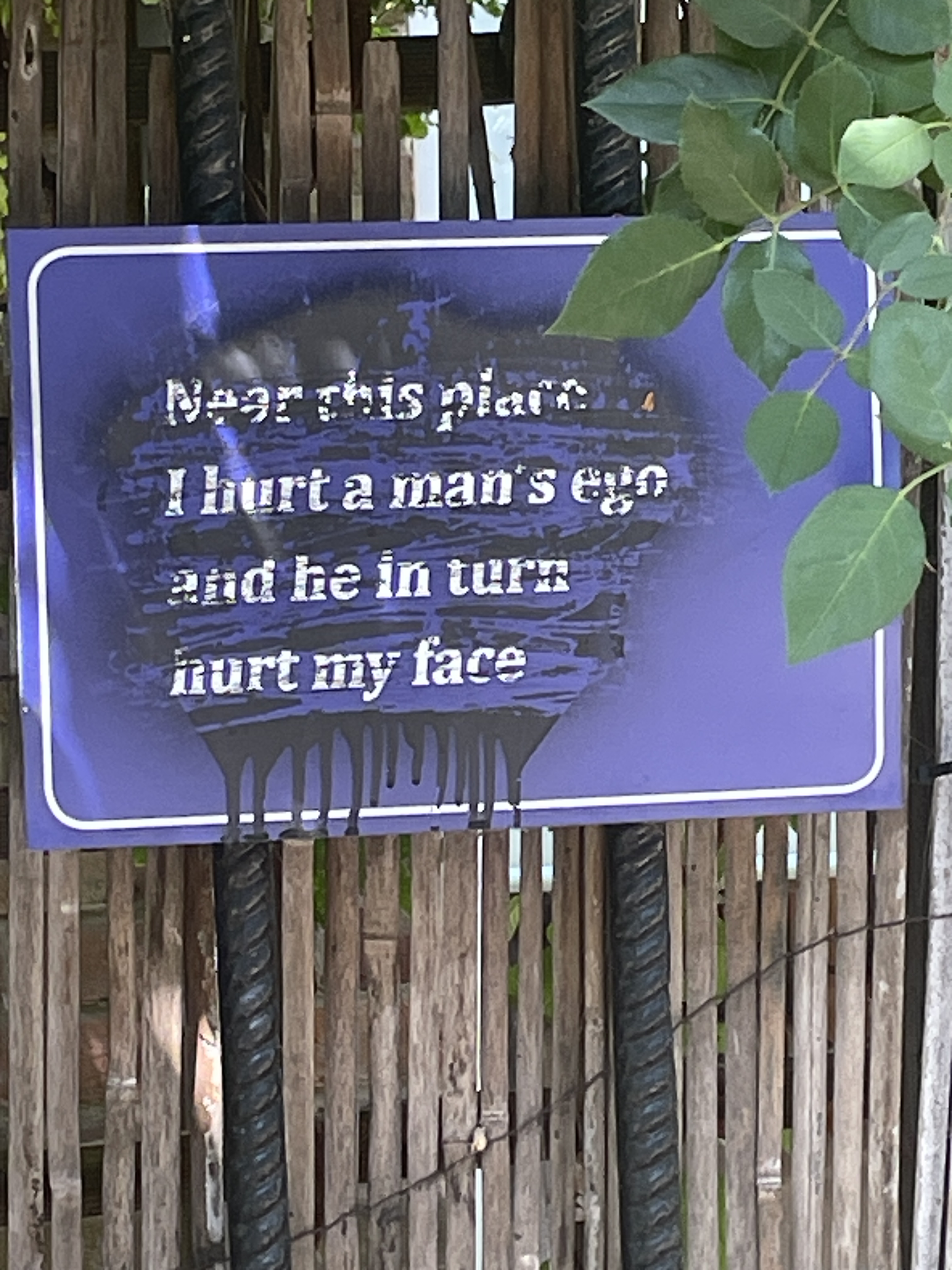
Some of my favourite discoveries were completely random. Somewhere along my route I came across a metal plaque attached to a fence that read:
Near this place
I hurt a man’s ego
And he in turn hurt my face
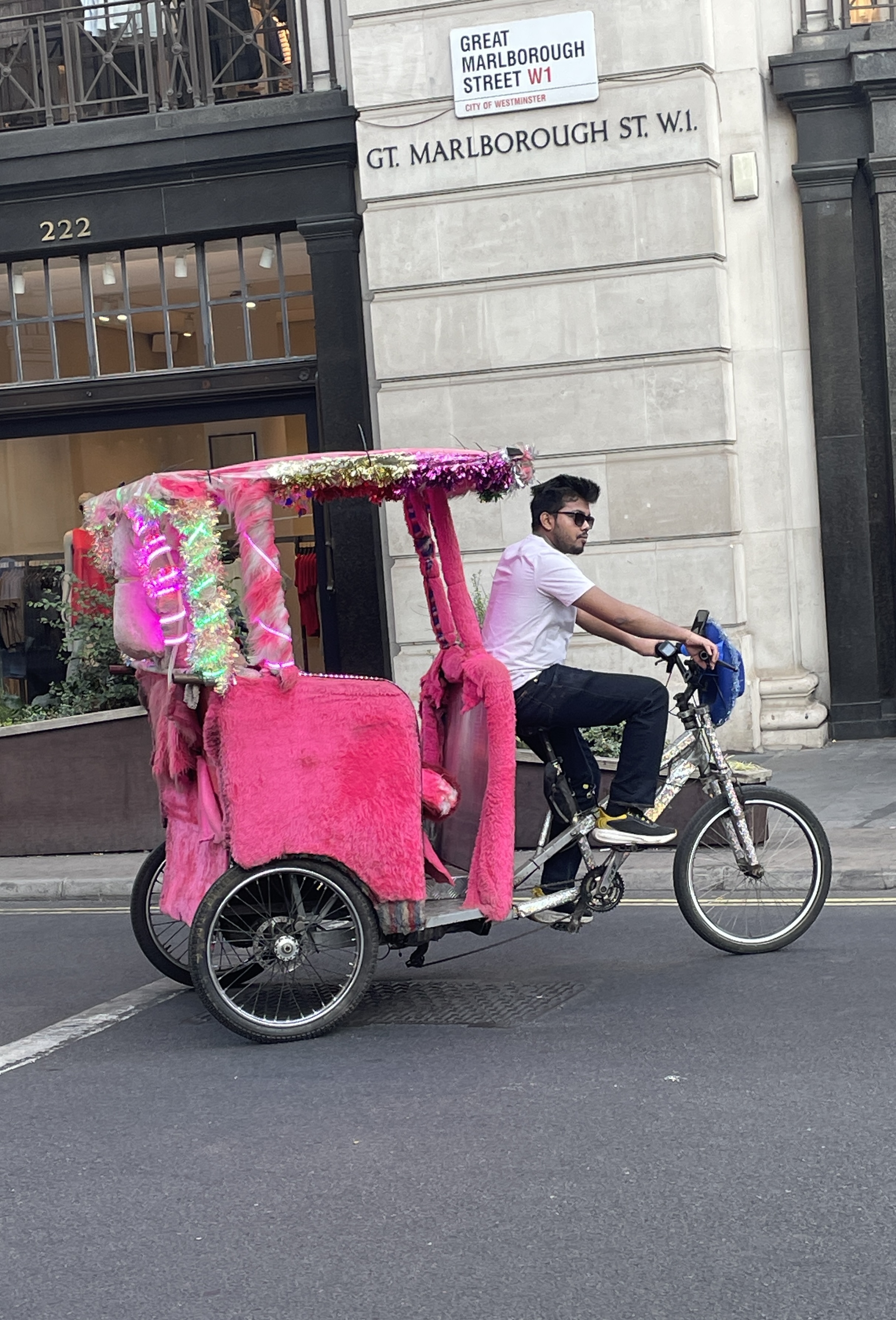
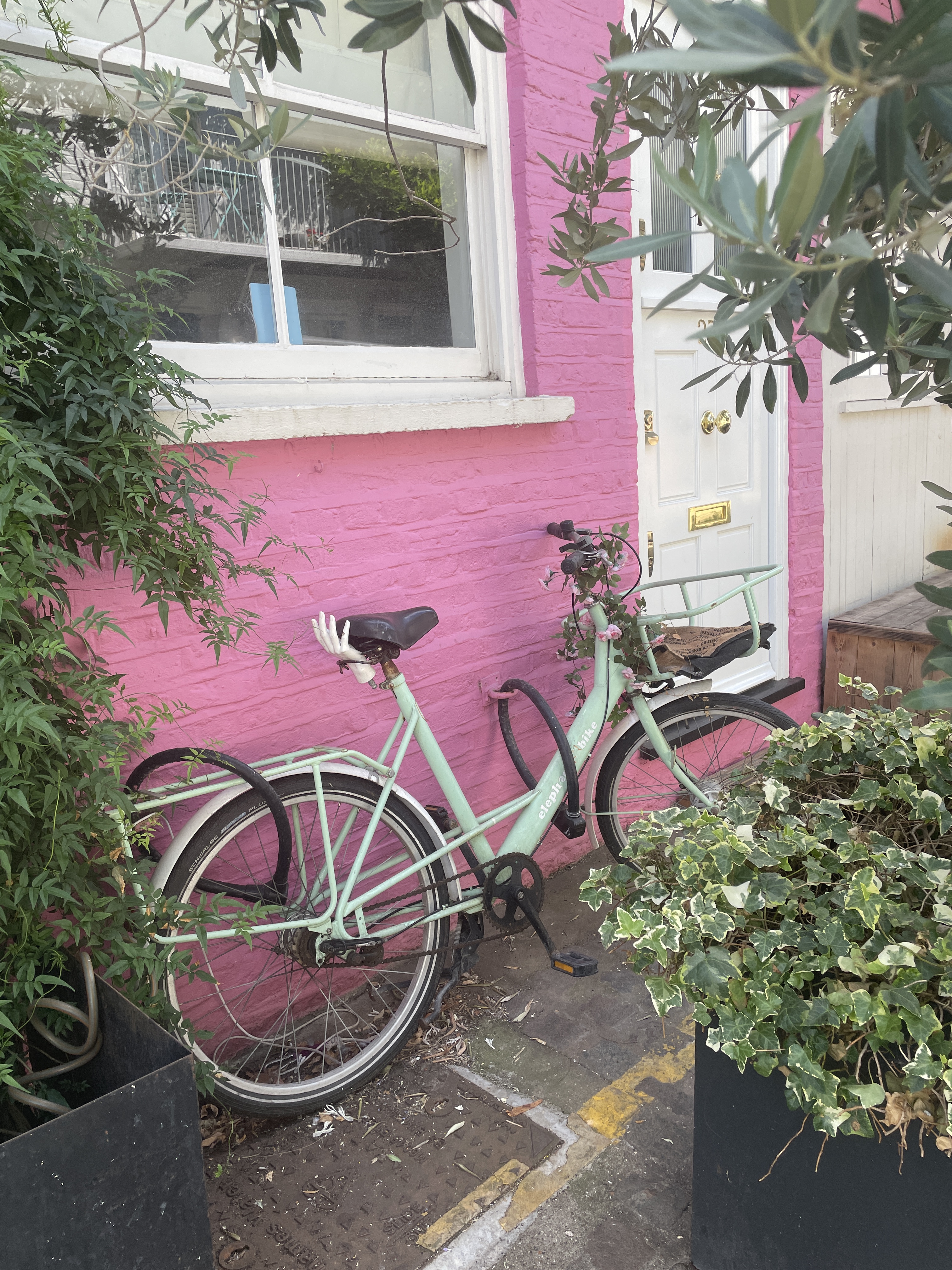
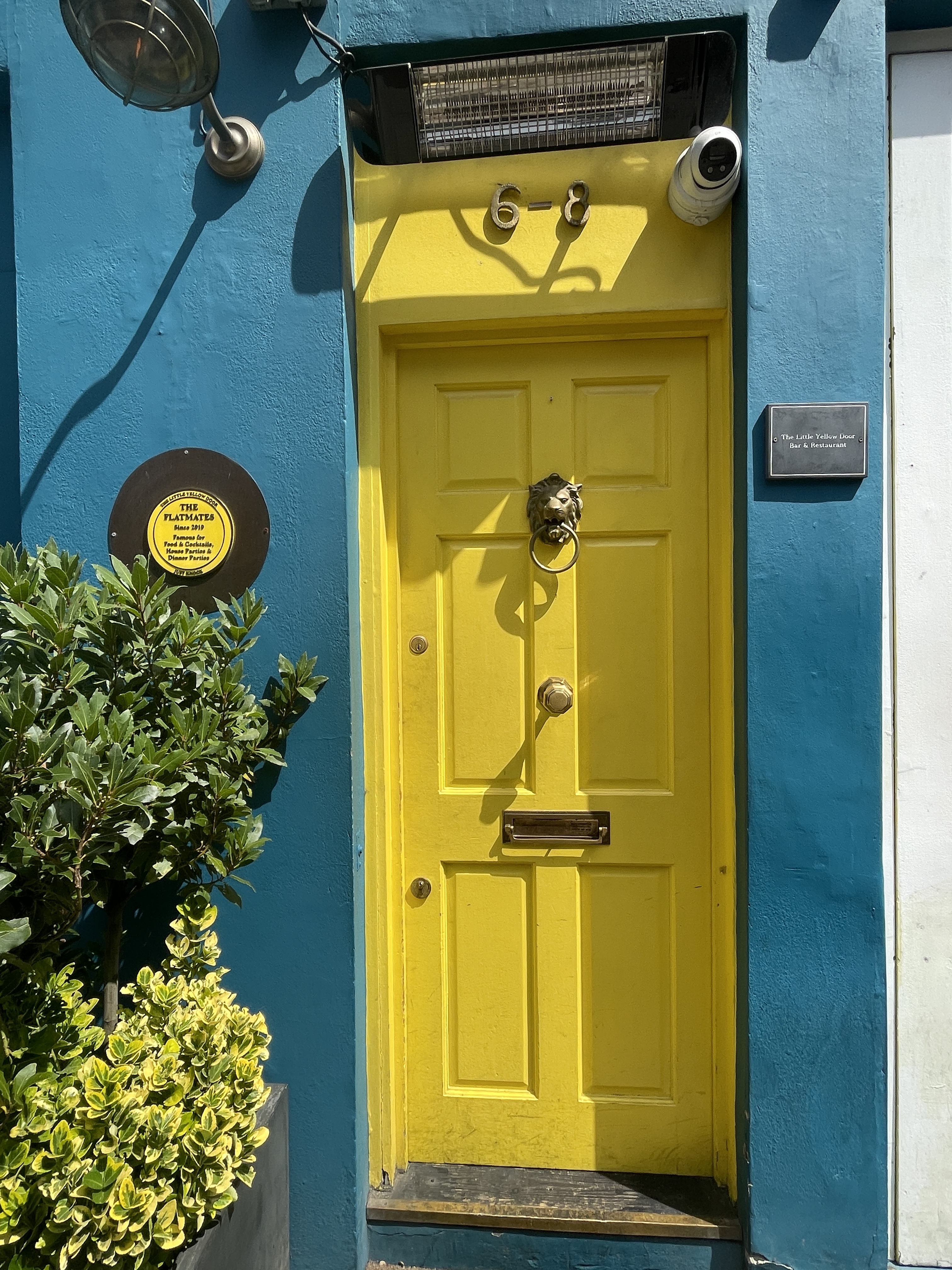
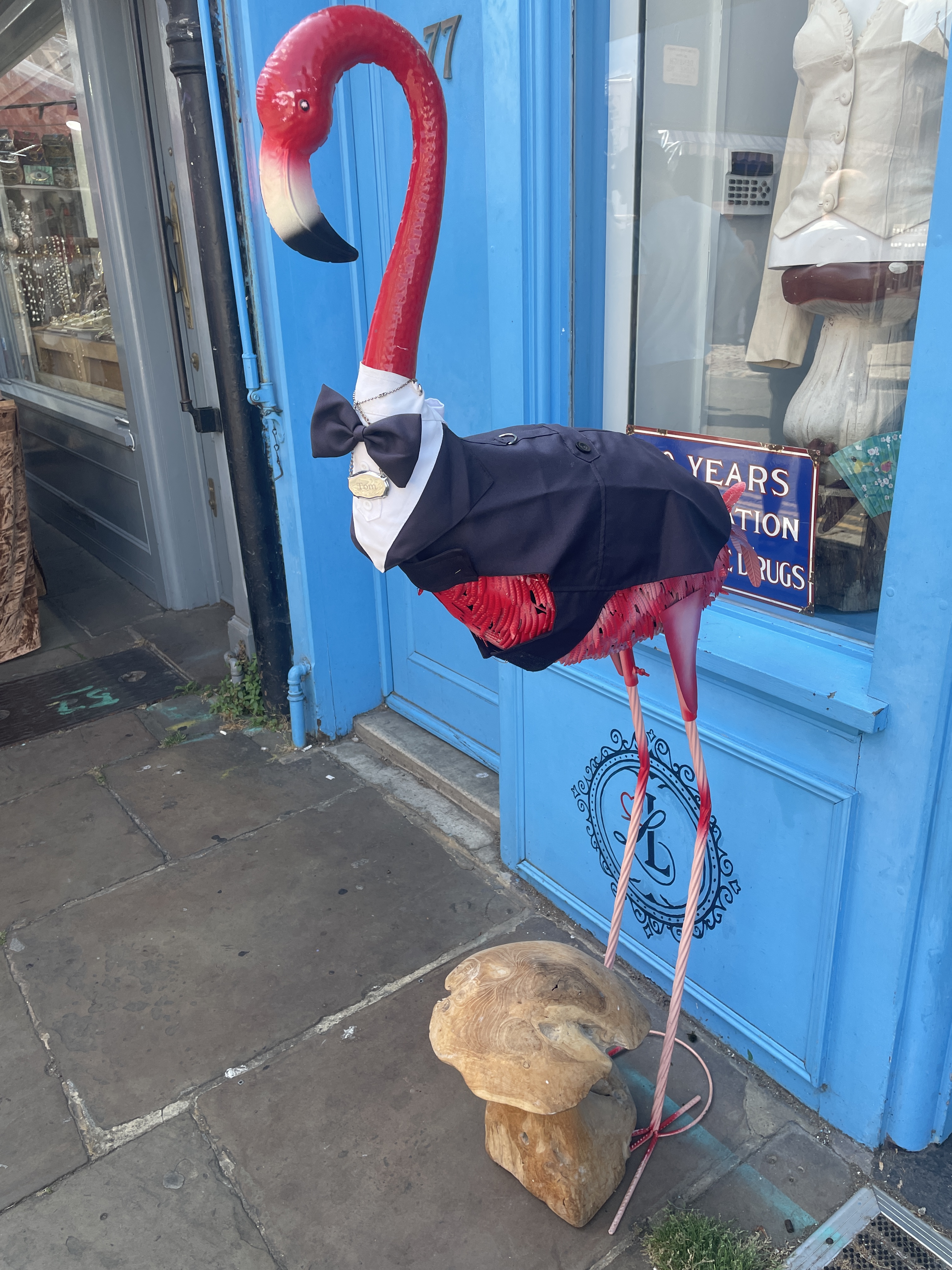
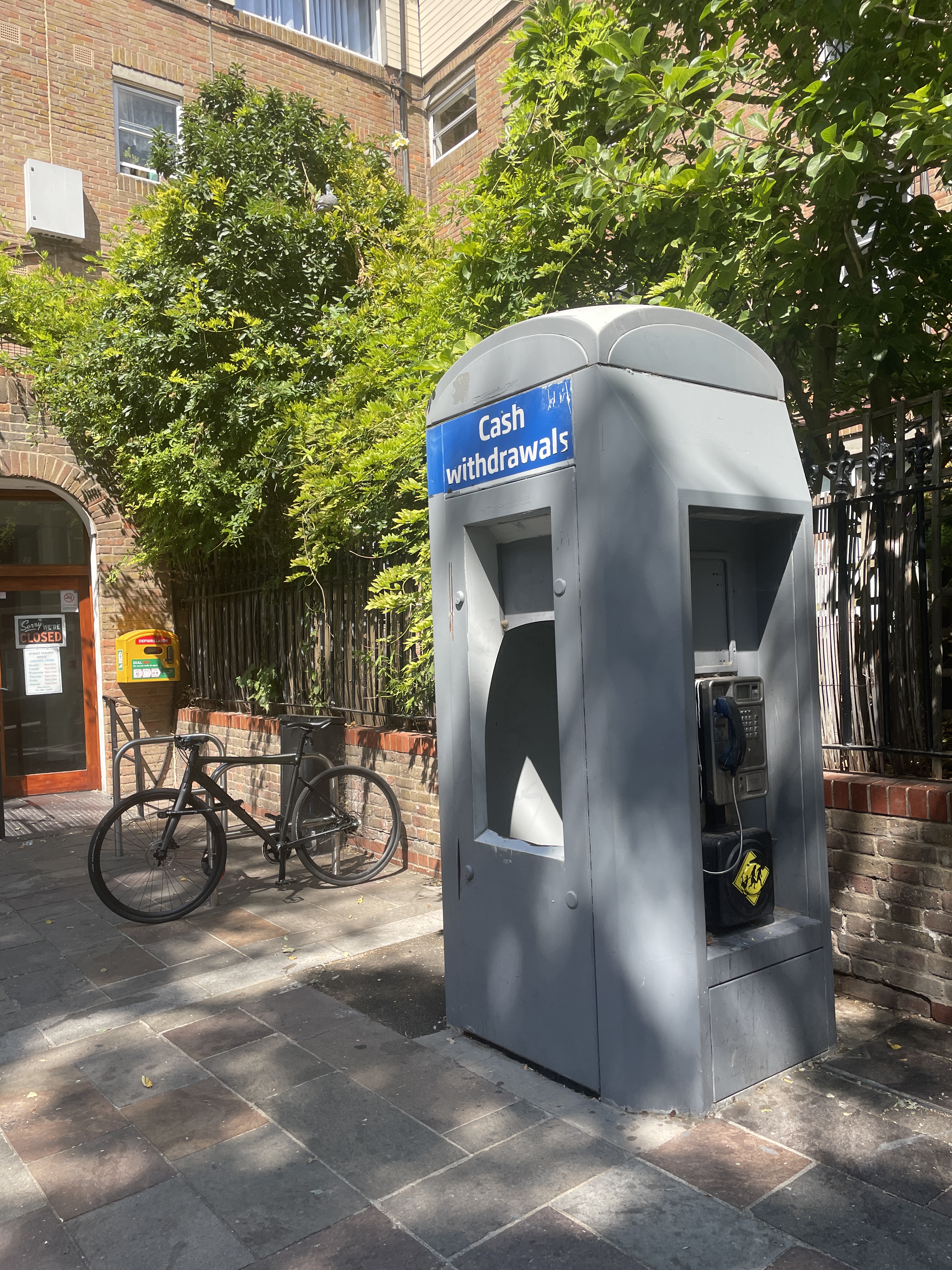
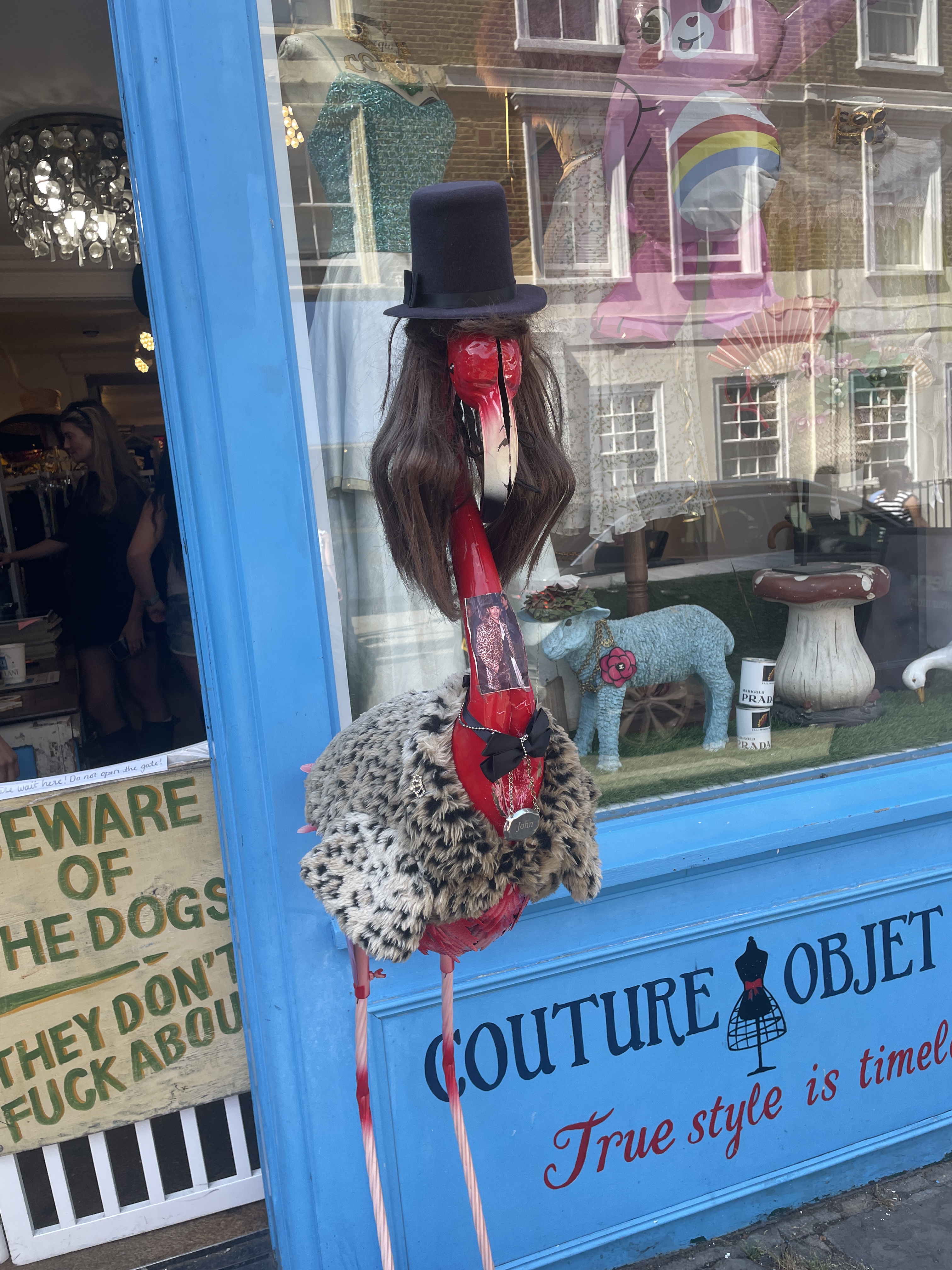
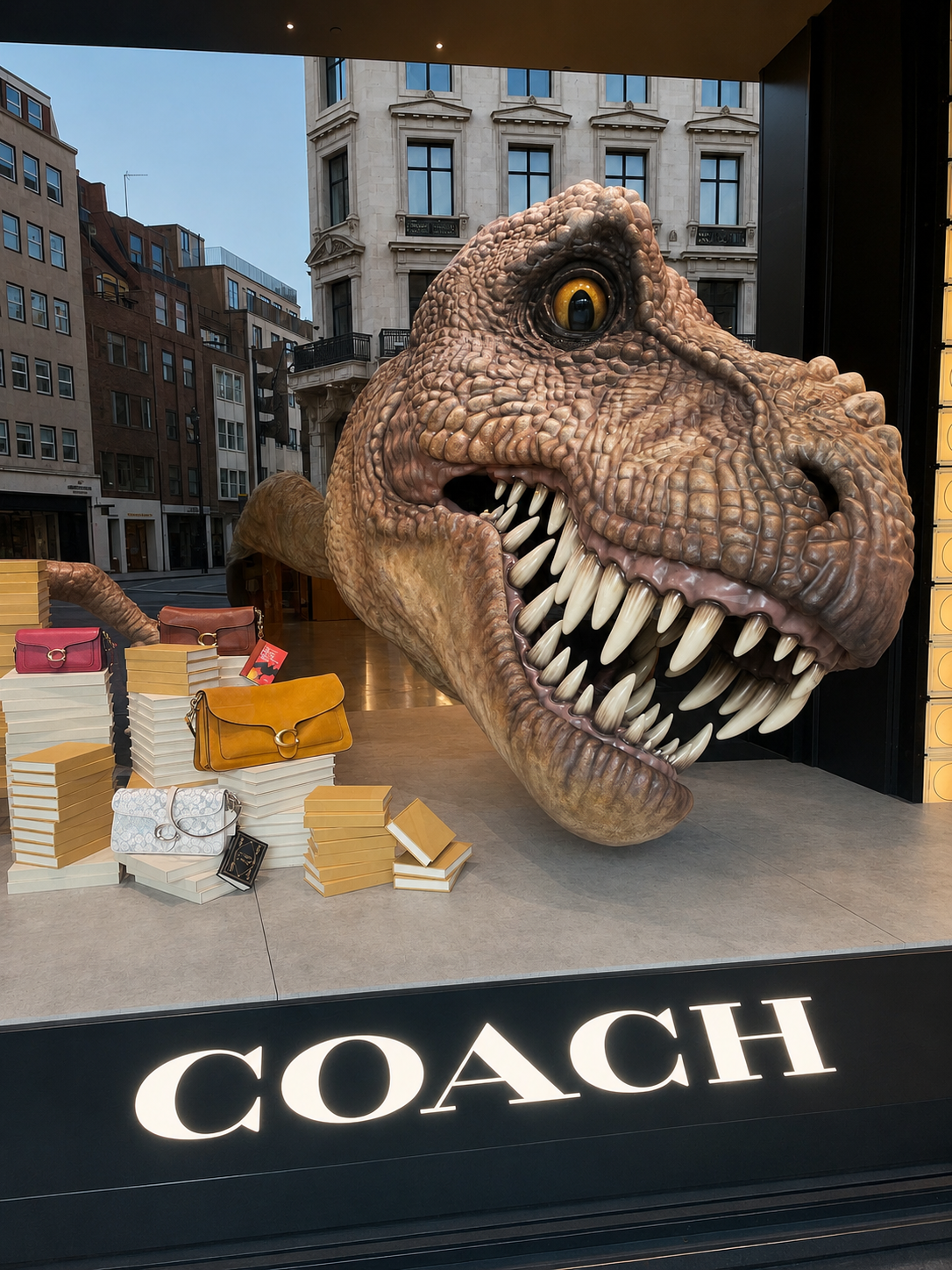
It made me giggle immediately. Then there was an empty ATM, which somehow looked so absurdly vacant that it became funny in itself. I saw a bicycle with a hand attached to its seat, a spectacularly fluffy pink rickshaw, an ice cream shaped like a rose and a gorgeous sunset spreading itself across Hyde Park. Then, completely unexpectedly, I saw an enormous dinosaur’s head in a Coach shop display. London seemed determined to keep throwing little visual jokes and surprises at me. None of these things was an official tourist attraction, yet they became some of the most memorable parts of the day.
That is one of the things I enjoy most about wandering without too rigid a plan. You begin noticing what exists between the landmarks. A tourist itinerary might tell you where Buckingham Palace is, but it will not warn you about an inexplicable hand attached to a bicycle seat. It will not schedule a strangely elegant ice cream rose or predict when a gigantic dinosaur will suddenly appear in the window of a designer shop. Those moments belong only to whoever happens to notice them.

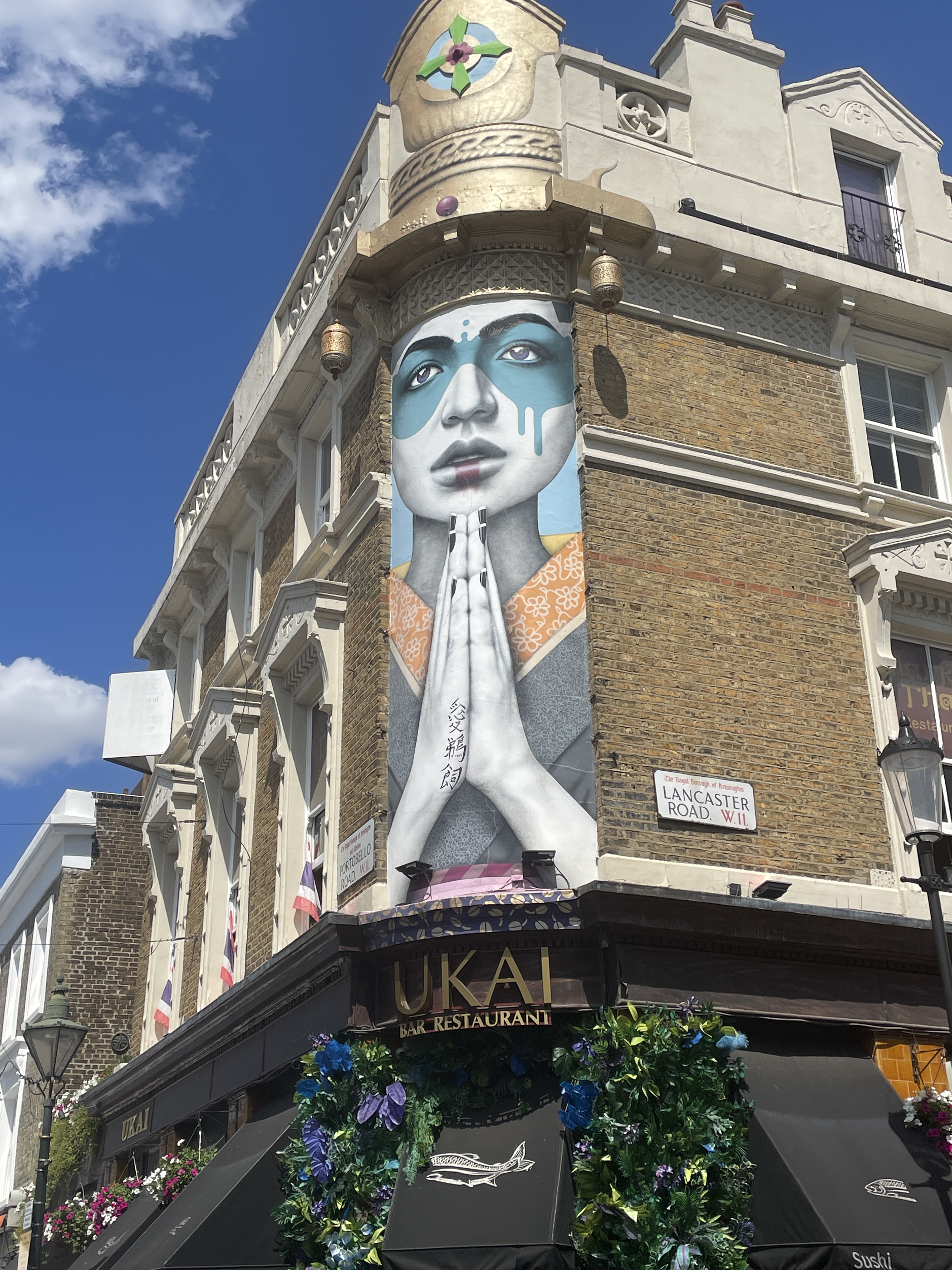
Portobello: A Market Full of Objects and Characters
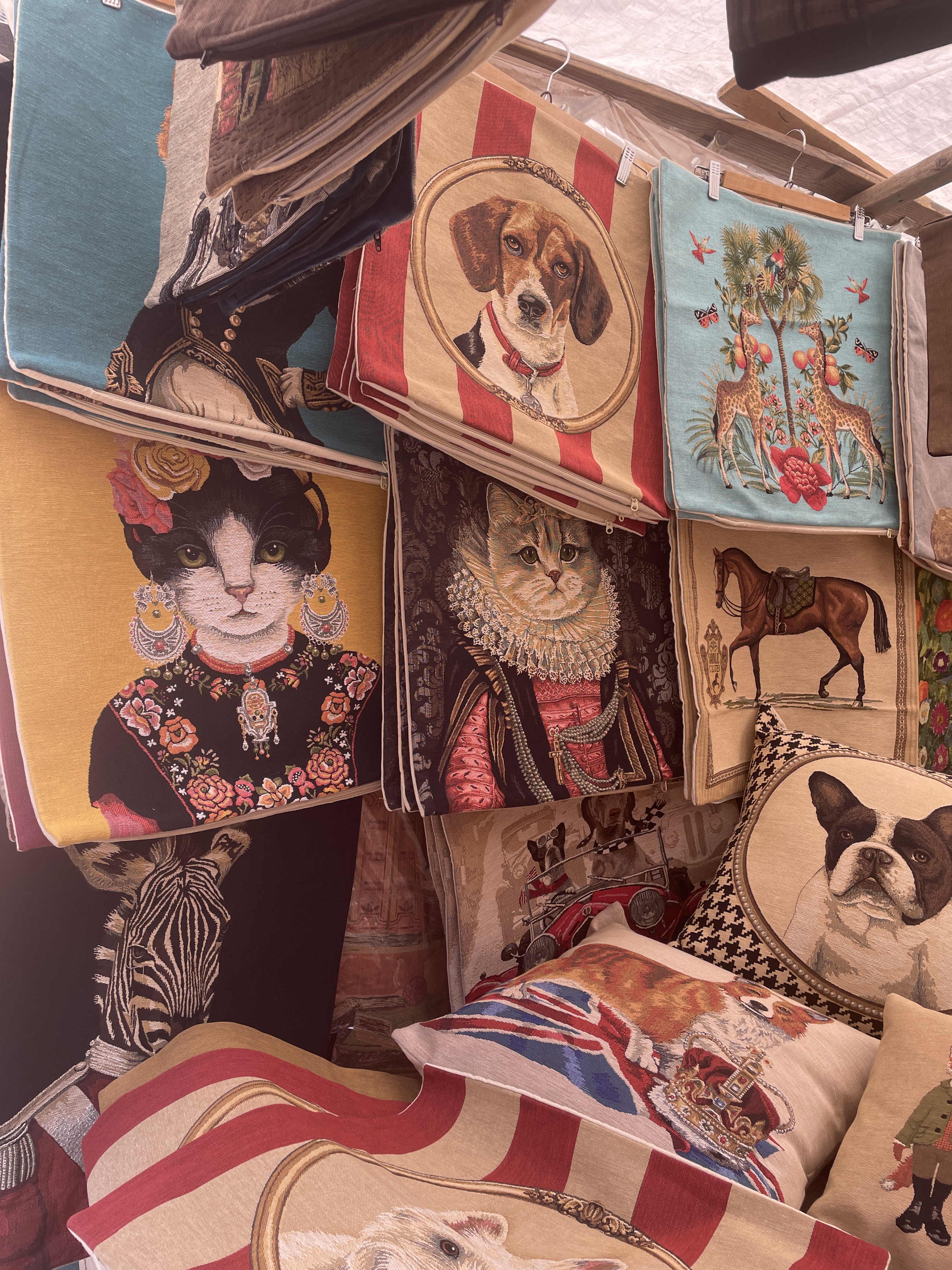
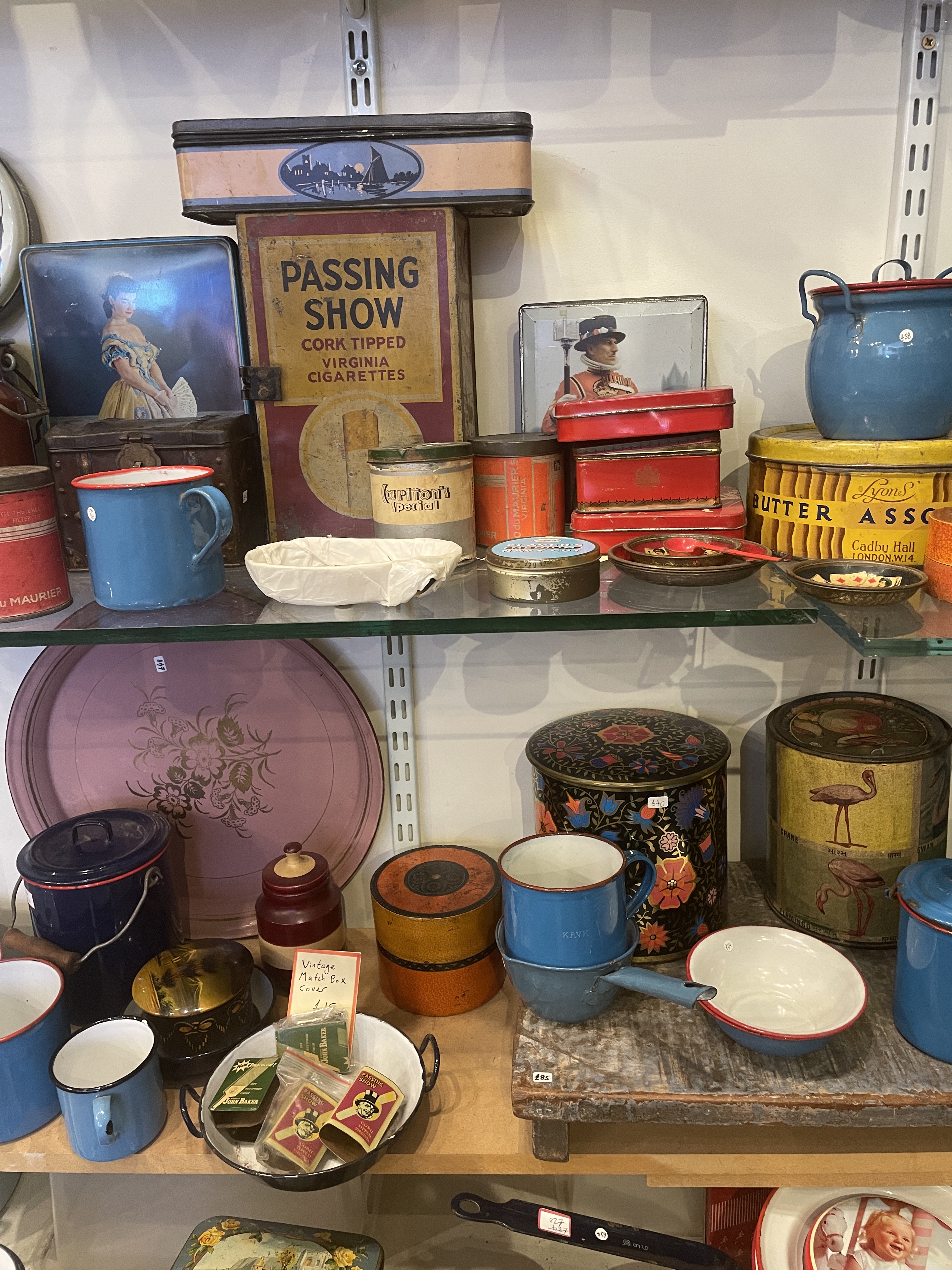
Portobello was a delight in itself. There were original vintage clothes, shoes, jewellery, designer pieces, purses made from shells and millions of bits and bobs. Some stalls looked less like shops and more like eccentric private museums whose owners had suddenly decided to sell the exhibits. I found brightly coloured jewellery, works of art, strange decorative objects and even a piece made from fluorescent pink cassette tapes attached to a canvas. There seemed to be accents, objects and influences from every corner of the world. Portobello is not merely full of extraordinary things; it is full of extraordinary characters.
Even some of the sellers seemed like attractions themselves. One woman selling vintage clothes looked like a pin-up girl: a red dress covered in white polka dots, a ponytail and red lipstick, sitting nonchalantly on the edge of a table as though she had been deliberately placed there as part of the display. Another was an older woman with long, lush hair, tall and slim, dressed simply in denim and a strappy top. There was something statuesque and glamorous about the way she carried herself. I kept noticing people like this throughout the day — people who had clearly decided that clothes were not merely practical coverings but an opportunity to construct a visual identity.
I spent hours searching through jewellery, art, shoes, vintage clothes and endless tables of objects that appeared to have been collected from several different centuries. There is something deeply satisfying about a market where you have absolutely no idea what you are going to see next. Portobello rewards curiosity. It asks you to look underneath things, turn things over, rummage, inspect, touch and occasionally wonder why on earth somebody created an object in the first place.
Only One Pound, Darling: Portobello’s Most Absurd Rummage.
At the far end of Portobello, after hours of wandering past Notting Hill jackets, Edwardian-looking lacy nighties and cotton skirts fluttering in the wind, I reached one stall where the seller had apparently decided that hangers were far too bourgeois and anarchy should prevail. Instead of arranging the clothes, he had simply tipped an enormous pile onto a table. Garments appeared to be strangling one another. Sleeves wrapped themselves around trouser legs, skirts fused with blouses, cardigans clung desperately to several pairs of leggings. Every garment required excavation followed by endless untying, untangling, twisting and fiddling.
I spotted something pink and satiny buried deep inside the heap and thought, At last! A beautiful shirt. I pulled and tugged until I finally liberated it from three other garments, only to discover that it was a pair of leggings. A little later I found a flash of gold spandex and became convinced that this must surely be a fabulous top or dress. Another joyful session of twisting, teasing and coaxing followed. Eventually the mysterious golden object emerged — another pair of leggings. Huge around the waist. Narrow around the ankles. Completely useless to me. The heap had defeated me again.
The entire rummage was punctuated by increasingly uncontrollable bursts of laughter. Meanwhile, Elvis’s deep buzzing voice filled the stall with a strange, hyperactive urgency, as though the music itself were commanding me to continue digging. Every few minutes the seller reappeared and announced, “Only one pound, darling.” The woman rummaging beside me began smiling at my growing merriment. I tried several times to regain my composure, but every new garment, every burst of Elvis and every fresh “Only one pound, darling” triggered another attack. Eventually I had to abandon the stall completely, stand on the pavement and laugh helplessly for at least a minute. When I attempted to return, one glance at the tangled heap set me off again. I had to walk away. I had never experienced anything quite like it. I love Portobello.
London Gives Me Permission to Be More Myself
Something else happened during that trip that mattered to me in a completely different way. London seemed to give me permission to become more visibly myself. In one of the parks I saw a woman practising yoga alone on the grass, moving through a beautiful flowing vinyasa as people passed nearby. Later I saw a couple rolling around on the grass and doing acro-yoga together, balancing and climbing over one another with complete disregard for whether anybody considered this a normal thing to do in a public park.
Watching them was strangely empowering. They were not waiting for a yoga studio, an organised class or an officially designated exercise area. They simply wanted to move, so they moved. Their bodies belonged in public space just as much as the bodies of people sitting on benches, walking dogs or drinking coffee. Something about seeing that loosened another little knot inside me.
At the back of Primrose Hill, I finally did about ten minutes of my own Outlanga. I felt incredibly brave. A man stopped nearby and appeared to watch me while drinking mineral water. Another man sat on the bench behind me. I knew I was visible, but for once that did not feel like a reason to stop. I wanted to dance, so I danced.
There is something about London that makes this easier for me. Perhaps it is the sheer variety of people, clothing, movement, behaviour and self-expression already occupying public space. Perhaps when a city contains enough difference, individual eccentricity stops looking like such a dramatic event. London seems to say: Go on then. Add your thing too. Dance on the grass. Wear something strange. Practise yoga underneath a tree. Become visually interesting. Move differently. Take up a little unconventional space.
That feeling matters to me because public dancing is still not particularly normalised. We accept running, walking, cycling and organised fitness without question, but an adult spontaneously dancing alone on a patch of grass can still attract attention. In London I felt increasingly uninterested in that attention. A person could look at me. Fine. A person could wonder what I was doing. Fine. I was not harming anyone. I was moving because movement made me happy. For those ten minutes behind Primrose Hill, I felt as though London had quietly granted me permission to inhabit public space as my authentic, creative self — and perhaps, more importantly, I had finally begun granting that permission to myself.
What Makes a Trip a Good Trip?
As I walked home the following day, I kept wondering: what is the litmus test of a good trip? Perhaps it is not the number of landmarks visited, kilometres walked or photographs taken. Perhaps it is something I have decided to call OMG frequency — the number of times a place makes you stop and exclaim, “Oh my God!”
Not everything that produces an OMG needs to be spectacular. Sometimes it is spectacular — a beautiful avenue, a sunset, an unexpected view. But sometimes it is ridiculous: a hand attached to a bicycle, a seller repeatedly shouting “Only one pound, darling,” or a pair of gigantic gold leggings emerging triumphantly from a mountain of tangled clothes. What matters is that the place keeps interrupting your expectations. It keeps waking you up. It generates wonder, curiosity, amusement, surprise or uncontrollable laughter.
Perhaps that is what I want from travel more than anything else. I do not simply want to move through a place and collect evidence that I have been there. I want the place to provoke me. I want it to make me look twice, deviate from my route, investigate something strange, laugh in public, discover another version of myself or suddenly decide to dance on a hill.
But perhaps a truly good trip does even more than that. It transfixes us. It makes us bolder, more confident, more expressive and more creative. It stretches us beyond the limits we have quietly imposed on ourselves and gives us opportunities to challenge assumptions about who we are and what we are allowed to do. Sometimes travel asks us to navigate unfamiliar streets; sometimes it asks us to navigate unfamiliar versions of ourselves.
A good trip can help us tame our fears simply by giving us repeated opportunities to act despite them. We speak to strangers. We enter places we would normally walk past. We get lost and discover that being lost is survivable. We wear something more outrageous. We dance where people can see us. We realise that the invisible boundaries we had constructed around ourselves were not necessarily permanent walls at all. Perhaps that is the real measure of a journey: do you return exactly as you left? If you come home slightly braver, slightly more curious, slightly more expressive, with an expanded idea of what is possible for you, then the trip has done something important. It has not merely entertained you. It has changed you.
By that measure, this particular London trip passed spectacularly.
London scored extremely highly on the Dora OMG Index — but more importantly, I think I came home a little more myself. 😄




Leave a comment