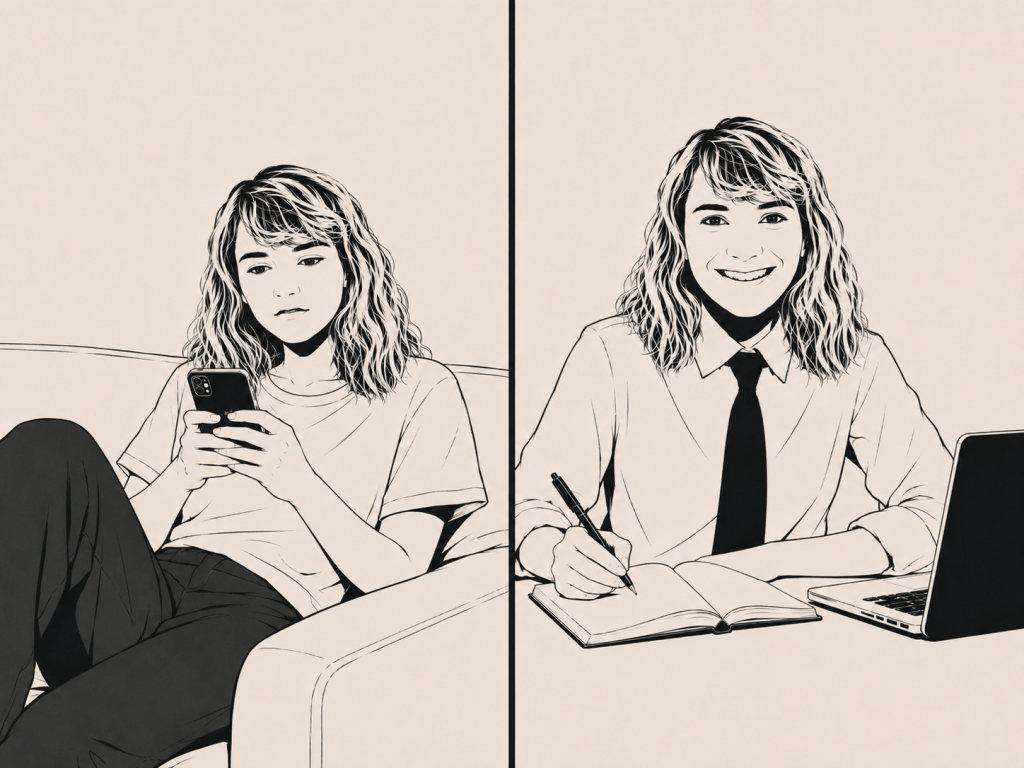
For many years, I worked a conventional nine-to-five job, Monday to Friday. During that period, there was one habit I particularly disliked in myself: mindless scrolling. I worked in specialist and secure education with young people who displayed challenging behaviour, significant social and emotional difficulties, and high levels of self-harm. Many of them regularly refused education, so attendance was often unpredictable. There were days when I taught only one lesson. You might ask: what did I do with all that free time?
The obvious answer would be to plan lessons and prepare resources. I did that. I had folders full of lesson plans, worksheets, activities and teaching materials. Eventually, however, there was only so much preparation I could reasonably do. What struck me was that I could not use the remaining time productively.
Free Time That Never Felt Free
If I tried to complete an online course unrelated to work, read something meaningful or focus on a personal project, I simply could not concentrate. I would listen for sounds in the corridor. I remained alert to doors opening, raised voices, alarms or the possibility of an emergency. My body was sitting at a desk, but my nervous system was in constant vigilance mode. That kind of free time was not truly free. I could not leave, relax or immerse myself in anything. I had to remain available and appear occupied, even when there was very little work to do. So, most of the time, I ended up scrolling.
My colleagues often did the same. We browsed Facebook, Rightmove, Amazon, news websites, sports news, travel websites and online shops. It was an endless stream of content: mildly interesting, instantly available and requiring almost no concentration. Pretending to work can sometimes feel more draining than actually working. Real work gives energy a direction. Pretending creates a strange state of suspended state in which you are neither properly productive nor properly resting.
Unfortunately, the scrolling habit followed me home.
When Scrolling Became My Default Setting
In the evenings, at weekends and during time off, I continued to browse. I read Reddit and Quora. I checked my emails, Amazon, Facebook and countless other websites without any particular purpose. The more time I spent scrolling, the more depleted and unhappy I felt. I read motivational books and tried repeatedly to break the cycle, but the habit had become too strong. It felt like my default operating system. I began putting my iPhone away. I locked it in drawers, hid it upstairs and placed it in the most inaccessible corners of the house. Sometimes this worked for a few days, but eventually I would simply start scrolling on my laptop instead.
But in reality, the phone was not the true problem. The behaviour would migrate to whichever device remained available. I once spoke to a colleague about how much I wanted to break the habit and go on a digital detox. She said, “But Dora, you eat healthily, you exercise, you do not own a television. Why would you deprive yourself of your final pleasure—scrolling?”
But I had my reasons.
Life felt too short to spend so much of it consuming content that was meaningless, directionless and instantly forgettable. I wanted to stop being only a consumer and become more of a producer. I wanted to create something of my own rather than spend every day absorbing what other people had created. At the time, however, wanting to change was not enough.
What Happened When My Life Became More Interesting
Eventually, I left my job in specialist and secure education and travelled around Southeast Asia for eight months while teaching English online part-time. Something unexpected happened during that journey: I largely lost interest in scrolling. My days were filled with new information, practical decisions, unfamiliar places and extraordinary experiences. I was planning visas, tickets, accommodation, transport, SIM cards and online lessons. I was hiking through Malaysian jungle, visiting tea plantations, tandem paragliding and zip-lining in Vang Vieng, taking a hot-air balloon flight, exploring local markets in Vietnam and Cambodia, swimming in the sea and island-hopping in Thailand.
I even sampled fried grasshoppers and beetles. My brain was fully occupied with real life. There was no need to manufacture stimulation through endless digital input because every day already contained novelty, new flavours and textures, challenge, uncertainty and adventure. That was when I discovered the first reason I had scrolled so much in my previous life: I had been anxious, restless, stuck, spiritually depleted and bored.
I realized that when life becomes vivid enough, we often lose interest in checking what everyone else is doing online.
Returning Home—and Returning to the Habit
When I came back to the UK and began teaching online full-time, the scrolling habit gradually returned. I was experiencing many unfamiliar emotions. For the first time, I was fully responsible for supporting myself from my laptop and organising my days from the comfort of my own home. The freedom felt wonderful, but it also produced a strange sense of guilt.
If I had a gap between lessons in the early afternoon, I could go for a run, take a two-hour walk or go shopping at one o’clock. This was thrilling, but also uncomfortable. Part of me felt that I should be sitting at a desk simply because it was the middle of a traditional working day. There was no boss planning my time, no institution deciding when I could leave, and no one monitoring whether I looked busy. I had worked hard to reach this atage, yet I initially felt guilty for having so much space, peace, flexibility and autonomy. It took me many months to process that guilt. Gradually, I learned to replace it with gratitude and joy.
I Did Not Need More Discipline—I Needed Better Alternatives
After approximately six months of working from home, I finally discovered a way to reduce my scrolling. I stopped blaming scrolling for stealing my time. I stopped fighting it. Instead, I began filling my life with projects and activities that were more exciting, meaningful and rewarding than passive content consumption.
First, I started redesigning my blog. Then I opened an Etsy shop and began creating and listing digital art. I realised that making art gave me immense joy and satisfaction. Unlike scrolling, it left something behind. At the end of the day, I had created a design, written a description, published a listing or developed an idea. I also began dancing more and developing my own movement practice, which I called Outlanga. It combines elements of skipping, Pilates, belly dance, tai chi and yogic dance. I usually practise it for one or two hours a day. I am planning to make some videos of Outlanga soon.
In addition, I walk for around an hour and a half most days. I also committed more seriously to running and trained for my first half-marathon. I developed new creative projects, stronger fitness regime and more reasons to direct my attention outward into the real world. Week by week, I reached for my smartphone less often. Now there are days when I genuinely forget where I have put it.
Scrolling Was a Symptom, Not the Addiction
So what am I trying to say?
Mindless scrolling is not always the true culprit. Sometimes it is a symptom of how we have organised our lives—or of how little control we feel we have over them. We scroll when we are bored, anxious, trapped, energetically and spiritually depleted, overwhlemed, under-stimulated or unable to engage fully with anything else. We scroll when we need relief but do not have enough energy, freedom or concentration to choose something more meaningful.
Telling ourselves to “be more disciplined” often fails because discipline does not remove the emptiness that scrolling is filling. Deleting or blocking an app may remove one doorway, but unless we understand why we kept walking through it, we will usually find another one. We may replace Instagram with Reddit, our phone with a laptop, or social media with endless online shopping and news. What helped me was not simply controling and limiting my social media exposure. It was replacement. I stopped allowing my attention and cognitive focus to roam freely wherever it wanted. Instead, I gave my attention a more constructive outlet. I started channeling my energy and focus more productively and mindfully.
That distinction mattered. Attention does not like a vacuum. If we remove scrolling but leave behind boredom, restlessness and a lack of direction, the urge to consume something will quickly return. It is much easier to release an unhelpful habit when there is something genuinely absorbing waiting to take its place.
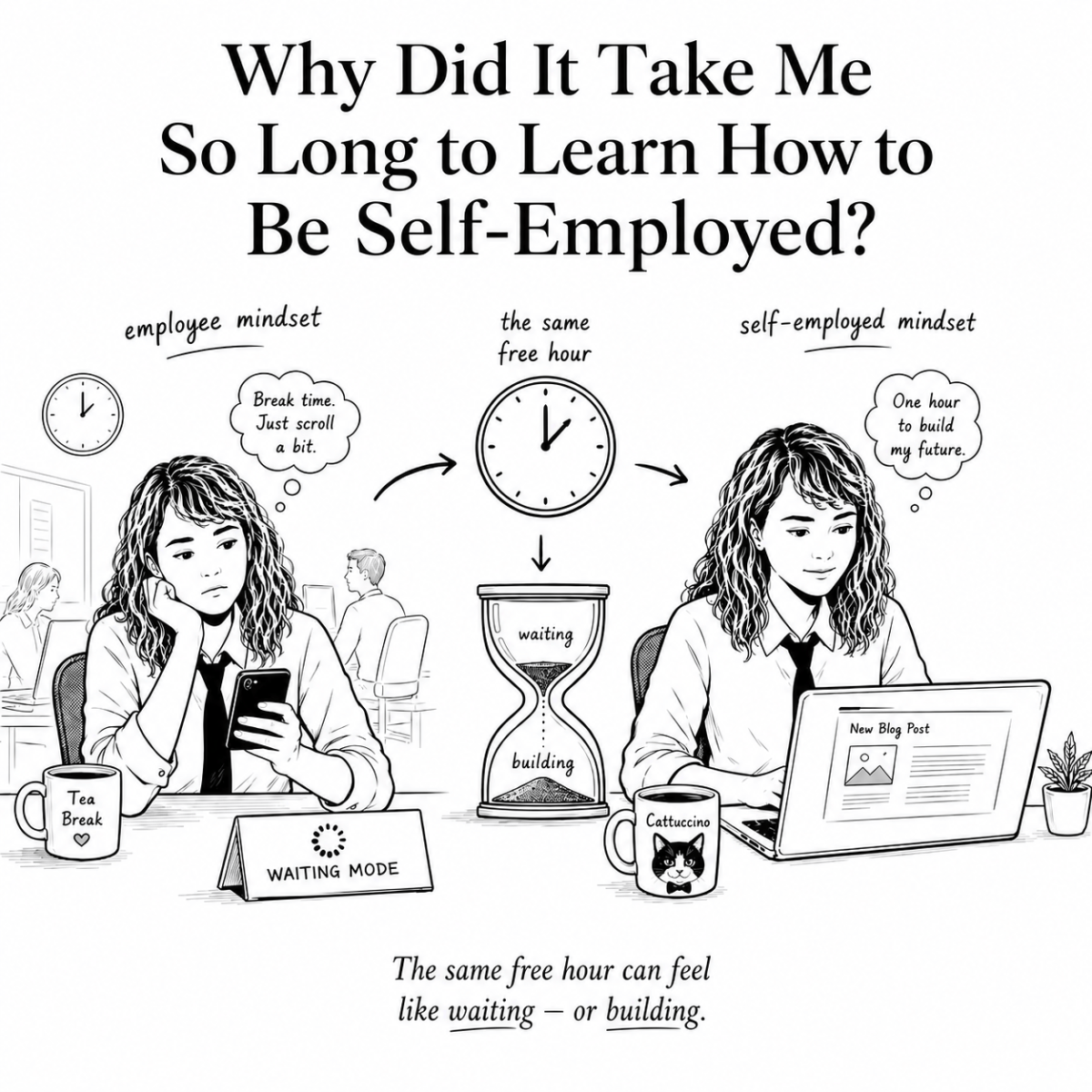
For me, those alternatives were writing, redesigning my blog, creating digital art, developing my Etsy shop, running, walking, yoga and Outlanga. These activities did not merely distract me from scrolling. They gave me something scrolling never could: evidence of growth. At the end of an hour spent scrolling, I usually felt depleted and could barely remember what I had seen. At the end of an hour spent creating, I had a new paragraph, an artwork, an energized body, a developed idea or a finished task. My attention had produced something rather than simply passing through an endless stream of other people’s content.
This does not mean that every moment of the day must be productive. Rest is valuable. Daydreaming, listening to music, sitting quietly and doing absolutely nothing can be deeply restorative. The problem was not that I occasionally relaxed with my phone. The problem was that scrolling had become my automatic response to every empty space. The answer was not to pack every minute with work. It was to make my life meaningful enough that my attention had places it genuinely wanted to go.
Once I knew that consistency in my chosen pursuits could create gradual progress, satisfaction and even financial reward, I became less willing to scatter my energy across endless digital noise. The old Dora, working a standard nine-to-five job, did not know how to organise her energy unless someone else gave her instructions. The self-employed Dora had to learn how to create her own structure, direct her own attention and decide what deserved her time.
It took months. I am still learning. But at least I now understand the strategy. I did not stop scrolling because I became stricter with myself. I stopped scrolling because I gave my attention somewhere better to go—and gradually created a life I no longer wanted to escape from.






Leave a comment