Ever since I read Moving Through Parallel Worlds by Kevin L. Michel, I have been paying much closer attention to meditation. I now try to meditate for at least twenty minutes every day. In his book, the author argues that even one minute of meditation each day is better than no meditation at all. I found his argument persuasive: during meditation, bridges and connections are formed between the conscious and subconscious minds. Consciousness is merely the tip of the iceberg—10 per cent—while the remaining 90 per cent, its base and foundation, is the subconscious. This demonstrates the enormous influence that patterns and beliefs encoded in our subconscious have on the quality of our lives.
Previously, I had not realised how profoundly our lives are shaped by our subconscious thoughts, desires, dreams and fears. If we subconsciously believe that we do not deserve love or happiness, our conscious efforts to open ourselves to them will not produce the desired results. We must begin by reprogramming the subconscious mind. The more connections we build between the conscious and subconscious, the easier it becomes to create our ideal, dream reality. The more thoroughly we exercise and explore the subconscious, the more quickly our thoughts materialise and our words are transformed into actions.
I particularly liked the new paradigm introduced in the book:
I am happy (cause) → I achieve my desired goal (effect).
The author explains that most people believe they must first achieve their desired goal before they can experience positive emotions such as joy, fulfilment, satisfaction, pride and happiness. He argues that this is not always the case. Because time is not linear, we can assume that generating positive emotions—fulfilment, pride, happiness, joy and excitement—can help us achieve a particular goal. Therefore, even before we have acquired that million pounds, we think, feel and behave as though the money were already in our account.
It is similar with love. When we fall in love with someone, we treat that person tenderly and lovingly. We behave this way because we want to awaken feelings of love within them. We do not wait until that person begins to love us. From the very beginning, we treat them with care, tenderness and affection. In other words, we begin at the place we want to reach. This example perfectly illustrates the pattern of effect → cause. Time is merely an illusion. The trick is learning to generate the emotions in the present that we would experience if we had already achieved our long-awaited success—as though we were already celebrating our triumph.
If you want to see the future, become the future.
The old paradigm:
You achieve financial abundance (cause) → you become happy (effect).
The new paradigm:
You are happy (cause) → you create financial abundance (effect).
Following this line of reasoning, we discover that the effect can precede the cause. Success does not lead to happiness; happiness puts us on the path towards success. The key is learning to eliminate emotions associated with low-energy states. Fear and anxiety must be eradicated. Fear keeps us trapped in a place of stagnation. When we feel afraid or uncertain, all the paths leading towards our Ideal Parallel World begin to disappear. We must experience courage, strength, confidence, gratitude, excitement and unwavering faith.
We must also visualise our Ideal Reality frequently. We must visualise it repeatedly until it becomes tangible and material. We must generate the feelings that would accompany such a reality. Our perfect, dream world must become more real to us than the three-dimensional reality in which we currently operate. The environment around us often functions at lower vibrational and energetic levels. What should we do then? In such circumstances, it is difficult to remain on the plane leading us towards our IPW—our Ideal Parallel World—because other people may begin to pull us down.
We can change our environment or protect ourselves with all our strength from its negative influence. We must surround ourselves with positive emotions: joy, gratitude, freedom, confidence, hope, humility, compassion and love. Exercise, meditation, prayer, writing, hypnosis, engagement with art and nature, developing our interests and visualisation can all help us achieve this. Equipped with these tools and weapons, even the immense mass of negative energy generated by humanity cannot threaten us. We are fearless. We must remain mindful and acutely aware, because every thought we have and every emotion we experience is a particle that influences the physical world surrounding us.
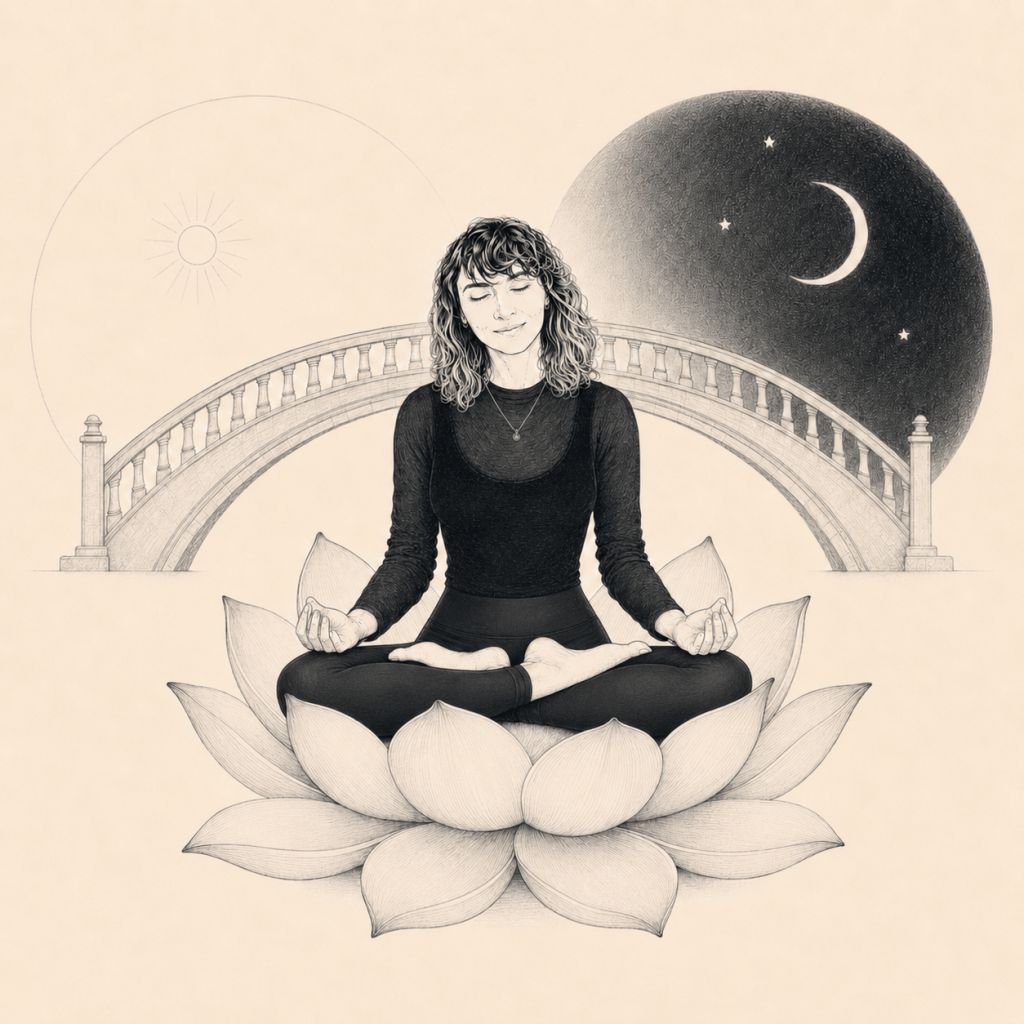
Building a bridge between the conscious and subconscious minds is essential, and meditation can help us construct that bridge. In the stillness of meditation, the constant commentary of the conscious mind begins to soften. Beneath that noise, we can become aware of beliefs, desires, fears and behavioural patterns that usually operate beyond our immediate awareness. What was once hidden gradually becomes visible—and what becomes visible can be understood, questioned and transformed.
This does not mean abandoning rational thought or allowing the subconscious to control us blindly. It means learning to listen to its quieter language: intuition, imagery, emotion, memory and instinct. When the analytical intelligence of the conscious mind begins to cooperate with the creative depths of the subconscious, we gain access to a much richer understanding of ourselves. We can recognise the invisible forces shaping our choices and begin replacing limiting patterns with ones that support the future we want to create.
A person who learns to enter this mysterious inner territory may appear to be both a mad genius and a visionary. They are willing to explore ideas that logic alone cannot immediately explain, yet they remain conscious enough to transform those insights into purposeful action. Perhaps genius emerges precisely at this meeting point—where reason encounters imagination, conscious intention meets subconscious wisdom, and an invisible possibility begins to take material form.






Leave a comment