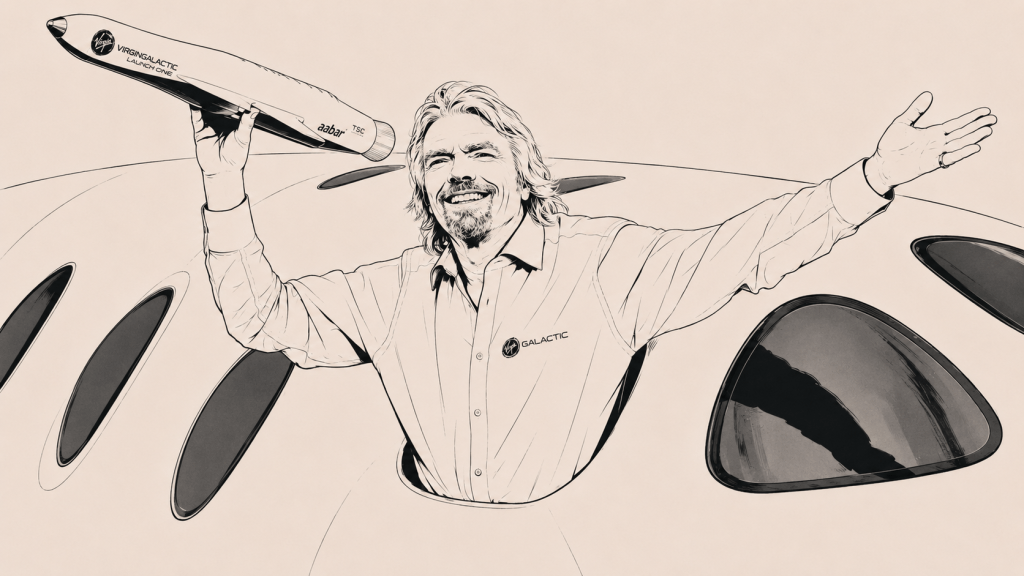
Books That Teach Us How to Live
I enjoy visiting one of my favourite places in the city—Waterstones bookshop every Friday. I always head towards the section devoted broadly to personal development. For several years now, I have been reading books that expand awareness—spiritual, emotional and financial awareness. I enjoy books that teach us new ways of thinking, encourage us to fight for what matters, inspire us, and show us how to live consciously, courageously and authentically.
The Programming We Receive in Childhood
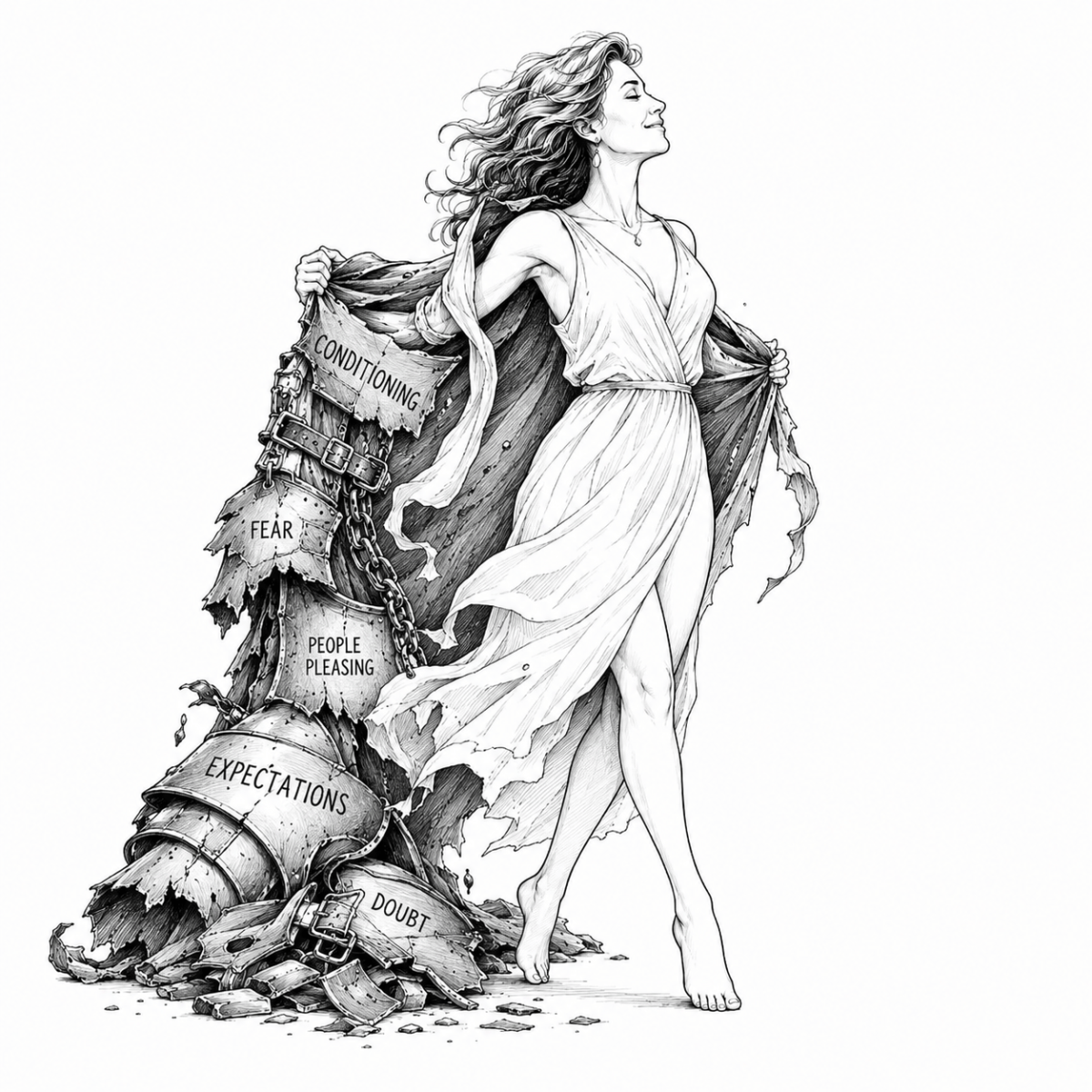
The truth is that, while we are growing up, nobody teaches us how to live consciously, courageously and authentically. Quite the opposite: we are often taught that the world is an unfair and hostile place. When this kind of harmful “malware” is installed in a young mind, that person may spend their entire life operating from a place of scarcity, fear and insecurity.
The Power of a Supportive Family
Of course, there are fortunate people such as Richard Branson—the subject of this post—who had the good fortune to be born into a wise, loving and supportive family. It was a family in which children were encouraged to express themselves and take part in conversations, rather than being constantly silenced and reprimanded for every childish act of mischief.
In one chapter, Richard describes a valuable lesson his mother taught him when he was a young boy. She told him never to judge or criticise other people. Whenever she heard Richard speaking negatively about someone, she made him sit in front of a mirror and stare at his own reflection for five minutes. Why? Because, in her opinion, criticising and judging others was merely a poor reflection of one’s own character.
When Richard decided to leave school at the age of just sixteen and become an entrepreneur, he did not encounter a great deal of opposition from his parents. At first, his father was disappointed that his son did not want to follow in his footsteps and become a lawyer. His mother, however, accepted his decision and supported him.
What If Richard Had Been Forced to Conform?
Now let us imagine a completely different scenario. Imagine that Richard had entirely different parents: strict, authoritarian and deeply conformist people who cared above all about what others might say. Imagine that, when they heard that Richard intended to leave school at sixteen, his family reacted harshly. His parents used every possible method to force him to continue his education and become that unfortunate lawyer—and, under pressure, he gave in.
What would the consequences have been? They would have been very sad: suppressed ambition, the violation of a young person’s free will, suffocated dreams and clipped wings. Richard might have led the ordinary and tedious life lived by billions of people. The world might never have heard of him. We would have lost a business genius.
How Much Human Potential Has the World Lost?
How many geniuses in art, business and technology has the world lost simply because a young person did not receive support and encouragement from their family or society? Probably millions. How many millions of people waste their valuable creative potential every day because they lack self-belief, courage and confidence?
Why do they lack courage and confidence? Because harmful software was installed in their subconscious minds during childhood: The world is bad and unfair. Do not stand out from the crowd. You have to be born talented, and you have no talent. I could continue listing examples of this kind of malicious programming indefinitely.
I believe we would have many more happy and fulfilled people in the world if parents gave their children more acceptance, respect, understanding and love while they were growing up. I also believe that, if the world had more people like Richard Branson, it would be a much happier and more progressive place.
Can We Reprogramme the Adult Mind?
Someone might now ask: “What happens if I am already an adult? My subconscious mind has already been formed, and I have just discovered that it operates according to negative algorithms. My life is filled with low energy. I feel that I will never achieve anything extraordinary. I lack self-belief, and I did not have a loving and supportive family, so has everything already been lost?”
“No, not entirely,” would be my answer. There is still hope for transformation, provided that you genuinely want it.
Replacing Harmful Inner Codes
Our minds are much more flexible than we realise. Recent scientific research demonstrates just how adaptable our minds—and even our personalities—can be. I will write about that in another post. Change is possible at every age and at every stage of life.
We can reprogramme the subconscious mind. We can reset harmful algorithms and replace them with fresh, healthy and more innovative ones. We can uproot damaged and unhealthy codes like weeds and plant new, healthy ones in our subconscious minds. There are ways of doing this. However, it requires a great deal of inner work and determination. I will also write about this in more detail in future posts—I am only just getting started! 🙂
For now, I simply want to say that I am an example of someone who has spent years resetting harmful and unhelpful subconscious programming and learning to replace it with healthier alternatives. The key words in these new codes are love, courage, joy, freedom, gratitude, beauty, kindness, success and growth.
I use many different techniques, most of which I learned about from books and the Internet. Because I enjoy experiencing new things, I turned myself into my own experimental subject. So far, I can see a clear improvement in my life. Since many of these strategies have worked for me, I decided to share them on my blog. That is how the idea of writing it first appeared.
Why Adults Need Role Models Too
But let us return to Mr Branson. Would I recommend reading his book Like a Virgin: Secrets They Won’t Teach You at Business School? Absolutely. It is worth reading, particularly when you are looking for inspiration, motivation and positive role models. I am also very pleased that the book has been translated into Polish.
I do not believe that only children and teenagers need authorities, idols and role models. Adults need them too. There are always role models in my life. Sometimes I find inspiration in a fitness instructor, and sometimes in an innovative entrepreneur such as Richard Branson.
At present, I am fascinated by Babette Davis, who looks beautiful, slim and remarkably fit at over seventy years of age. Babette owns a vegan restaurant and has herself been vegan for more than thirty years. She is a successful woman who radiates energy and optimism. She is undoubtedly one of my role models.
Age Is Not a Barrier to Ambition
At the time I am writing this post, Richard is seventy-two years old. In addition to having billions in the bank, he still has countless ideas for new businesses. Work is currently continuing under his supervision on the development of space tourism. Richard would like people to be able to travel into space for recreation. Commercial space flights—does that not sound wonderful?
He would also like to enable people to explore the seabed in specially designed submarines, with glass domes allowing passengers to observe the underwater world. Mr Branson’s example shows that we should never abandon our dreams and that age should never prevent us from pursuing our ambitions.
Richard remains extremely active: he runs marathons, goes snowboarding, plays tennis and skis. In his autobiography, he writes that he plans to remain professionally active until at least the age of ninety.
An Entrepreneur from the Age of Sixteen
As I mentioned earlier, the billionaire ended his formal education at the age of sixteen. From a young age, Richard knew that he wanted to be his own boss and that, by working for somebody else, he would never be able to realise his original ideas and dreams.
Even as a teenager, he was independent, entrepreneurial, rebellious and exceptionally inventive. At sixteen, he tried his hand at business. He created a student magazine called Student and promoted it over the telephone, making calls from the school telephone box.
Building the Virgin Empire
In his book, Richard describes the beginnings of Virgin—the record label and chain of music shops—and explains how the Virgin Group later expanded into an increasing number of industries, including railways, banking and aviation.
Branson’s idea of creating Virgin Atlantic emerged because, several decades ago, customer service aboard passenger aircraft was not particularly impressive. Richard wanted to provide passengers with comfort, a sense of being valued and entertainment. He was one of the first people to introduce video and computer entertainment systems into the backs of aircraft seats, allowing passengers to relax and forget about the stress of flying. Virgin Atlantic also introduced limousine transfers for passengers travelling from their hotel to the airport.
Richard has always had unconventional ideas and bold advertising campaigns. He has been able to create services that were missing from the market. He is a pioneer and a creator of innovative solutions. He knows how to identify and enter niche markets.
In his book, Richard repeatedly mentions Steve Jobs. It is clear that he respects and greatly admires him. Steve loved beauty in its purest form and was a perfectionist in every respect. He believed that human beings could bend reality and that obstacles were often merely products of our imagination.
Creativity, Innovation and Boldness
In his book, Richard responds to letters and questions from readers. He writes about an organisation he founded to support young investors and offers advice on how to establish a business, manage a large company and motivate employees.
Richard repeatedly emphasises the importance of humour, creativity, innovation, flexibility and a healthy dose of boldness. I like his approach towards employees. Richard believes that people are much more productive and imaginative when they are able to work part-time or from home. For this reason, he allows his employees to work flexible hours.
Challenging Outdated Education
I also appreciate his views on higher education. Richard argues that spending four or five years studying for a bachelor’s or master’s degree is far too long. Branson believes that university holidays are excessively long and that student accommodation fails to generate enough income because it remains empty for two or three months each year.
He argues that higher education should be condensed, that more remote learning should be offered, and that greater emphasis should be placed on practical experience and preparation for employment. I agree with him completely. There are still so many outdated paradigms in this world that it is difficult to believe. Much of this comes from people’s enormous attachment to tradition.
Take the First Step
Richard Branson does not take himself too seriously. In his book, he repeatedly admits that, when Virgin began investing in railways, banking and passenger aviation, he did not fully understand how all of these industries would work. After all, nobody can be an expert in everything.
However, this did not prevent him from taking action. The most important thing is always to take the first step and begin. Afterwards, everything gradually becomes clearer and starts to gain momentum. Experts appear who can help us, and mentors emerge who possess more experience than we do in a particular field. Gradually, step by step, we develop our knowledge and our business.
Sitting, deliberating and planning endlessly will never take us anywhere. Only action can produce tangible results.
So, let us get started!




Leave a comment