I came across a statement recently that young people tend to take more risks because they have less to lose. It made me think. It made me question it. I mean, of course there is a grain of truth in it – young people are usually less rooted by mortgages, families, responsibilities and careers than older folks. But I actually started taking some serious risks when I was older. Growing up, I was discouraged from taking risks, or rather, I grew up in an environment where everyone lived a very static, predictable life. Same old, same old – work, food, TV for decades. I was surrounded by extremely risk-averse people for almost three decades of my life. The people who raised me conditioned me to believe that living a small, predictable life was safer. I was never taught that risk could be exciting, expansive or transformative. I had to discover that for myself much later.
What if you were never taught how to take risks?
I genuinely believe that risk-taking is a learnt skill. I call it an art because I believe it can be practised and mastered like almost anything else. You start a new sport and you are crap at it. I started running and could barely run 3 km. Several years down the road, I have my first half-marathon under my belt and substantial weekly mileage. Risk-taking works in a similar way. You start small, you test yourself, you survive uncertainty, you realise that discomfort does not kill you, and gradually your tolerance for the unknown expands. Just like muscles can be flexed and strengthened, our ability to take risks can be developed too.
A young person raised in a risk-averse environment might not even know what risk-taking tastes like. They may have never truly savoured the adrenaline, the anticipation, the cortisol rising, the uncertainty and then the outcome. They may have been taught that uncertainty equals danger and that the safest, or the easuest possible option is automatically the best one. So I do not entirely accept the argument that young people naturally take more risks simply because they have less to lose. Having fewer responsibilities does not automatically give someone courage. A 22-year-old may have no mortgage, no children and very little financial responsibility, but still be paralysed by fear, family conditioning or the need for approval. An older person may have more to lose but also possess far more self-knowledge, self-awareness, perspective and experience of surviving failure.
How a Child Learns to Play It Safe
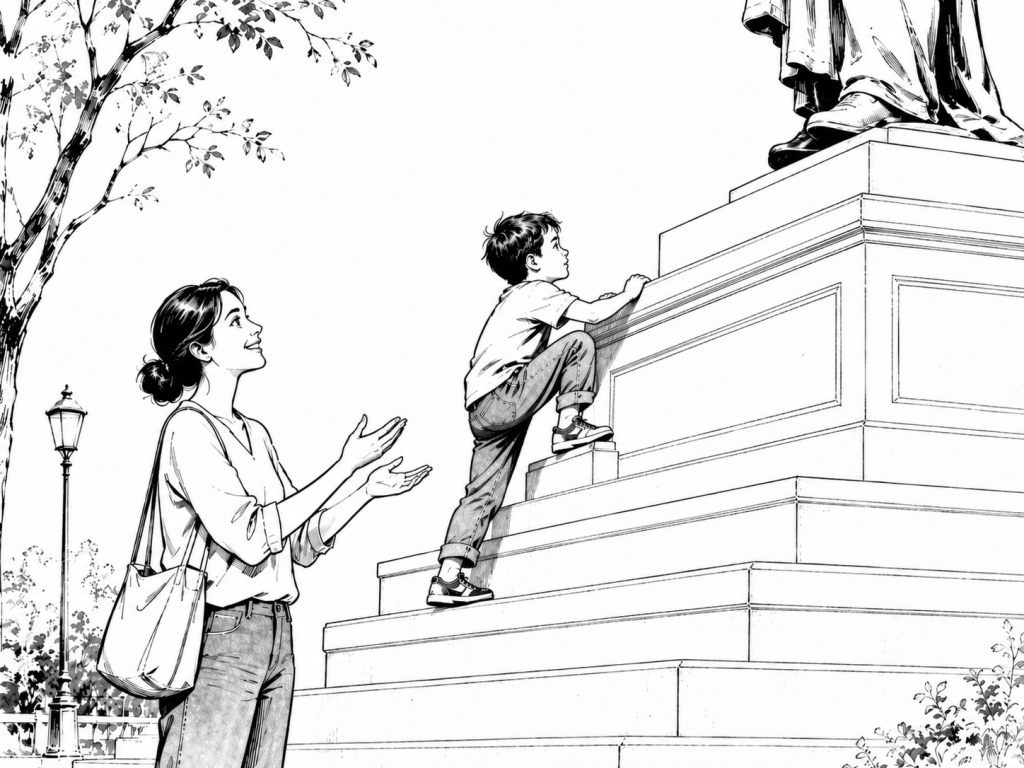
I walked through the park a few days ago and saw a mother with a little boy. He could have been about six years old. He desperately wanted to climb the pedestal on which a statue was mounted. The mother was growing increasingly displeased. First she sent him warnings and then, when he ignored her, she started shouting at him not to climb the monument because monuments are not supposed to be climbed. I overheard this and thought: this boy wants to explore, test his abilities, discover new heights and textures. Why are you limiting him? Why are you stunting his natural curiosity, playfulness and risk-taking instincts? I am not encouraging recklessness. Of course a parent should be vigilant, assess the situation and offer support when needed. There is a difference between allowing a child to explore safely and letting them put themselves in obvious danger. But shouting at a child simply because he wants to climb, investigate, test his agility and discover what he is capable of can plant unnecessary seeds of fear. Children need guidance and boundaries, but they also need opportunities to experiment, stretch themselves and learn what their bodies and minds can do.
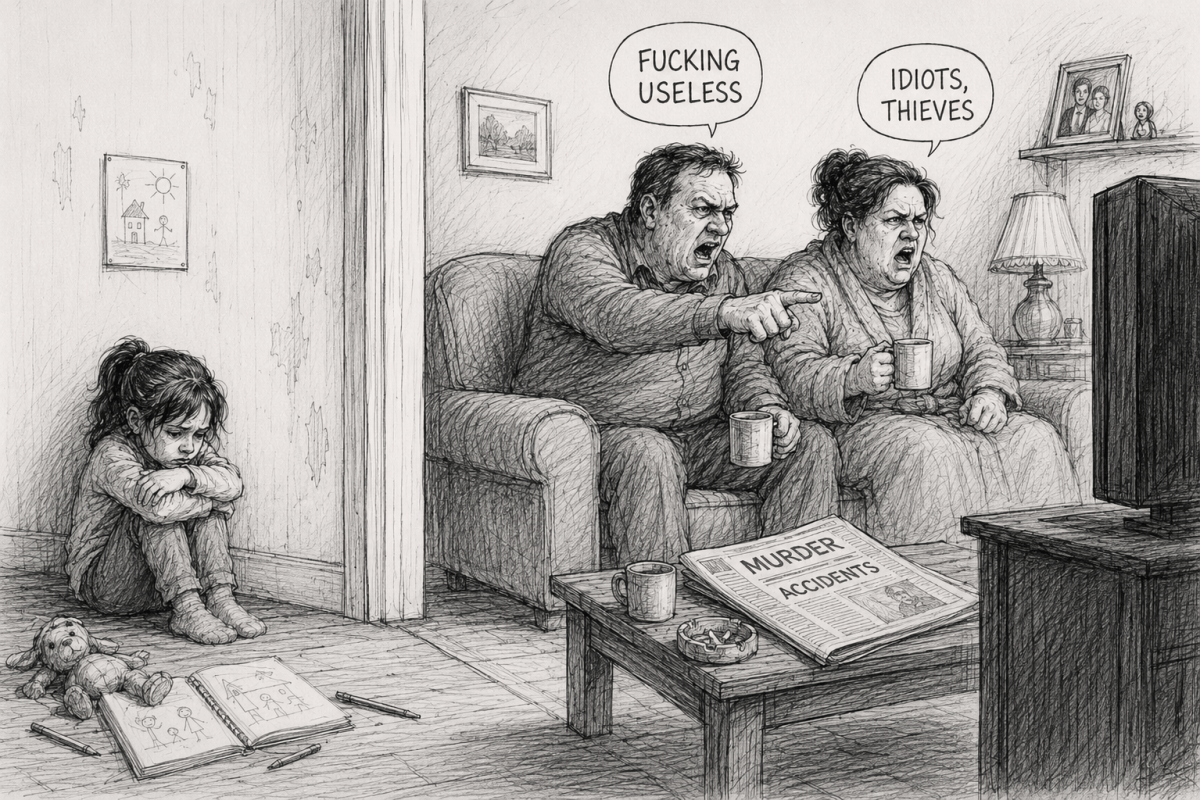
I sympathised with the boy because I experienced exactly the similar wing-clipping and ruthless editing when I was growing up. I remember walking backwards in the street while joking with my friends. My father saw me and scolded me aggressively for looking foolish. Another time, he overheard me singing songs in a made-up English language. I did not know English at five, so I invented sounds that remotely resembled it. Instead of finding it amusing or creative, he shouted at me for singing some foreign gibberish. It hurt and made me withdraw into myself. I stopped singing in the garden. I stopped walking backwards when I wanted to. Small acts of spontaneity began to feel as though they needed to be checked, edited and approved before being expressed.
That is why I think childhood matters enormously when we talk about risk-taking. Children are naturally experimental. They climb things, invent things, make strange noises, test limits, move their bodies in ridiculous ways and approach life with curiosity before they understand all the possible consequences. Of course children need boundaries and protection, but there is a difference between keeping a child safe and constantly censoring their exploratory instincts. If every slightly unconventional behaviour is met with ridicule, anger or alarm, the child may eventually learn that being visible, daring or experimental is dangerous.
Some of us have to unlearn fear first
If you were lucky enough to be encouraged to be brave, courageous and a go-getter, that is amazing. Cherish it. It is a gift. If, like me, you were not, there may be a lot of unlearning to do. I had to unlearn patterns I inherited – fearfulness, anxiety around new things, imagining the worst possible outcome and assuming that stability was always preferable to uncertainty. I did not wake up one morning as a fearless risk-taker. I had to gradually expose myself to different possibilities and discover that there were many more ways to live than the ones I had seen growing up.
The first decisive step was removing myself from a stifling and dysfunctional environment. Once I left Poland, where I had been surrounded by people who tended to play small and safe and were often filled with bitterness and regret, I moved to the UK. Disconnecting from the old environment was crucial. Later, I gradually reduced contact even further because I noticed that ordinary conversations could smuggle seeds of fear and worry back into my life. You can physically leave an environment but still carry its voice around in your head for years.
Exposure to different lifestyles changes what you believe is possible
The second major step was exposure to completely different lifestyles. In Poland, I had often seen people cling to one job, one career or one partner for decades out of fear. In the UK, I experienced much more flexibility and mobility. People changed jobs, retrained, changed professions, took gap years and sabbaticals, left unhappy marriages, started again, moved cities and reinvented themselves. I liked this a lot because it showed me that life contains far more options than we often realise. The possibilities may have existed before, but I had not been psychologically trained to see them.
That exposure changed my internal map. I began to understand that the choice is rarely just between staying where you are and catastrophic failure. There are usually dozens of intermediate possibilities. You can try something and change your mind. You can leave and return. You can retrain. You can experiment. You can fail and recover. You can discover that the path you were frightened of taking actually suits you much better than the safe one.
My first proper risk
I started taking some proper risks once I left Poland. My biggest was moving to the UK at the age of 28 with only one suitcase. The risk felt enormous, but it brought some of the greatest rewards of my life. I met people from different cultures, mastered my English and learnt a great deal about human psychology. Working in education meant completing extensive training in attachment, trauma, neuroplasticity and human behaviour. I was exposed to different cultures, foods, dialects, lifestyles and ways of thinking, and I began to thrive. That experience also taught me something important about risk: the biggest possible reward often sits behind uncertainty. Had I chosen the safest available option and remained inside the environment I knew, I might have avoided a great deal of anxiety and discomfort, but I would also have missed everything that came afterwards. The outcome could not have been guaranteed before I left. That is precisely what made it a risk.
Older does not mean less daring
This is why I question the simplistic idea that young people take more risks because they have less to lose. Perhaps some do. But I think risk-taking has far more to do with conditioning, confidence, exposure and accumulated experience than with age alone. Some young people have been trained to be bold from childhood. Others have been trained to fear almost everything unfamiliar. Some older people become more conservative with age, but others finally acquire enough autonomy and self-knowledge to become far more adventurous than they ever were in their twenties.
In my case, getting older has not made me less willing to take risks. It has made me better at recognising which risks are worth taking. I understand myself better. I am less interested in approval. I know that failure is survivable. I have accumulated evidence that some of the decisions that frightened me most eventually expanded my life the most. I no longer think that the safest option is automatically the wisest one.
Risk-taking is not simply something you either possess or do not possess. It can be encouraged, suppressed, forgotten, relearned and strengthened. Some people are lucky enough to develop it early. Others, like me, have to reclaim it later. And perhaps that is one of the greatest things about getting older: you can eventually realise that the cautious little life you were taught to accept was never the only one available to you.




Leave a comment