India—a land of vibrant culture, history and extraordinary diversity—is a dream destination for many. It is fascinating and exhilarating, but it can also be exasperating, disorganised, chaotic and deeply unpredictable.
Unfortunately, India also has its share of scams designed to catch unsuspecting tourists off guard. As a white traveller, I often felt that I was regarded as a walking cash machine—a two-legged ATM—and was relentlessly approached by scammers, touts and beggars. Even small children would sometimes run after me shouting, “Money, money, money!”
Knowing what to expect can spare you bruised pride, unnecessary stress and financial loss. This is not intended to be an exhaustive list; there are many more scams operating across India than I could possibly cover. Instead, I am focusing exclusively on those I witnessed or experienced firsthand. Here is my guide to some of the scams tourists may encounter in India—and how to avoid falling for them.
- The boat scam
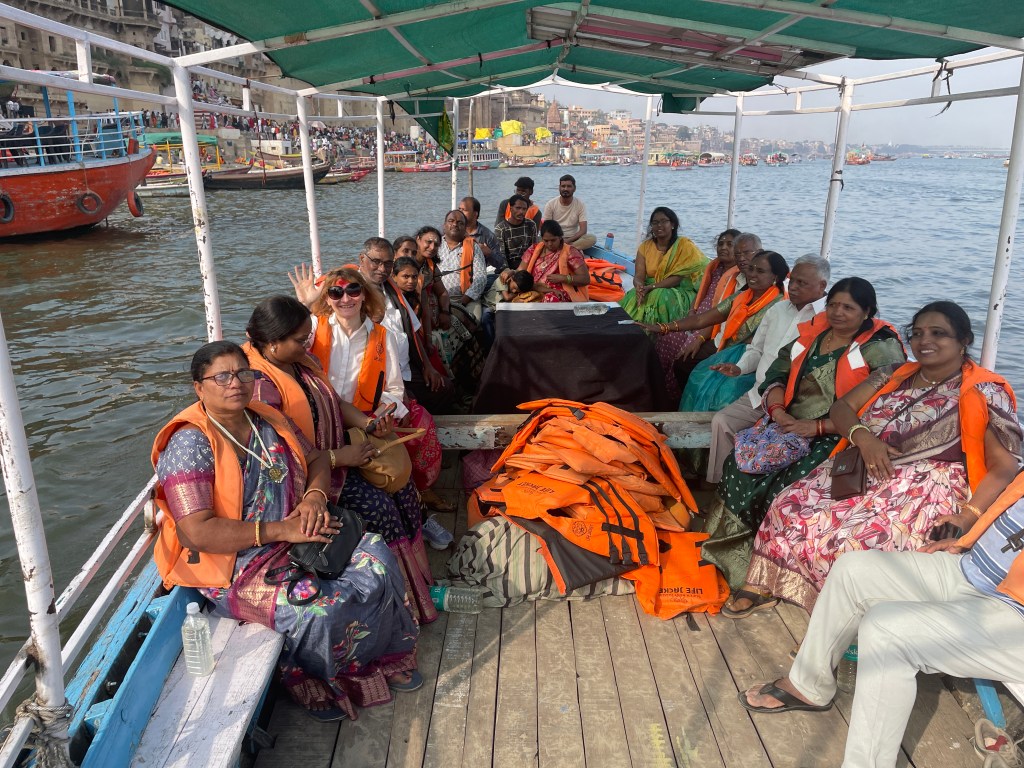
If you are planning a boat trip along the sacred River Ganga, beware of scammers operating along the riverbanks. They watch for tourists who appear unfamiliar with the system and approach them confidently. A man may point towards a boat and ask, “Boat cruise, madam?” If you were already planning to take a boat trip that day, you might happily agree. The man may even hold your hand and help you step safely into the wobbly boat. He will then charge you—₹200 in my case—and disappear.
You sit down, believing that everything has been arranged, while more passengers gradually climb aboard. Once the boat is full and ready to depart, an actual member of the boat crew begins collecting the fares. You are bewildered. How can this be? You have already paid another boatman! Except he wasn’t a boatman. He was simply a scammer who helped you into someone else’s boat and collected money for a service that wasn’t his to sell.
How to Avoid the Boat Scam
Do not hand money to the first person who approaches you on the riverbank. Pay only after you have boarded the boat and identified who is genuinely operating it. Ask the other passengers whether they have already paid, how much they paid and—most importantly—whom they paid. Never pay an unverified person in advance. Otherwise, your money will disappear with the scammer, and the legitimate boat operator will still expect you to pay the proper fare.
Varanasi is a magnificent holy city, but its riverbanks are also crowded with people who make a living by exploiting confused and unsuspecting visitors. Some operate with such confidence and skill that scamming appears to have become a profession. Their greatest advantage is the surrounding chaos: tourists often cannot distinguish an official boat operator from someone who merely behaves like one.
2. Tuk-tuk / rikshaw / taxi scam
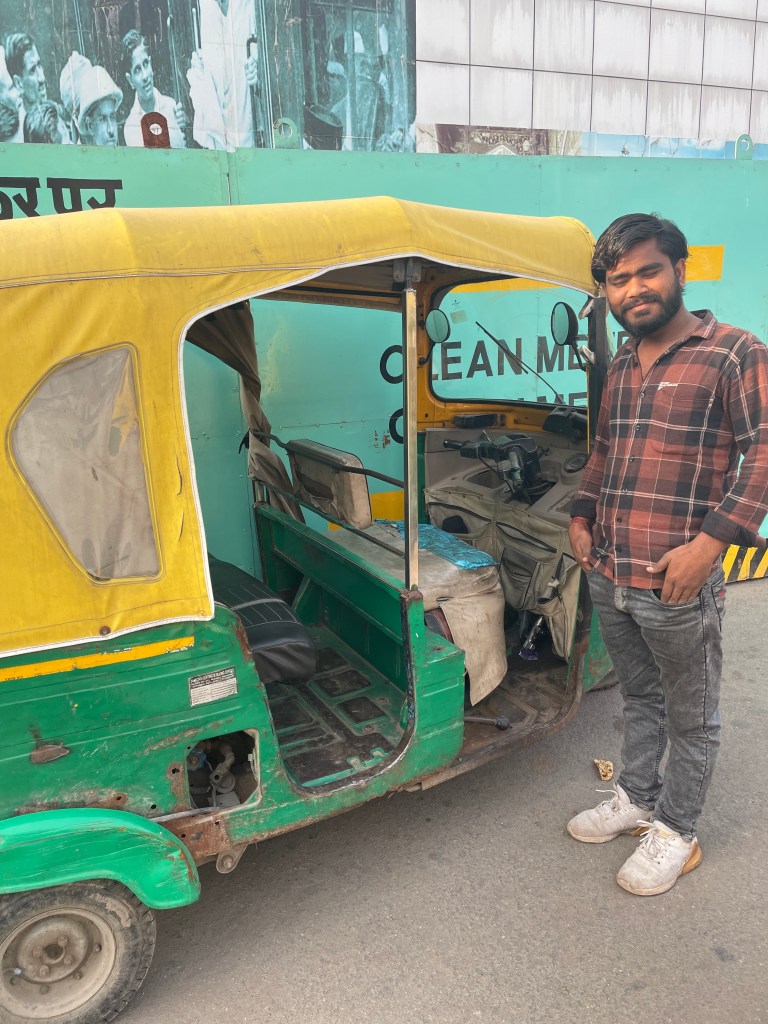
As mentioned previously, foreign tourists—particularly those with white skin—are often regarded as cash cows. Tuk-tuk and rickshaw drivers may inflate their fares considerably, charging tourists two, three or even four times the usual price. Some claim that their meter is broken, take unnecessarily long routes or demand an extortionate fare upon arrival.
How to Avoid Tuk-Tuk and Rickshaw Scams
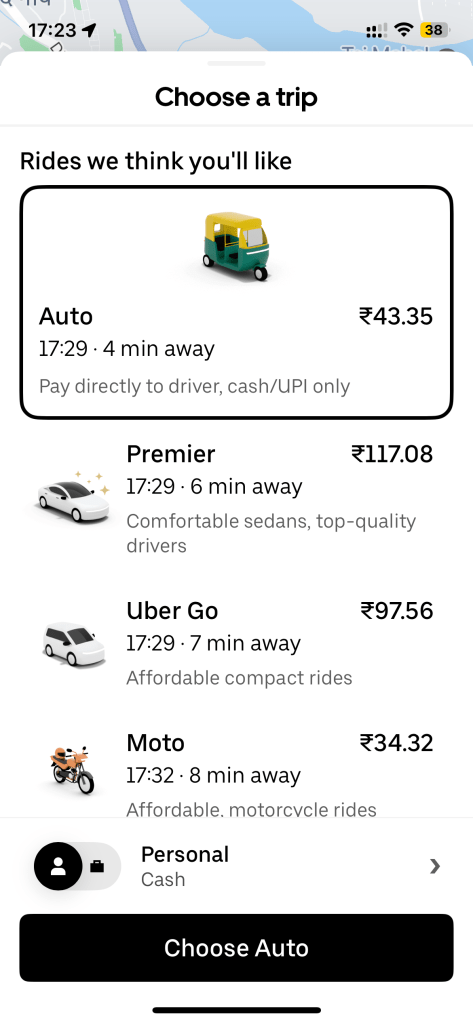
Whenever possible, use a ride-hailing app such as Uber, Ola or Rapido, which allows you to see the estimated fare before beginning your journey. If you use a local tuk-tuk or taxi instead, insist on using the meter or agree on a price before getting in. It is helpful to familiarise yourself with the approximate fare for your route. This is where ride-hailing apps become extremely useful, even if you do not book through them. If a dozen eager drivers surround you outside a railway station or tourist attraction, check the journey on one of the apps. You will immediately have a realistic price for comparison and a much stronger position from which to negotiate.
Always settle the fare in advance. This gives you an opportunity to haggle and prevents the driver from inventing a price once you have arrived. If a driver quotes an absurd amount, show him the considerably lower price offered by Uber or Ola. You may be surprised by how quickly his fare drops. I forgot to agree on the fare only once, and it was a mistake. I was tired and overwhelmed by the noise and crowds, so I climbed into a random tuk-tuk on the street. The journey to my hotel was relatively short. When I checked the same route on Uber, the estimated fare was approximately ₹75. Upon reaching my hotel, the young driver demanded ₹500.
I laughed, handed him ₹150 and walked into the hotel. He continued shouting after me and demanding more money, but I ignored him. Although I escaped without paying his outrageous price, the confrontation could have been avoided entirely if I had agreed on the fare before beginning the journey.
3. Tour guide scams
Oh, crikey—these are everywhere, particularly outside major tourist attractions such as palaces, monuments and the Taj Mahal. Dozens of would-be guides may flock around you, offering their services and claiming to be officially authorised. Some display identification cards, but are those documents genuine? I have my doubts. These unofficial guides often demand surprisingly high fees—for example, ₹1,000 for a short tour—despite having limited knowledge of the attraction and only a basic command of English.
I hired one such “guide” when I visited the Taj Mahal. He initially demanded ₹1,000, but I haggled and eventually paid him ₹500. His English was very limited, he knew remarkably little about the history of the Taj Mahal, and he ignored most of my questions—probably because he could not answer them. Fortunately, I had not hired him primarily for his historical expertise. What I really needed was a photographer, and in that respect, he served his purpose.

How to avoid tour guide scams?
If you want to hire a genuine, knowledgeable guide, arrange one through a reputable agency or your hotel. Check independent reviews and ask to see official identification—and, if possible, verify that it is authentic. You should also be careful about disclosing your travel plans to tuk-tuk drivers. If a driver takes you to your hotel and asks how long you intend to remain in the city, you do not need to provide an honest or detailed answer. Simply say that you are leaving the following day or that you have not yet decided.
I made the mistake of telling a driver in Agra that I would be staying for three days, and he immediately began planning those three days on my behalf. He wanted to drive me to every tourist attraction, accompany me throughout the day and act as my personal guide. To prove his credibility, he repeatedly showed me a tattered diary filled with comments and recommendations supposedly written by previous tourists. I asked him to give me his telephone number so that I could contact him and arrange a tour at a convenient time. In a sorrowful voice, he explained that he was far too poor to own a mobile phone.
I felt sorry for him—but at the same time, he was becoming increasingly pushy. He wanted me to drop off my bags and begin sightseeing with him immediately so that he could start earning money. I told him that I needed to rest and walked towards my hotel. When I looked back, I was astonished to see him standing there with a smartphone in his hands. He was certainly skilled at guilt-tripping—but not quite skilled enough to hide the evidence.
4. The “no change” scam
You will hear this excuse constantly. After two weeks in India, I began wondering why I had hardly seen any coins or small-denomination notes. Tuk-tuk drivers claimed that they had no change. The man selling tickets for the Taj Mahal Nature Walk claimed that he had no change. The list was endless.
How to avoid the “no change” scam?
Be firm, remain calm and ask for the correct change. If a tuk-tuk driver insists that he has none, do not immediately accept the excuse. Tell him assertively that you will wait while he finds it. You may be surprised by how quickly a supposedly empty wallet produces a thick bundle of rupees.
The same principle applies elsewhere. My ticket for the Taj Mahal Nature Walk cost ₹150, and I handed the seller a ₹500 note. He claimed that he had no change and suggested keeping the entire ₹500 until I returned from my walk, when he would supposedly give me the remaining money. I refused and proposed an alternative: “No. I will give you ₹50 now and the remaining ₹100 when I return.”
Guess what happened next? He immediately pulled out a metal cash box overflowing with money. Apparently, change had existed all along. The best way to prevent this scam is to carry plenty of small-denomination notes. Break larger notes when buying fruit, vegetables or street food, and keep the smaller change for tuk-tuks, entrance tickets and other inexpensive purchases. The closer you can pay to the exact amount, the fewer opportunities anyone has to make your change mysteriously disappear.
5. The incorrect change scam
This scam is very similar to the previous one. Whenever you buy a ticket or any other product, count your change carefully before walking away. On several occasions, I was deliberately given less change than I was owed. In one instance, I should have received ₹700 but was handed only ₹200. I was even short-changed by a ticket seller at the official ticket counter outside the Taj Mahal—a place where you would reasonably expect the transaction to be conducted honestly.
Pay close attention to the banknotes you receive and count them in front of the seller. India can be extraordinarily crowded, noisy and hectic, making it easy to become distracted, forgetful or overwhelmed. Scammers rely on that confusion and assume that a tired tourist will simply take the money and walk away.You must keep your wits about you. Stay alert, vigilant and observant—but always remain cool and composed. If the amount is incorrect, calmly point it out and wait for the rest of your change before leaving the counter.
6. Selective memory or temporary amnesia scam
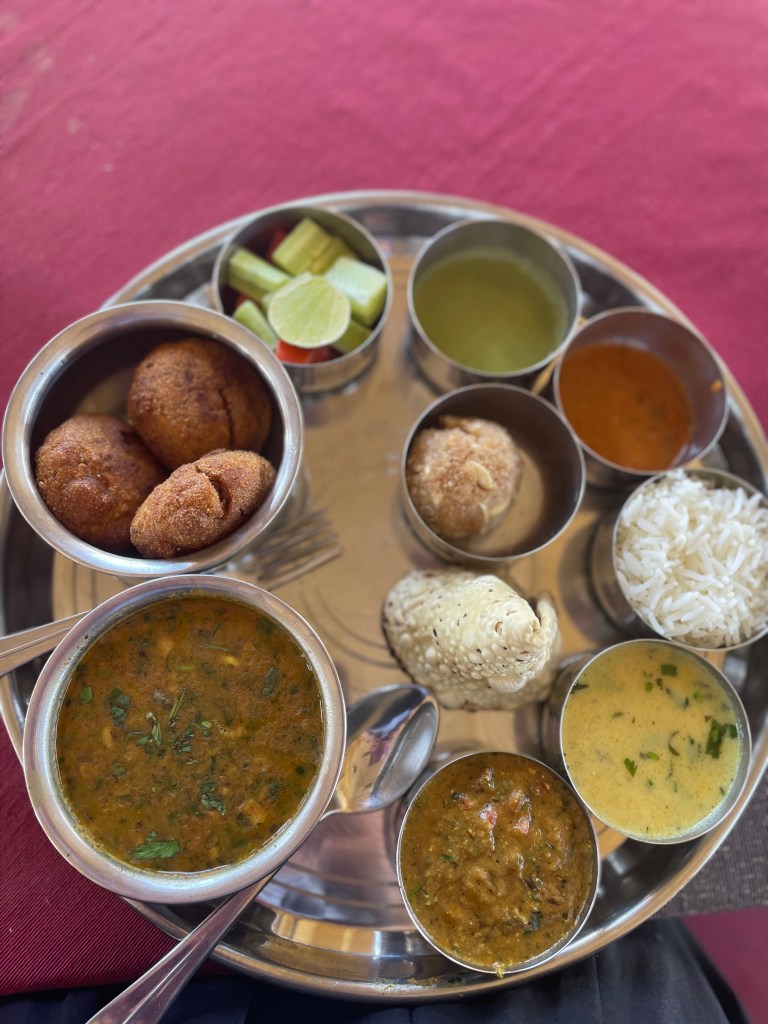
During my travels in India, I encountered a curious form of selective forgetfulness—particularly when money was involved. Strangely, this temporary amnesia always seemed to benefit the person receiving the payment. While staying at a hostel in Varanasi, I regularly ordered food through reception because they served a delicious Maharaja Thali. One evening, I did not pay the delivery driver because I lacked the correct change and did not want to hand over a large banknote that might never produce any change. Instead, I explained that I would pay at reception the following day.
I paid the ₹300 as promised. However, when I checked out two days later, the receptionist added the Maharaja Thali to my bill again. I immediately challenged him. I remembered very clearly handing him ₹300 on Wednesday evening. Once I stated the precise day, time and amount, his memory miraculously returned, and he removed the additional charge.
How to avoid the selective memory scam
Write everything down. Record the date, time and amount whenever you make a payment that will not appear automatically on a formal bill. Ask for a receipt or handwritten confirmation, and keep it until you have checked out or completed the transaction.If no receipt is available, make a note on your phone immediately and, where appropriate, photograph any written bill or payment record. The clearer your evidence and the more precise your recollection, the harder it becomes for someone else’s memory to fail conveniently at your expense.
7. The assistance scam
As a tourist, you may be targeted by people offering unsolicited assistance. They may insist on carrying your luggage, helping you locate the correct train, or showing you to your coach or seat. Do not assume that they are helping you for free or acting purely out of goodwill. Once the “favour” has been completed, they may demand an extortionate payment—even though you never requested their assistance in the first place.If you do need help, establish the price before accepting it. Otherwise, politely but firmly refuse and keep hold of your belongings. Do not allow anyone to create a service for you and then decide afterwards how much you supposedly owe them.
Ways to avoid the assistance scam
Politely refuse unsolicited help and disengage immediately. A firm but courteous “No, thank you” is usually sufficient. Keep hold of your belongings and do not allow anyone to carry your bags unless you have deliberately requested the service and agreed on the price beforehand.If you accept help from a stranger without establishing a fee, be prepared for them to follow or even chase after you, shouting, “Money! Money! More money!” This can be deeply disconcerting, particularly in an already crowded and unfamiliar environment.The simplest rule is this: if you did not ask for the assistance, do not accept it.
8. Pujas, bindis and flower offerings
I have grouped pujas, bindis and small flower baskets into one category. In Varanasi and other holy places, you may be approached by people offering to perform a blessing or puja, apply a bindi or tilak to your forehead, or sell you a tiny basket of flowers to place in the river.
None of these customs is a scam in itself. They can be meaningful parts of Indian religious and cultural life. The problem arises when no price is mentioned beforehand and the person demands increasingly large amounts of money afterwards—particularly from foreign tourists who are perceived as walking cash machines. I agreed to let a man apply a mark to my forehead. I gave him ₹20, but he immediately demanded more.The same thing happened with a puja performed by one of the sadhus sitting on a ghat beside the River Ganga. I gave him ₹100, yet he continued asking, “Dollar! Dollar!”Damn—I didn’t have any dollars. I’m not American!
How to avoid unwanted pujas, bindis and flower offerings?
Disengage immediately and do not accept any pujas, flowers or forehead markings unless you genuinely want them and have agreed on the price beforehand.Use a clear hand gesture, step away and say firmly, “No!” Do not allow anyone to begin the ritual or place something in your hands, as they may then insist that you owe them money.










Leave a comment